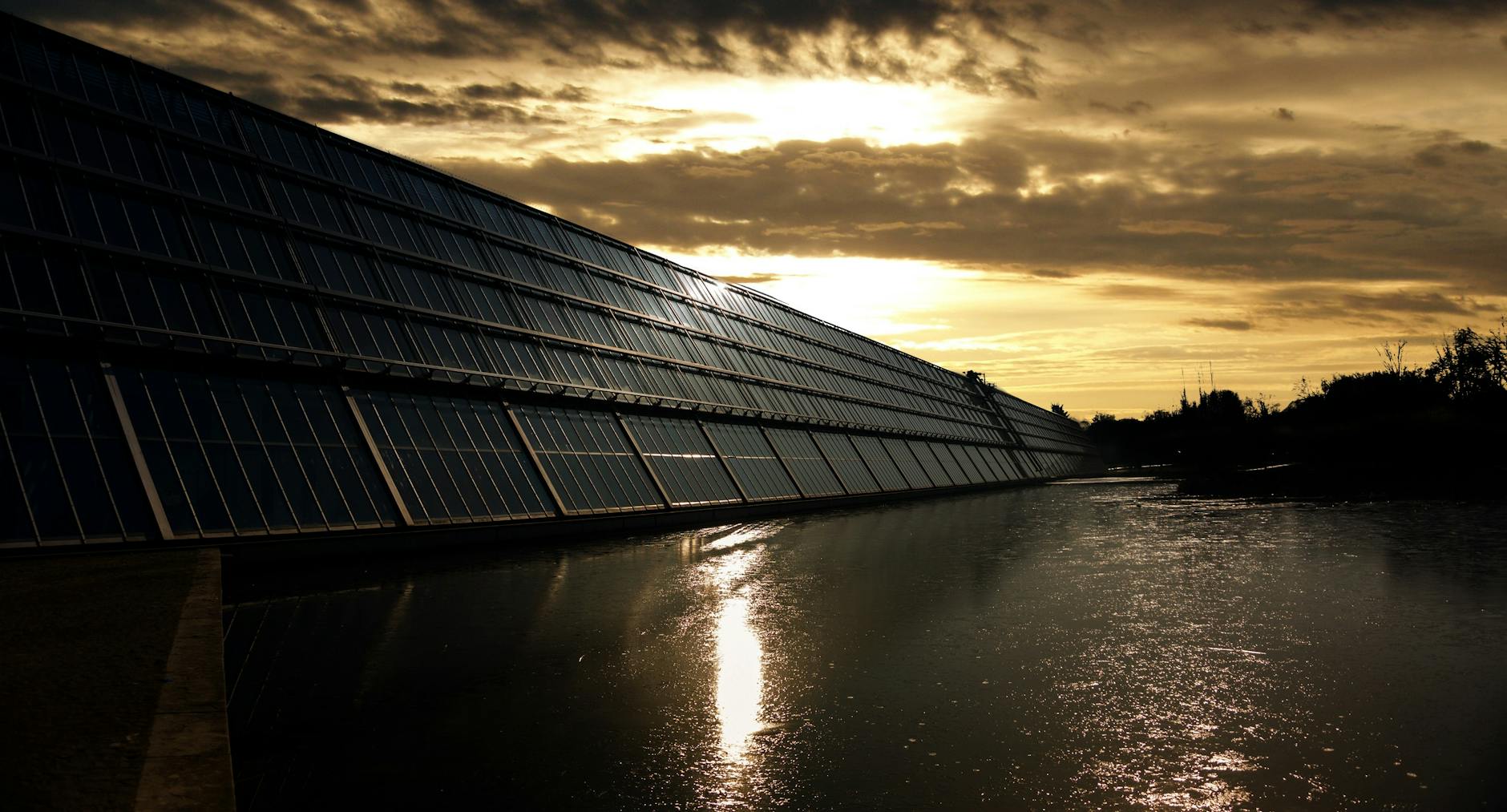
34.4 Percent. Let That Sink In.
Inside a lab at the Fraunhofer Institute for Solar Energy Systems in Germany, a small 833-square-centimeter panel just rewrote the record books. In early 2026, the Fraunhofer ISE team hit 34.2% solar module efficiency — a world record. Then, within months, they topped themselves. Their III-V germanium solar PV module, built with solar cells from AZUR SPACE and anti-reflective coatings from temicon, has now reached 34.4% efficiency — the most efficient solar module ever made. Visitors to Intersolar / The Smarter E 2026 can see it in person at booth A1.440.
That's not just a laboratory milestone. It's a signal. The world is watching solar power sprint forward on every front simultaneously — in efficiency labs, on university campuses, in national policy chambers, and in trillion-dollar investment portfolios.
Money Is Already Voting
On May 28, 2026, the International Energy Agency dropped a number that stopped a lot of people mid-scroll. According to its World Energy Investment 2026 report, global clean energy investment last year hit $2.2 trillion — nearly double the $1.2 trillion that flowed into fossil fuels. And as Ingmar Rentzhog, CEO of We Don't Have Time, noted in a June 7th Forbes essay, this isn't a sudden pivot. The trend has been building for a decade.
"The honest question is this," Rentzhog wrote: "If we add fossil fuel subsidies to fossil fuel investment, does clean energy still lead?" The answer, he argues, is still yes — though the margin narrows when you account for the enormous government subsidies still propping up oil and gas worldwide. The clean energy transition is real. It's just competing on an uneven field.
Grid Connections and Smart Policy
The UK isn't waiting around. Britain's National Energy System Operator announced this week that it has offered grid connections to 713 of 1,223 projects in its 2030 pipeline — representing 37 gigawatts of combined power capacity. The move, enabled by a reformed allocation system that replaced a bottleneck-prone "first come, first served" approach, is expected to unlock up to £40 billion in annual clean power investment, according to Reuters. Offshore wind, onshore wind, solar, and battery storage projects are all moving forward.
Meanwhile, on the other side of the world, Bangladesh just introduced a 0% tax rate for its entire solar power sector, running through 2035. Import duties, regulatory duties, supplementary duties, and advance taxes on solar components have all been cut to zero. Businesses that use solar-generated electricity can claim a 5% tax rebate against their income tax. The country is targeting 20% renewable electricity by 2030, building on a grassroots solar story that stretches back over a decade.
On the Ground, in the Parking Lot
You don't have to look at national policy to feel the shift. On the campus of Brigham Young University–Hawaii, phase two of the University Solar Project is underway. When complete, it will power 100% of the university's electricity needs — plus supply clean energy to the Polynesian Cultural Center and the Laie Hawaii Temple. The project includes ground-mounted solar arrays southwest of campus, solar canopies in the parking lot, and a battery backup system capable of keeping the lights on for five full days in an emergency. The university first kicked off this initiative in 2022, when three rooftop systems, five solar carports, and 7 MWh of battery storage already covered 39% of campus needs.
It's a quiet, practical story. But multiply it by every campus, every parking lot, every rooftop in the world, and it adds up fast.
The Bottleneck Nobody Fixed
Not every headline is triumphant. In the United States, T1 Energy CEO Dan Barcelo is sounding an alarm that, frankly, has been ringing for a decade. As PV-Tech reported following an interview with Barcelo, the single biggest drag on US solar isn't technology or cost — it's permitting. From raw material mining to grid interconnection, the regulatory maze slows everything down. With federal subsidies being cut and net metering programs under pressure, Barcelo argues the industry is heading into a post-tax-credit world without the infrastructure reforms it desperately needs.
The UK's £40 billion sprint makes the contrast sharper. The tools to move faster exist. The political will is the variable.
The Road Ahead
Even Europe's aviation sector is feeling the pressure to align, with Transport & Environment calling on the EU to ensure State Aid guidelines push airports toward zero-emission futures rather than rewarding volume-based growth and fossil fuel dependency. The clean transition, it turns out, doesn't stop at the solar panel. It runs through every system we've built.
From a record-shattering module in a German lab, to a tax-free solar market in Bangladesh, to a university parking lot in Hawaii — the solar age isn't arriving. It's already here. The question now isn't whether clean energy wins. It's how fast the systems around it can catch up.
Sign in to join the conversation.
Comments (0)
No comments yet. Be the first to share your thoughts.