Two Men Who Became Brothers in a Classroom
In a conference room in Madrid in 2017, Lionel Scaloni sat for his coaching exams. He was 29, recently retired from playing, and had no idea he'd soon be managing Argentina to World Cup glory. His instructor was Luis de la Fuente — a man who'd just left Spain's Under-19s and was still years away from the senior team.
"He gave us an enormous hand," Scaloni later said of de la Fuente. And so he did. A friendship formed in those fluorescent-lit hours — teacher and student, both products of football cultures that couldn't seem more different.
On Sunday, they'll stand on opposite sides of a World Cup final in New Jersey. The student, seeking to defend his crown. The teacher, bidding to win both the World Cup and European Championship in the same cycle.
The King Who Keeps Walking
While Spain and Argentina were cementing their bond, Lionel Messi was busy dismantling England for the second time in a World Cup semi-final. At 39, he doesn't walk like he used to. He strolls. He drifts. He appears, to the untrained eye, to be conserving energy.
England's coaching staff had a plan for that.
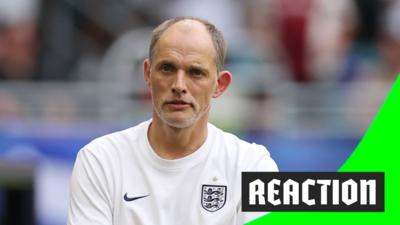
Thomas Tuchel's side pride themselves on physicality. They'd researched Messi's movement patterns, studied his declining pace, mapped out how a 39-year-old who conserves his speed might be contained. For about 25 first-half minutes, it worked beautifully. England pressed high, harried Argentina's defenders, and looked every bit the team heading to a final.
Then Messi woke up.
"He has Lionel Messi. He has the GOAT. The greatest of all time," said BBC pundit Micah Richards after Messi set up both Argentina goals in a 2-1 comeback win. "They thought it could have been Jude Bellingham or Harry Kane, but this is why he is the king."
Messi's four assists at this World Cup now sit alongside eight goals. Joint top scorer. Second-highest assister. Still the best player on any pitch he graces. "I don't know what else he would have to do to prove that," said Argentina boss Lionel Scaloni. "The majority of Spaniards love him."
On the pitch, he wasn't just playing — he was coaching. While England's players tired and Tuchel's substitutions disrupted their shape, Messi served as Argentina's on-field general, finding pockets of space, directing teammates, exploiting the exact gaps that England had left unguarded.
A Different Kind of Rivalry
England's dreams of a final against Messi ended in Atlanta. But the Three Lions still had business to attend to — and they handled it in style, beating France 6-4 in the third-place playoff. "Brilliant first half, turbulent second," Tuchel admitted. A wild game, a bronze medal, and lessons learned for what comes next.
There's something fitting, though, about England meeting Argentina again. These teams have history that stretches far beyond the pitch. Twenty-eight years ago, David Batty stepped up to take England's fifth penalty in a shootout at France 98. The ball never crossed the line. Argentina went through. Batty walked off with his head held high.
He refused to do a fast-food advertisement making light of the miss. He wouldn't profit from the disappointment of fans who'd travelled to watch. When his Leeds United teammates texted him a birthday message years later — Ferdinand, Viduka, Wilcox, O'Leary all in the same group chat — he responded with quiet warmth.
He never seemed to need football to define him.
Neither, it turns out, does Messi — though he keeps finding reasons for the rest of us to watch.
While We're At It: A Mile Record Falls
Across the Atlantic, in a London Stadium packed with 60,000 spectators, Josh Kerr did something that hadn't been done in 27 years. The Scottish miler broke Hicham El Guerrouj's world record, crossing the line in 3 minutes 42.66 seconds — nearly half a second faster than a mark set when Kerr was one year old.
He'd been planning this moment since March. On Saturday, the five-time global medallist delivered. "Unbelievable," the crowd roared.
Kerr became the seventh British athlete to claim the mile record, the first since Steve Cram in 1985.
The Final, and What's Beyond It
So here we are: Spain versus Argentina. Teacher versus student. Two men who studied together in Madrid, now separated by a trophy that neither could have imagined holding when they first met.
De la Fuente grew up in Haro, in Spain's wine country, where the annual Batalla del Vino sees thousands cover each other in red. Scaloni came up through the particular dressing-room culture of Argentine football. They share more than their faith, their families-as-teams mentality, their paths through football's wilderness before rising to the top.
They share a belief that the game still has stories to tell.
On Sunday, one of those stories ends. But watching Messi — still orchestrating matches at 39, still finding angles that shouldn't exist — it's hard not to wonder what chapters remain unwritten.
For now, the final awaits. And for the rest of us: a reason to believe that brilliance doesn't age, that teachers become champions, and that the sport we love keeps finding new ways to surprise us.
Sign in to join the conversation.
Comments (0)
No comments yet. Be the first to share your thoughts.