Insights
AI-synthesized editorial coverage of positive news from around the world

The Quiet Revolution Remaking Our World
From self-healing roads to reprogrammable optics and compostable offices, researchers worldwide are redefining what’s possible. These innovations aren’t just fixes—they’re complete reimaginings of how systems should work.
A glowing molecule that senses pressure and temperature could transform aircraft design.

Burning Scrolls, Quantum Pyramids, and Deep-Sea Giants: How Scientists Are Unlocking Secrets Across Time
From burning papyrus to mimic Vesuvius’s scrolls to launching quantum computers into orbit, scientists are decoding mysteries across time and space. Deep-sea explorers found 31 new species, while archaeologists used Ice Age spearheads to map ancient survival.
Scientists burned hand-written papyrus to recreate a 2,000-year-old disaster—and found a way to read it.

The Quiet Surge of Hope: How Underdogs Are Winning the World’s Biggest Stages
From the U.S. golf team's dramatic Presidents Cup victory to Northern Ireland's last-gasp football win and Brandon McNulty's cycling miracle, a wave of underdog triumphs is sweeping global sports. These victories—hard-earned and perfectly timed—are rewriting what’s possible.
The U.S. just won their 11th straight Presidents Cup—after trailing by 3 points going into the final day.

Mobile Batteries Cut Outage Impacts by 41% — While Earning Revenue Waiting for Disasters
Scientists made a smart plan for mobile batteries (like big ones on trucks) to help power grids survive storms. In tests, it cut power loss by 41% and sped up recovery by 3.2 hours. The system works in three steps:
41% less energy not served — and mobile batteries earn revenue while waiting for disasters.

27% More Accurate: How AI Is Sharpening Forecasts of Atmospheric Rivers
West-WRF AI 2-km is a new AI weather model that predicts storms in the western U.S. with 2-km detail—sharp enough to show how mountains affect rain. It combines global AI training with local data to improve forecasts. In tests, it cut errors in extreme moisture tracking by 27% and caught rainfall peaks others missed. Unlike global AI models that run at 25 km or coarser, this one uses 2-km data from the western U.S. to fine-tune predictions.
27% lower error in forecasting extreme atmospheric rivers
The 60-Second Algorithm That Lets Renewables Stabilize the Grid
Scientists created a smart controller that helps renewable energy plants work together like a single power plant. It uses wind, solar, and batteries to help keep the electric grid stable, even when weather changes fast. In tests, it matched power needs with 98.7% accuracy. The system updates every minute, balancing energy supply, saving battery life, and making more money. It handled big wind shifts and cloudy weather in a simulated grid. This could let clean energy replace fossil fuels for keeping the grid steady.
98.7% tracking accuracy—virtual power plants now stabilize grids like fossil plants, but cleaner.
How a New Adaptive Solver Cuts Drone Estimation Error by 60% — While Running 70% Faster
At 15 mph, a drone can crash if its position is off by just 0.3 meters. Researchers at the University of Illinois made a new method that cuts errors by up to 60% and computation time by 70%. It combines Moving Horizon Estimation (MHE) with an L1 Adaptive Optimizer. This lets the system fix its own prediction mistakes in real time, even with bad starting guesses or noisy sensors. In simulations, it beat the Extended Kalman Filter and standard MHE, reducing position errors from 0.48 meters to 0.19 meters.
0.19 meters: the new level of accuracy in drone state estimation, down from 0.48 meters.

How a 40% Drop in Battery Losses Could Supercharge Renewable Energy
Scientists made a smart controller for hybrid batteries that cuts energy waste by up to 40%. It uses math (called KKT conditions) to split work between lithium-ion and redox-flow batteries the smartest way, in real time. Unlike older methods, it doesn’t need slow, heavy computing. It’s especially good at low power, where redox-flow batteries usually waste energy. Tested in simulations and real hardware, the system helps solar farms run more smoothly.
40% less energy lost in hybrid battery systems thanks to a smarter dispatch algorithm.

The Algorithm That Learns Equations Like a Scientist
Scientists made a smart new math tool that finds better equations to predict how waves hit offshore towers. It mixes real physics with data, like giving a computer part of a rule (Morison’s equation) and letting it find the rest. The method treats equations like sentence trees, building them step by step. Unlike black-box AI, it shows its work—giving clear equations and saying how sure it is, even admitting when parts are uncertain. On real data from the North Sea, it cut errors by 40% vs. old physics-only models.
40% lower prediction error by treating equations like sentences and learning which ones best describe reality.
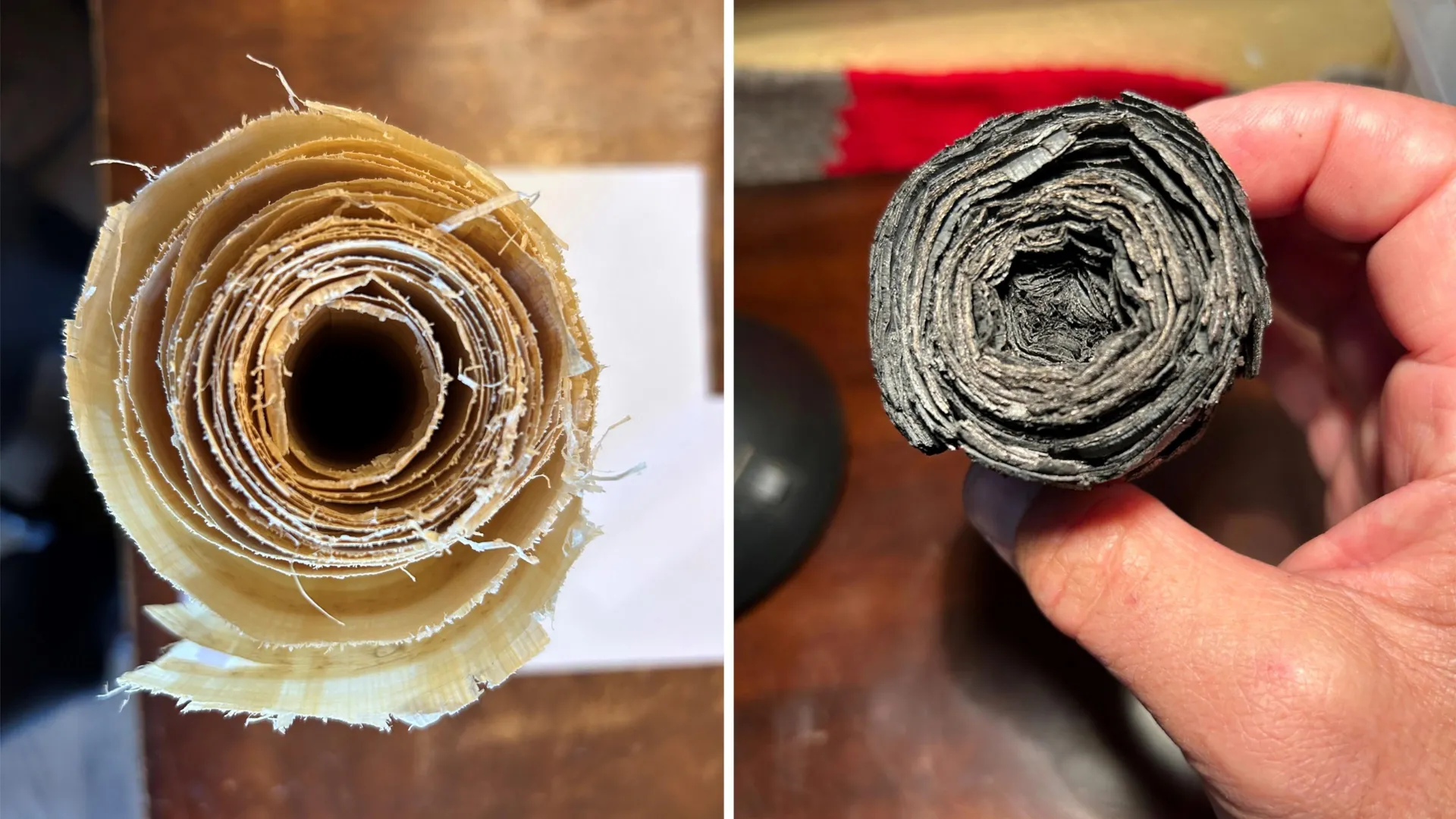
How Fake Star Wars Scrolls and Frog Skin Bacteria Are Unlocking the Secrets of Life
From burning Star Wars scrolls to decode ancient texts, to discovering a human gene that still 'jumps' in our DNA, scientists are making astonishing breakthroughs. New studies reveal bat origins, frog armor, and clues to life on Enceladus—all pointing to a deeper understanding of life on Earth and beyond.
Scientists burned Star Wars scrolls to unlock secrets of ancient Roman libraries.

The Quiet Revolution in Patient Care: How Science Is Delivering Hope Ahead of Schedule
From Houston to Sydney, researchers are turning data into lifelines. AI predicts cancer earlier, genetics ends diagnostic odysseys, and new therapies target rare diseases with precision. These advances aren't futuristic—they're happening now, reshaping patient outcomes across continents.
An AI model can predict pancreatic cancer 3 years before diagnosis—changing everything.

From Second Tier to Super League Final: How 2026 Became the Year of the Comeback
In 2026, Wakefield Trinity shocked Wigan to reach their first Grand Final, Brandon McNulty ended a 33-year American drought in cycling, and 17-year-old Shin Ohashi broke a world record post-Covid. Meanwhile, 73-year-old Mary Stevenson’s gold at the Commonwealth Games became a symbol of enduring hope.
Wakefield were in the second tier in 2024. In 2026, they're one win from a Super League title.

The World Is Full of Comebacks: How Science Is Helping Nature Return
From the rediscovery of a lost bird in West Africa to AI-protected bees and a new cat species in Bolivia, conservation science is delivering unexpected hope. Researchers are uncovering nature’s resilience—and how to support it.
A cat unseen by science for over 100 years has just been discovered in Bolivia’s cloud forests.

How 300 Girls, a Saturday Cleanup, and a Few Plants Are Quietly Changing the World
From AI classrooms in Nigeria to community cleanups in Ohio, people are reimagining education, technology, and care. Research shows digital tools and green solutions aren’t just effective—they’re empowering. The future is being built locally, inclusively, and with purpose.
300 Nigerian girls learned AI in 5 days—now they’re teaching their schools.

The Hidden Logic of Cancer’s Evolution: Why Mutation Order Shapes Tumor Diversity
New math models show the order of cancer mutations changes tumor diversity. If a strong mutation happens early, it creates many different cancer cell types, increasing variety. The same mutation late leads to one dominant type. This means tumors with the same mutations can act differently based on timing. For example, in blood cancers, a JAK2 mutation after TET2 causes worse disease. The model tracks how cells grow, die, and change over time, showing that mutation sequence shapes cancer’s structure and response to treatment.
A strong driver mutation increases clonal diversity when it hits early—but reduces it when it hits late.
Bigger AI Models Aren’t Smarter — They’re Just More Expensive
A 2026 study of DeepSeek-R1-Distill AI models (1.5B to 70B parameters) found bigger models solve harder problems, but not more efficiently. While the largest model handles problems 14 times larger, it uses just as many tokens per correct answer as the smallest. Capability grows slowly—doubling model size improves performance by only ~60%. Efficiency doesn’t improve at all: token use for correct answers stays high and scales with problem size. On tasks like math and logic, larger models fail just as often and cost just as much.
70B-parameter AI models use 50x more compute but gain only 14x in problem-solving scale.

A 15-Minute Visualization Cut Learning Gaps by 60 Points — Here’s Why That Changes Everything
In a physics class, students thought electrons moved like marbles rolling downhill. After a 15-minute 3D video showing electron behavior in crystals, that number dropped from 65.9% to 6.1%. A 59.8-point drop—no extra homework or weeks of review.
Students reduced a misconception from 65.9% to 6.1% in 15 minutes—by aligning one visualization exactly with their

How a Saturday Cleanup, a Cricket Victory, and AI Classrooms Are Rewriting the Future
From a STEM camp in Ibadan to a cleanup in Youngstown and AI workshops in public libraries, everyday people are using time, technology, and togetherness to close gaps and build resilience. Research shows these efforts boost education, health, and civic trust.
A Nigerian teen learned Python in 5 days—and it changed everything.

The 99th-Minute Miracle and Other Reasons to Believe
From a last-minute football goal in Tbilisi to a teen's world record swim post-Covid, athletes are redefining resilience. Brothers, boxers, and late-blooming champions prove that triumph comes in many forms — and often, when we need it most.
A 99th-minute goal by a brother, a world record after Covid, and a club’s rise from relegation — power is rewriting the
How Burned Scrolls, Bat Fossils, and Alien Oceans Are Rewriting Science
Researchers used charred scrolls to improve ancient text recovery, traced bat evolution to Europe 65 million years ago, mapped aardwolf chromosomes revealing unexpected feline similarities, and detected the first stellar stream beyond the Milky Way. Together, these advances deepen our understanding of genetics, evolution, and dark matter.
They burned recreated ancient scrolls to unlock lost knowledge hidden for 2,000 years.