A Spinning Atom, a Drought, and the Race to Power Tomorrow
In a laboratory in Colorado, Bennett Addison holds a printout of spectral data and asks the question he asks every researcher who walks through his door: "Did you really make what you think you made?" More often than not, the answer surprises them. They're overlooking something fundamental at the atomic level — and that oversight could mean the difference between a breakthrough battery and a dead end.
Addison runs the nuclear magnetic resonance (NMR) facility at the National Laboratory of the Rockies, where an 80-year-old technique of spinning atoms with magnets is unlocking new possibilities in batteries, semiconductors, and bioplastics. "There's almost definitely a way that NMR is useful in your field," Addison tells inventors. "You just have to go and do it."
That restless curiosity animates the entire clean energy ecosystem converging on Colorado this summer. Across four competitions and forums in the past month, researchers, students, and investors have descended on NLR — and they're not just tinkering in isolation. The lab is becoming the connective tissue between fundamental science and real-world deployment, between academic competitions and billion-dollar industries.
Last week in Green Bay, Wisconsin, a team from California Polytechnic State University took the Grand Prize at the 2026 Hydropower Collegiate Competition, having designed solutions for complex dam infrastructure challenges. In Portland, Oregon, the University of Southern California claimed victory at the Marine Energy Collegiate Competition finals, harnessing the power of ocean waves. Both teams trained under NLR's mentorship and DOE funding. Meanwhile, 45 new teams just won spots in the 2027 season — a record applicant pool, signaling that a generation of engineers is betting on water.
"These competitions transform how students think about energy," said a DOE official at the Green Bay event. "They're not just solving textbook problems. They're solving our problems."
Those problems are urgent. In Zambia — a nation that built its grid around hydroelectric dams — climate-driven droughts have pushed power cuts to 20 hours a day in the worst periods. The country isn't waiting for the rains to return. Zambia has launched one of Africa's most aggressive solar expansions, adding gigawatts of capacity in a matter of years. The lesson is stark: the energy transition isn't just about replacing fossil fuels; it's about building resilience against a climate that's already shifting.
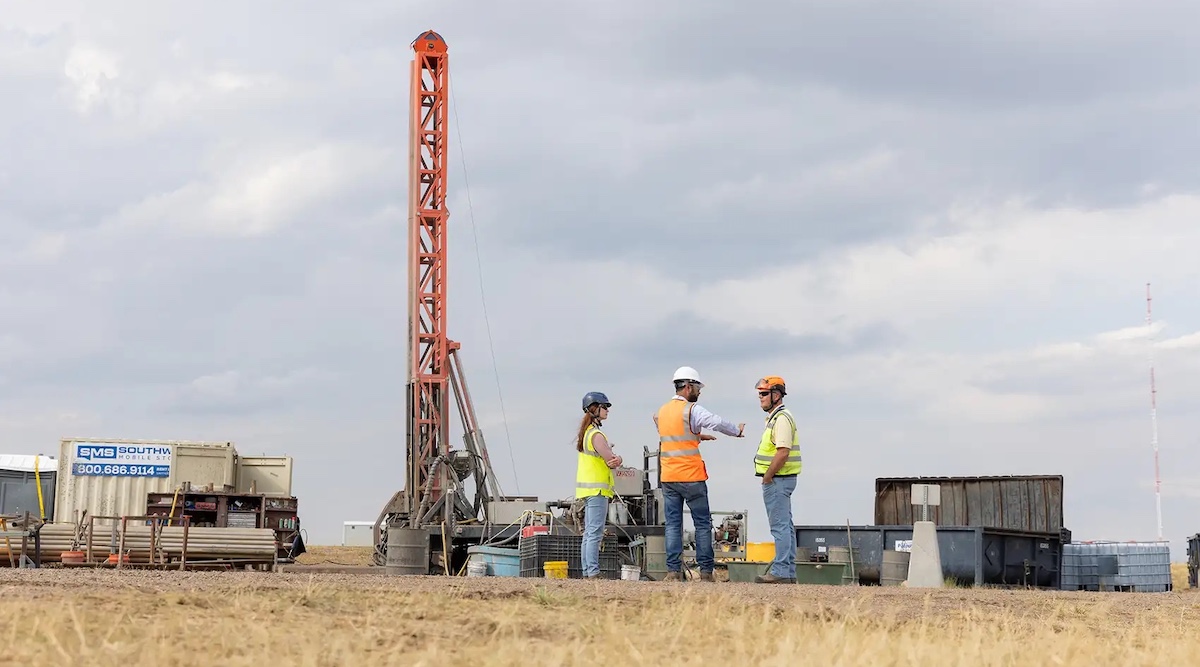
That same urgency drives geothermal companies, who are drilling deeper than ever before to tap heat stored miles underground. NLR's "Fast Lane" program has released three new technologies this month alone to help drillers go deeper, hotter, and more profitably — because as one researcher noted, the heat beneath American soil could theoretically power every home in the country.
And as energy infrastructure ages, a new challenge emerges: what happens when wind turbines, solar panels, and batteries retire? NLR just launched the T-ReX Collegiate Competition, inviting students to develop recycling pathways for components that would otherwise end up in landfills. Teams will visit the lab in person to select materials, then pitch solutions to industry judges next May.
The funding is following the momentum. This week, the Emerging Africa and Asia Infrastructure Fund signed a $50 million financing agreement with Ukko Renewable, supporting over 2 gigawatts of solar, wind, and hydro projects across Vietnam, the Philippines, and beyond. Meanwhile, across the Pacific, Chinese EV makers NIO and XPENG are posting staggering numbers: NIO's July deliveries jumped 71% year-over-year to 35,934 vehicles, while XPENG grew 4% to 38,027 — both achievements made more remarkable by an overall slump in Chinese auto sales.
But back in Addison's lab, the work begins with something smaller. A researcher brings in what they believe is a pristine semiconductor. Addison runs the NMR scan. The data tells the truth atoms always tell — whether the invention is exactly what was promised, or whether there's something entirely unexpected waiting to be discovered.
"Every time," Addison says, "we learn something we didn't expect."
That's the quiet engine driving the clean energy revolution: not just the billion-dollar deals or the record-breaking sales figures, but the persistent, patient work of people asking whether they really made what they think they made — and being honest enough to find out.
Sign in to join the conversation.
Comments (0)
No comments yet. Be the first to share your thoughts.