Insights
AI-synthesized editorial coverage of positive news from around the world

The 50-Gigawatt Bottleneck: How AI Data Centers Can Build Before the Grid Is Ready
AI data centers use huge amounts of electricity. By 2030, the US will need 50 gigawatts of new power for them—like 50 big gas plants. One building can use as much as a small city. But hooking up to the power grid takes five years or more. So, developers wait while AI grows faster.
50 GW of AI data centers needed by 2030. Grid connections take 5 years. This framework could cut that to 2.

When 300 Africans Spoke to Space: The Historic ARISS Contact That Changes Everything
On April 18, 2025, 300 young people from 38 African nations talked with NASA astronaut Nichole Ayers
300 students from 38 African nations just talked to a NASA astronaut on the ISS — here's why that matters

The First Century of Storm-Resolving Climate Science
Talk about a big leap in weather science. In France, a supercomputer spent months studying Earth's air from 1976 to 2099. It looked at tiny details, just 2.6 kilometers apart. That's fine enough to see single storms or how winds hit mountains. Even small Pacific islands' weather showed up clearly.
124 years of climate at 2.6 km resolution reveals island weather invisible to existing models.

The Wind-in-the-Forest Paradox: Why Blocking Wind in Forests Costs More Than Anyone Calculated
Norway already gets nearly all its power from hydropower. But its net-zero goals need more electricity. So it’s turning to wind power. And wind farms often go in forests. Cutting trees for wind farms is a hard choice. It pits fighting climate change against saving nature. , 2026) looked at this in Norway. It found forest wind could supply 60–90% of all onshore wind power. But excluding forests from wind farms raises costs. 5% more cost. That might sound small, but across a huge energy buildout, it matters.
60-90% of Norway's wind capacity sits in forests — and blocking it costs 0.5% per GW.
The Drones That Refuse to Fail: Why Planning for Recovery Beats Planning for Efficiency
New research from Army and university scientists shows that planning drone missions for recovery works better than just planning for speed. Drones were once sent to map disaster zones or survey farms. But threats like jamming signals, storms, or lost connections can break plans. The paper, “Planning for Mission Efficiency, Robustness, and Resilience for Unmanned Autonomous Systems (UASs) in Contested Environments,” found that efficiency isn’t enough. Robustness means keep going when hit. Resilience means recover and adapt.
Planning drone routes for maximum efficiency is the norm—but in contested environments, it may be the wrong goal

The Phantom Pathway Problem: How a New Mathematical Trick Makes Epidemic Models Dramatically Faster
During the summer of 2020, a math idea was growing. Scientists studying disease spread found a problem. Their models spent too much time tracking fake interactions. For example, with 30 connected cities, standard methods tracked 900 possible contacts, even if some didn't exist. For 100 cities, that's 10,000 tracks. Most were phantom pathways.
Models tracking only real pathways can run 10x faster than those chasing phantoms.

The Quiet Revolution: How July 2026 Became a Landmark Month for Rights
From Africa's first combined gender and child statistics forum to Lebanon's historic death penalty vote, July 2026 became a landmark month for rights. South Africa and Namibia deepened their gender equality pact, indigenous youth claimed more cultural space in Brazil, and the ICC moved its first Libya case to trial. The thread connecting them all? A global movement toward making invisible populati
42,715 fans. 100 indigenous artists. One parliament vote. July 2026 quietly became a landmark month for rights worldwide

The Curious Lab: 8 Breakthroughs That Started With Unexpected Questions
From Australian salt lakes to Greenland snow cores, researchers are finding creative solutions to big problems in unexpected places. Scientists decoded bacteria that naturally produce biodegradable plastic, discovered how bacteria "sacrifice" themselves to protect others from antibiotics, and developed sensors that work at extreme temperatures. One unexpected study even found that surfing webcams
A grad student watching surfing webcams accidentally created a fog-measuring tool—here's what's next for creative scienc

When Barriers Come Down: The Week Human Potential Exploded
This week saw Spain crowned world champions in a dominant 2026 World Cup final, but the most powerful stories ran deeper: the two managers were once classmates in a coaching classroom, Josh Kerr shattered a 27-year mile world record in London, and Nigeria announced $3.05 billion in poverty-reduction programs—each a reminder that when barriers come down, human potential explodes.
Spain won the World Cup. But the real story this week was everything else that broke open.
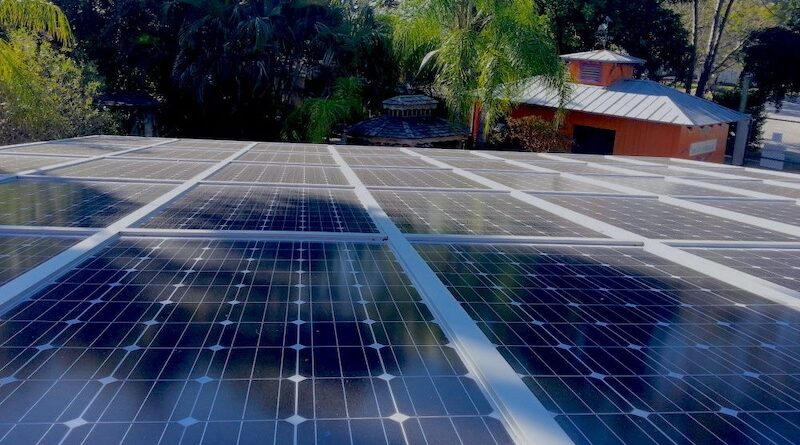
The Energy Transition Hits Its Stride: 6 Records Broken and 3 Continents Moving at Once
Solar and storage captured 91% of new US grid capacity in Q1 2026 and outperformed coal for the first time in May. Virginia, the Philippines, and Australia are tackling the same challenge differently—by building fast, electrifying ports, and requiring data centers to bring their own clean power. The transition is uneven and incomplete, but the momentum is real.
A coal plant in the Philippines was just demolished to make room for batteries. It's one of 47 signs the energy transiti

The Smartening of Medicine: 8 Studies That Reveal a Health Revolution
Scientists are reshaping medicine with faster cancer treatments, smarter risk predictions, and groundbreaking discoveries about why diseases strike specific body parts. From FLASH radiation therapy that fires in less than a second to the revelation that 60% of Sjögren's cases may be driven by a single inflammatory molecule, researchers are moving toward precision medicine that targets the right pa
A radiation beam fires for less than a second—and cancer patients feel relief that lasts.

The Chip That Predicts Before It Measures: How a 1950s Math Trick Could Power the IoT Revolution
Your watch tracks your heartbeat. A patch on your arm checks blood sugar. A sensor in your home listens for smoke. All these gadgets share a hidden job: turning smooth real-world signals into digital code that chips understand. This work needs an analog-to-digital converter (ADC), and ADCs use lots of power.
Cutting sensor power by 50% with math that predicts instead of measures
The Factory That Knows Itself: Inside the Smart Manufacturing Revolution
A review paper explains how factories are getting smarter using connected machines and data. The Internet of Manufacturing Things (IoMT) means machines predict when they'll break, products report if damaged, and supply chains reroute before problems hit. Over $70 billion has been invested worldwide. Large factories could save millions. But cybersecurity risks
A factory that orders its own parts when it senses wear. A supply chain that reroutes before congestion hits. Smart
The Green Roof Reality Check: What New Zealand's Cities Can Actually Expect
A New Zealand study looked at green roofs—roofs covered with plants. It found they don't cut yearly energy bills much. In Auckland, savings are about 3% now, maybe 3.3% by 2050. Christchurch saves 2.3%, rising to 2.6%. Wellington saves just 1.5%, dropping to 1.1%.
Green roofs save just 1.5-3.3% of annual energy—but up to 9% of summer cooling in Auckland by 2050.

The Hidden World: Eight Scientific Breakthroughs That Rewrote the Rules This Year
In July 2026, researchers worldwide published discoveries spanning bacteria that sacrifice themselves to fight antibiotics, a new monkey species called Likweli in the Congo, 40-year-old air from Greenland revealing industrialization's impact, and breakthroughs in early skin damage detection. These eight findings share a common thread: each challenged assumptions that had gone unquestioned for deca
Scientists just confirmed a new monkey species—only the 5th African monkey discovered in 75 years—and that's just one of

The Night Messi Reminded Us Why the Story Never Ends
Spain won their second World Cup in 2026, beating Argentina 1-0 after extra time in New Jersey. The tournament's real story was Lionel Messi at 39 — still magnificent, still impossible to defend. Ferran Torres scored the winner as Spain dominated with 65% possession and just one goal conceded across the entire tournament.
At 39, Messi was supposed to be done. Then he dismantled England and sent Argentina to the final.

The Week Medicine Learned That Less Can Be More
Researchers discovered that strategic restraint is transforming cancer care: FLASH radiation treats in a fraction of a second, a major trial showed myeloma patients can safely stop chemotherapy after two years without losing survival benefit, and computational 'virtual tumors' predict immunotherapy response before treatment begins. A University of Manchester study also found that home visits withi
A cancer treatment that lasts less than a second, chemotherapy you can safely stop after two years, and virtual tumors t

Counting What Counts: How Africa Is Making Women and Children Visible in 2026
From Pretoria to Yaoundé to Lagos, Africa is counting what counts. In July 2026, South Africa and Namibia signed a landmark gender equality agreement while the first-ever African Forum on Gender and Child Statistics convened to ensure women and children are visible in the data that shapes policy. Financial institutions including Access Bank and Comercio Partners announced major funding initiatives
In July 2026, Africa made a quiet promise: no woman or child would be invisible anymore.

The Mathematics of Equality: Why Targeted Redistribution Outperforms Equal Dividends
In 2014, a village in Brazil's Minas Gerais state tried something. They split tax money two ways. Half went equally to everyone. The other half went more to poor homes. After two years, inequality dropped. Was it luck or a real pattern?
Progressive redistribution cuts inequality 15-27% more effectively than equal splits—a mathematical proof with

The Shape of Selection: How Clipping a Population's Upper or Lower End Predicts Its Evolutionary Future
Fishermen have been running a big evolution experiment for centuries without knowing it. By catching the biggest fish, they make small fish more likely to survive and pass on their genes. This is a clear example of "unnatural selection." But until now, no one fully understood how removing fish again and again changes a population over time.
Clip the big fish or the small ones—same ocean, same species, but mathematically opposite futures for your population.