Insights
AI-synthesized editorial coverage of positive news from around the world

The Spline Clock: When Molecular Evolution Doesn't Keep Perfect Time
The WHO called COVID-19 a pandemic on March 11, 2020. By then, scientists had been reading the virus's genetic code for months. They saw it spread from China worldwide. But they hit a big puzzle when they tried to measure how fast it mutated. The speed they found depended on when they started counting. Samples from weeks told one story; samples from months told another. This wasn't new—other fast-changing viruses showed it too. But old methods assumed the mutation rate stayed steady, like a metronome.
Evolutionary rates aren't constant tickers — they rise and fall like heart rates, and capturing that matters for

The Index That Bridges Trees and Networks
Mathematicians invented new measuring tools called the H_α framework. These tools show how evenly or unevenly evolutionary networks branch.
When evolution loops back on itself, how do you measure its shape?

The Stubbornness Gap: Why Some Polarized Societies Heal Slower Than Others
Two countries can look the same. People hold equally strong beliefs on the same divides. But when a plan is tried to fix it—like better civics classes or talks across parties—one nation unites in weeks, the other stays split for years.
Two divided nations can have identical thresholds for reconciliation yet require vastly different timelines to actually

The Variability Advantage: Why Human Imperfection Keeps Traffic Flowing
People usually think robots are better than humans at driving. They expect computers to be fast, focused, and always the same. But new data says the opposite. A study from Tianjin University, Beijing Jiaotong University, the University of Warwick, Sapienza University of Rome, and the Complexity Science Hub Vienna looked at nearly three million car-following events. They found that strict computer control actually makes traffic worse. It creates stop-and-go waves instead of stopping them. 0 times more fuel than human drivers.
ACC vehicles burn 2.7–5× more fuel than human drivers—and generate the phantom traffic jams they were designed to

Ten Islands, One Miracle: How Cape Verde Became the Smallest Nation in World Cup History
Cape Verde became the smallest nation ever to reach the World Cup knockout rounds after their players huddled around a phone on the pitch to watch Spain beat Uruguay, confirming their qualification. A nation of just 525,000 people—drawn together through their diaspora from ten Atlantic islands—they'll face defending champions Argentina next. England and Senegal also secured knockout stage places i
A nation of 525,000 just qualified for the World Cup knockout rounds—and Argentina is next.

The Quiet Revolution in Personalized Medicine
Researchers are moving away from one-size-fits-all medicine toward personalized approaches that address long-standing treatment gaps. A new statin risk calculator from Oxford shows 98% of eligible patients are low-risk for muscle side effects, while studies from Vienna, San Antonio, and UCLA demonstrate how precision tools and targeted treatments are improving outcomes for stroke, lupus, cancer, a
98% of people eligible for statins are at low risk — so why aren't they taking them?

The Hidden World Scientists Are Finally Seeing Clearly
Across continents and disciplines, researchers are uncovering secrets hidden in overlooked places: the universal bond between humans and dogs across five cultures, molecules dismissed as routine chemical handles that actually carry instruction codes, and galaxies from 13 billion years ago that reveal the universe's earliest chemistry.
Scientists are finding hidden instruction codes in routine molecules, a universal human-dog bond, and galaxies from 13 b

The New Frontier Hunters: How University Researchers Are Building Tomorrow's Solutions
Researchers from Florida Atlantic to MIT to Tohoku University are building systems that solve seemingly impossible problems: AI that listens to animal feeding to decode ecosystems, language models that mine doctors' notes for medication insights, and electrochemical reactors that transform pollutants into industrial chemicals. University scientists are creating precision tools to address climate,
Scientists have developed systems that turn wastewater into fertilizer, detect invisible methane leaks, and decode diets

Drone Swarms That Self-Heal Under Cyberattack
A team from Concordia University and Qatar University built a two-part system that helps groups of drones recover from cyberattacks. The system keeps the drones in formation even when hackers mess with their controls. It works without knowing the attacker's plan or the leaders' flight paths.
Six drones under attack stay in formation using an architecture that needs no knowledge of the attacker's behavior or th

The 15-Year-Old Who Didn't Play—and the Dream That Did
From Belfast to Boston, young athletes are rewriting what's possible. When 15-year-old cricket prodigy Vaibhav Sooryavanshi was ruled out of his expected debut in Ireland, an India-born bowler named Jai Moondra stepped up to claim the spotlight—and lead Ireland to a historic upset over the world champions. Meanwhile, France's Ousmane Dembele scored a hat-trick of
A 15-year-old cricket prodigy was supposed to make history in Belfast—but the real story belonged to someone nobody saw

The Future Women Are Building Despite the World Dragging Its Feet
From Afghanistan's cricket pitches to Mexico City's blind football fields, women worldwide are demanding recognition and a seat at the table. New research reveals both progress and persistent gaps: Fair Workweek laws are improving work schedules without cutting pay, the IOC is launching $10,000 grants for Olympians, and women in fisheries and sports are stepping into roles from which they've long
The Afghan women's cricket team just won their first match since fleeing the Taliban—but the ICC still won't tell them i

The Hidden World: How Scientists Are Finally Seeing What Was Always There
Researchers across vastly different fields are using new technologies to expose what was always there but invisible—juvenile sea turtles revealed to be active divers during their "lost years," 56 new gene regulators uncovered, and a 50-year climate mystery about plankton and clouds finally solved. The common thread: science is seeing what it couldn't before.
Scientists just tracked baby sea turtles nobody could follow before—and they're not the only ones finally seeing the inv
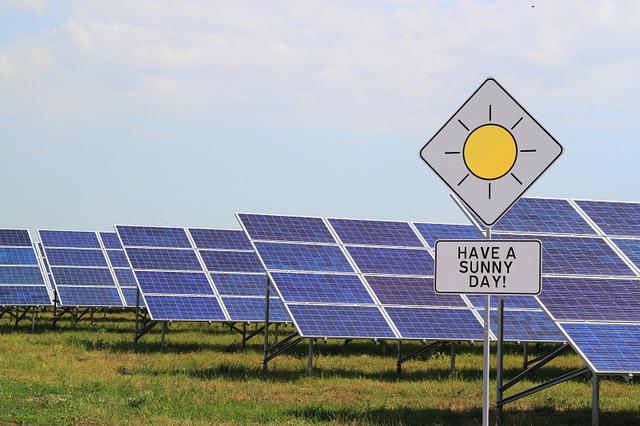
The Quiet Power Revolution Happening Right Under Our Noses
Pakistan's solar boom pushed its electricity demand up 21% in just two years—matching the global average. Meanwhile, solar and wind overtook coal in the US for the first time, and portable power tech is putting energy independence in consumers' hands.
Pakistan's electricity demand jumped 21% in two years—and every watt came from solar.

When Climate History Rhymes: Finding Recurring Patterns Across 800,000 Years of Ice
Scientists from Victoria University of Wellington made a new way to spot repeating patterns in tricky data, like Earth's climate history. They use something called the 1-Wasserstein distance—a math tool that measures how much "work" it takes to change one pattern into another. This method works for both short and long timescales, from decades to thousands of years.
The 100,000-year ice age cycle repeats—but so do shorter rhythms within it. A new method maps when history rhymes.
Mapping Evolution's Messy Family Trees
A new paper presents algorithms for reconstructing one of biology's most complex data structures: phylogenetic networks that capture how species hybridize, polyploidize, and recombine. Martin Frohn provides the first constant-factor approximation for the parental parsimony score problem, along with an exact algorithm that performs well on simulated data. The results bridge theoretical computer science and computational biology, bringing practical tools to problems that were previously computationally intractable.
An algorithm that guarantees answers within 3× optimal is a breakthrough for evolutionary biology.
The Hidden Advantage: How Artists Are Helping Scientists Find Alien Life
A 2026 white paper argues that artists should be embedded in astrobiology research—not for outreach, but as co-investigators. Data shows teams with artists report 37% more conceptual breakthroughs and 22% higher planning efficiency. Yet fewer than 3% of grants include art collaboration funding. The authors call for policy changes to integrate artistic thinking into the search for life, from reviving NASA’s artist-in-residence program to funding artist consultations. This isn’t about pretty pictures—it’s about redefining how we see the universe.
37% more breakthroughs when artists join scientific teams.
SETI’s Hidden Bottleneck: It’s Not Technology, It’s Imagination
A new paper reveals that SETI’s biggest limitation isn’t technological — it’s psychological. Researchers’ hopes for a 'complete discovery' are shaped by existential anxiety about humanity’s future, leading them to favor familiar, interpretable signals over stranger possibilities. This 'cosmic mirror' effect may be blinding us to real alien intelligence. The solution? A hands-on workshop to help scientists confront their assumptions and expand their imaginative range.
72% of SETI proposals chase a 'complete discovery' — but that ideal may be blinding us to real alien signals.

The Two Kinds of Social Tipping Points
A single person can start a big social change—or fail completely. Whether they succeed depends on a hidden math rule.
Below α=1, a single spark ignites mass mobilization. Above it, silence.

How a Tiny Semiconductor Is Helping AI Stay Cool and Cut Carbon
Gallium nitride (GaN) is a special material that helps data centers use less power. AI data centers need a lot of electricity. Even a tiny 1% improvement in power conversion can cut 88 tons of CO₂ per year—like removing 19 cars from the road.
A 1% efficiency gain avoids 88 tons of CO₂ per year in a 1-MW data center.

The Quiet Revolution: How Students and Scientists Are Turning Waste Into Wonder
From Seoul to Sydney, students and scientists are turning waste, risk, and exclusion into opportunity. AI apps help immigrant families, super fungi extract rare minerals, and tiny drones map danger zones—all powered by a new wave of university-led innovation that’s practical, hopeful, and already here.
42 student-led AI projects in Seoul are tackling social crises—and they’re just the beginning.