Insights
AI-synthesized editorial coverage of positive news from around the world

The AI That Reads Your Gut Like a Clinician: A Smarter Way to Review Capsule Endoscopy
Capsule endoscopy — swallowing a tiny camera to screen the gut — produces 8–12 hours of video with up to 100,000 frames, yet fewer than ten may contain clinically meaningful findings. A new framework called DiCE mirrors how gastroenterologists actually read these studies: first screening broadly, then grouping lesion events into contexts, then converging evidence across frames for a stable diagnosis. Tested on VideoCAP, the first dataset built directly from real clinical reports, DiCE consistently outperformed state-of-the-art long-video AI models on every metric.
100,000 frames, fewer than 10 matter — new AI finds them by thinking like a gastroenterologist.

A Simple Calibration Trick Makes AI-Assisted Science Far More Reliable
Modern science increasingly blends expensive human-labeled data with cheap AI predictions. But when an AI model's numbers are on the wrong scale, statistical estimates suffer — even if the model ranks things correctly. Van der Laan & Van der Laan (2026) show that a quick calibration step, requiring no retraining, can shrink confidence intervals by up to 17% and formally prove that isotonic calibration is first-order optimal among all monotone transformations of a prediction score.
17% shorter confidence intervals — just by rescaling an AI score before plugging it into stats.
The 8× Efficiency Trick That Could Make AI Fine-Tuning Far Cheaper
Fine-tuning large AI models for specific tasks is expensive — but a new method called GiVA cuts that cost dramatically. By initializing adaptation matrices using the gradient of the first training step, GiVA reduces rank requirements by 8× compared to existing vector-based methods, achieving training speeds comparable to the popular LoRA approach. Tested across language understanding, math reasoning, code generation, and image classification, GiVA consistently matches or outperforms its competitors.
GiVA slashes fine-tuning rank requirements 8× — matching LoRA speed with far fewer trainable parameters.
AI Can Now Feel the Rhythm of Time in Videos — and Manipulate It
For the first time, AI models have been trained to treat time itself as a learnable visual concept in video. Using only the natural structure of video — no human labels — the system can detect when footage has been sped up or slowed down, estimate exact playback speeds, and generate new video at a specified temporal pace. The researchers also used their models to curate the largest slow-motion video dataset ever assembled from raw internet footage, unlocking a new tier of temporal detail for future AI training.
AI trained with zero human labels can now detect video speed changes and generate slow-motion from scratch.

The Shortcut Through Shape Space: A Smarter Way to Generate Molecules with AI
AI models that create molecules waste a lot of effort learning to spin and move them, even though those actions don't change the molecule's real shape. Researchers from Peking University, Xi'an Jiaotong University, and Microsoft Research Asia fixed this. They built diffusion models in a math space where these useless rotations and shifts don't exist. This made the models 9–23% better on standard tests. Also, a protein design model with only 60 million parameters beat a 200-million-parameter rival on most key scores.
9–23% better molecule generation — just by teaching the AI to stop rotating in circles.

The AI That Reads the Whole Story: A Smarter Way to Extract Events from News
When disaster strikes, the ability to rapidly pull structured facts from news reports — who was involved, what happened, where, when, and why — could save lives. A new system called MODEE combines large language models with graph neural networks to extract these "5Ws" from documents more accurately than any existing approach, including models 100x its size. It works across any event type, without needing predefined schemas, and generalizes to specialized domains too.
MODEE beats 70B-parameter LLMs at event extraction using a model a fraction of the size.

The AI System Catching Financial Failures Before They Cost Millions — in 3.5 Minutes
When Alipay's systems accidentally applied a 20% discount to every transaction in January 2025, even a 5-minute window could have cost $40 million. TingIS, a new AI-powered incident detection system, is built to prevent exactly that. By sifting through 300,000 daily customer complaints, it identifies genuine system failures from just a handful of noisy messages, achieving a 95% detection rate for high-priority incidents with a P90 alert latency of just 3.5 minutes.
3 complaints in 3.5 minutes: how AI stops a $40M financial disaster before it happens.

The Microchip Revolution Quietly Reshaping Everything From Your Heart to Deep Space
MIT built a chip to protect pacemakers from quantum hackers. Researchers made AI 70% more energy efficient using neuron-inspired hardware. A 64-gram origami antenna could unlock deep-space CubeSat missions. These eight breakthroughs share one thread: nature is the best engineer.
A 64-gram antenna folded like origami just changed what's possible in deep space.

The Week Science Rewrote Deep Time — From Giant Octopuses to Alzheimer's Breakthroughs
This week in science delivered eight stunning findings: giant prehistoric octopuses as apex predators, 700,000-year-old African tools in Europe, a hidden earthquake phase, and a quantum clue to life's oldest mystery. UC Irvine also identified a new dopamine-linked mechanism behind Alzheimer's memory loss. It's a rare week when deep time and the human brain make headlines together.
100 million years ago, giant octopuses ruled the ocean — and science just proved it.

The Neighbors Who Showed Up: How Ordinary People Are Rebuilding Community From the Ground Up
A teen ambulance crew in New York, 300 home-repair volunteers in Florida, a grief-fueled supercar charity in England, and cacao farmers defending Bolivia's rainforest — these stories share one thread. Around the world, people are choosing to show up for their neighbors in ways big and small, and the data backs up what it means.
Teenagers in a small New York town took over running the entire local ambulance service during COVID.
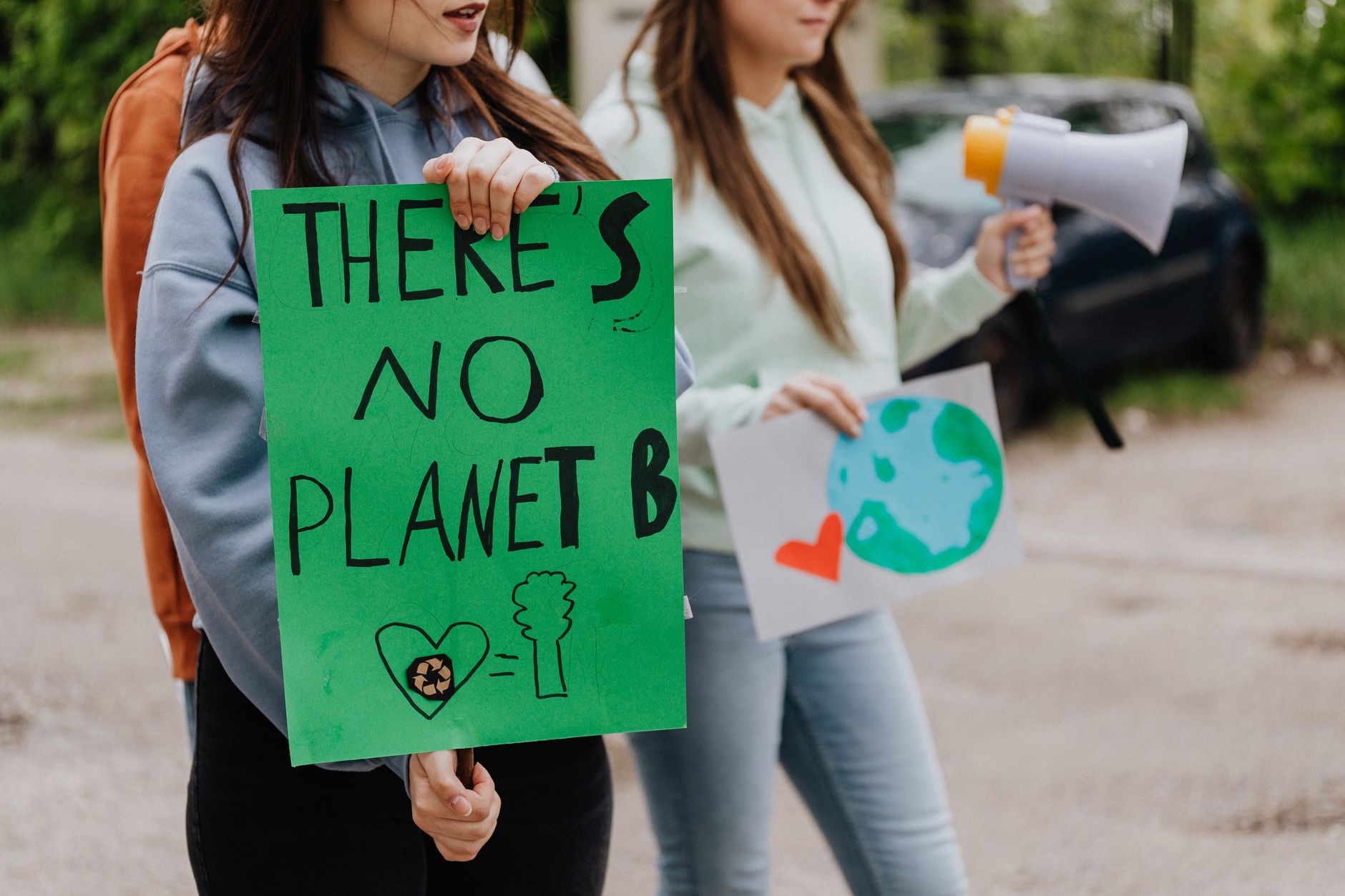
The Planet Is Sending Signals — and We're Finally Learning to Listen
A rat trap in Madagascar, a clothing swap in Stockholm, and a landslide in New Zealand all point to the same truth: the planet is sending urgent signals — and humans are finally building the tools to respond. New research on forests, wetlands, microbiomes, and farming is converging into a clearer, more hopeful picture.
A rat in a trap in Madagascar may hold the key to the next pandemic — and to saving forests.
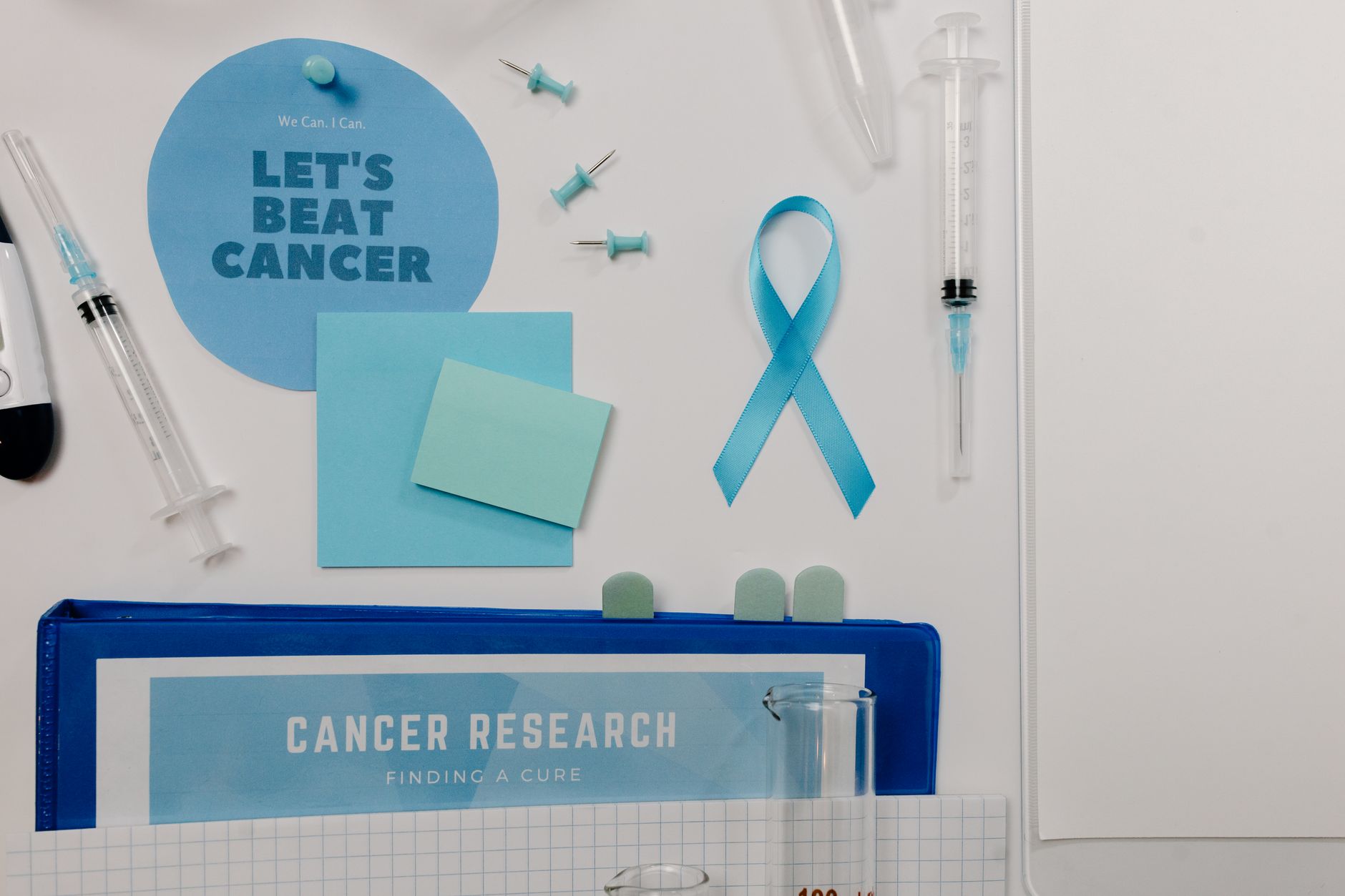
Your Body Knows More Than Your Doctor's Chart: Eight Breakthroughs Rewriting Modern Medicine
From a microfluidic device that squeezes breast cells to detect cancer risk, to blood biomarkers linking diabetes to Alzheimer's in Latino adults, a wave of new research is rewriting how we understand the body's early warnings. Studies also reveal that brief everyday movement rivals structured exercise, and that ADHD traits can amplify chronic pain through anxiety. The future of medicine is precis
Scientists squeezed individual breast cells to predict cancer — and it worked.

The "Batch Effect" Curse That Breaks AI Drug Discovery — And How Control Samples Finally Fix It
A persistent problem in AI-assisted drug discovery is that models trained in one lab fail badly when run in another, thanks to invisible technical noise called batch effects. Sanchez-Fernandez et al. (2026) propose CS-ARM-BN, a method that adapts in real time using negative control images already present in every experiment. Tested on a large-scale cell-painting dataset, their approach recovers near-training-level accuracy of 93.5% — up from 86.2% without adaptation. It works even across lab sites with strong domain shifts, requiring no new data collection.
AI accuracy drops from 93.9% to 86.2% when tested on new lab batches — a gap now finally closed.

The Shape of a Heartbeat: How Topology Is Revealing the Best Way to Rewire a Failing Heart
Cardiac resynchronization therapy saves lives, but cardiologists still debate where exactly to place the pacing lead. A new study applied the Mapper algorithm — a tool from abstract mathematics — to hemodynamic data from pigs with induced heart failure, and found that pacing the heart's basal region produced dramatically more coherent, connected responses than mid-wall or apical pacing. Endocardial stimulation sharpened these regional differences even further. The findings suggest topology could become a powerful new tool for personalizing heart failure treatment.
Pacing the base of the heart scored a self-connectivity index of 0.57 — four times higher than mid-wall pacing.

The Robot That Learns How You Move — and Gets Out of Your Way
Most collaborative robots treat every human worker the same way, optimizing schedules without caring about where you walk or adapting your paths without caring about the bigger task picture. RAPIDDS, from MIT's CSAIL, fixes this blind spot by learning both your spatial habits and your task timing simultaneously. In a 32-person user study, it outperformed non-adaptive systems on efficiency, proximity safety, perceived fluency, and outright user preference.
32 people worked beside a robot arm — and preferred the one that silently learned their habits.

FASTER: Teaching Robot Brains to Think Smarter, Not Harder
The most capable robot learning systems today work by imagining many possible actions and picking the best one — a powerful but expensive process. FASTER teaches AI to spot losing action candidates before the thinking is even finished, cutting both training and inference costs while matching or beating state-of-the-art performance. Tested on complex, long-horizon robotic manipulation tasks, FASTER consistently outperforms competing methods. Applied to a pretrained vision-language-action model, it achieves equivalent results with substantially lower compute requirements.
FASTER matches top-performing robot AI at a fraction of the compute cost.
Encryption Didn't Fail Signalgate — The Humans Using It Did
When US officials accidentally added journalist Jeffrey Goldberg to a Signal group discussing live military strikes on Yemen, encryption was working perfectly — and it didn't matter at all. A formal mathematical analysis by Chiodo et al. (2026) uses process calculus to prove the information leak was structurally guaranteed. The deeper finding: power imbalances, false confidence in security tools, and a culture of bypassing institutional process made genuine operational security impossible regardless of which app was open on the screen.
Signal's encryption is unbroken. The humans using it broke everything else.

The Lab Bench Is Becoming the World's Most Powerful Policy Tool
Scientists are engineering bacterial proteins to secure rare-earth supply chains, printing artificial neurons that activate real brain cells, and folding antennas into shoe-box satellites. Meanwhile, MIT's fusion magnets are pulling double duty for geothermal energy, and China just revived century-old grid technology for the renewable age. The lab bench, it turns out, is the world's most powerful
Artificial neurons can now fire so realistically they activate living brain cells — and that's just one of eight breakth

One Weekend, Eight Stories: The World of Sport Is Alive and Racing Forward
A Kenyan double at the 130th Boston Marathon, Man City surging to the top of the Premier League, Chelsea committing all WSL games to Stamford Bridge, and England handing a debut cap to Millie David — one week of sport delivered headlines in every direction. Hearts are somehow still leading the Scottish Premiership with five games to go.
Two Kenyans won the Boston Marathon — and that was just the start of the weekend.
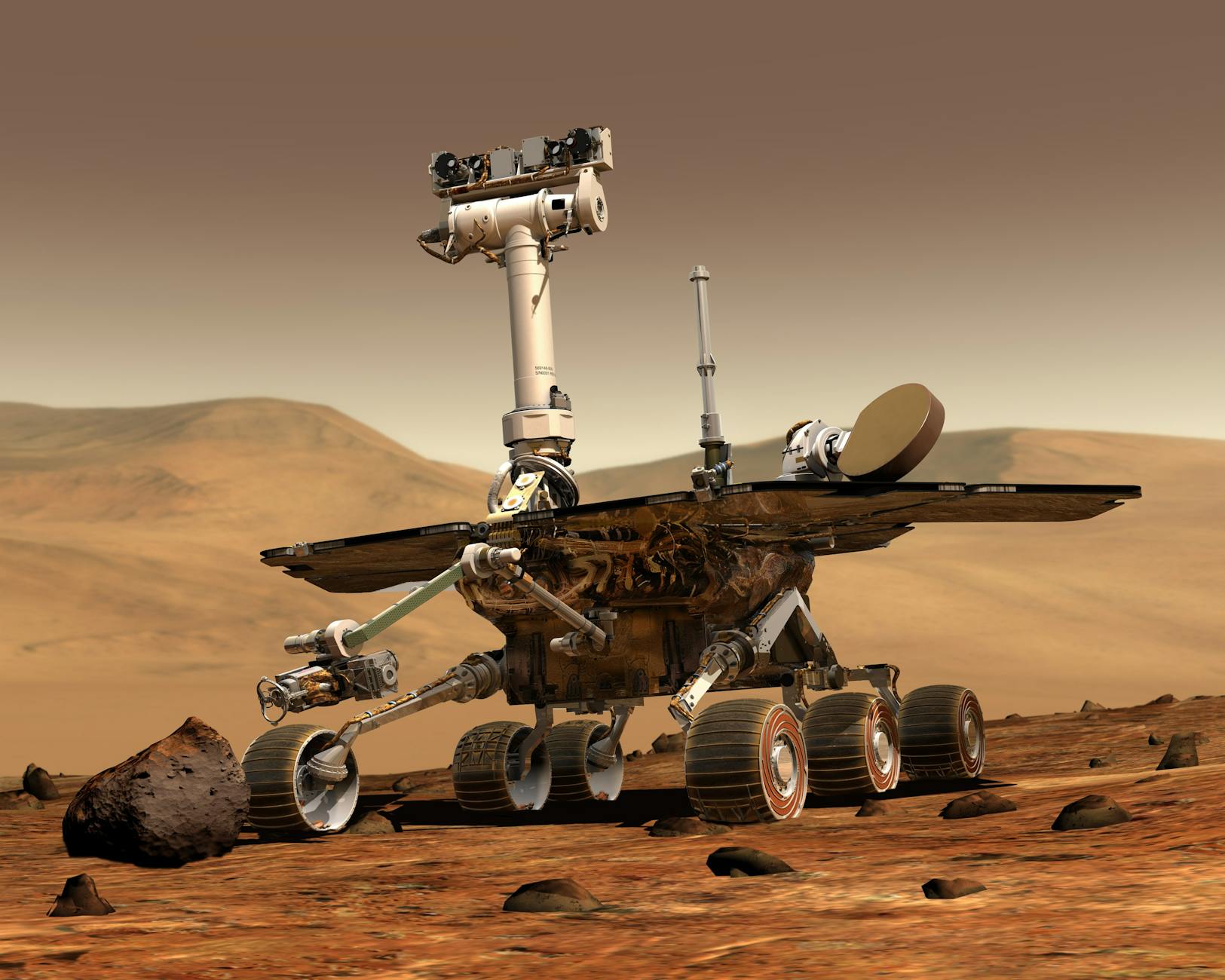
Eight Breakthroughs Rewriting What We Know About Earth, Life, and the Cosmos
Scientists this week cracked open familiar questions and found stunning depth: a quantum explanation for why life prefers one-handed molecules, a molecular switch driving cancer progression, flexible brain neurons that rewrite neuroscience dogma, and a Martian lakebed confirmed by metal-rich rock. Plus: El Niño predicted 15 months out, ancient hominins in Iberia 700,000 years ago, and a penguin's
A cancer switch, a Martian lake, and a penguin's secret muscles walked into the same week of science.