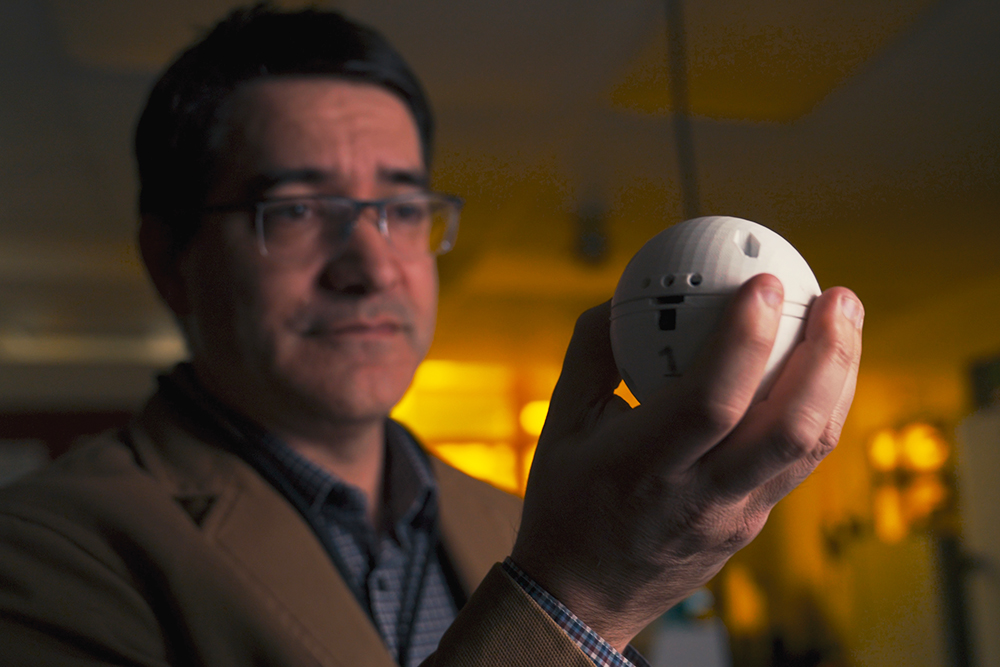
Imagine throwing a small ball into a dangerous room and knowing within seconds whether the air is safe to breathe. That's the idea behind a new device created by researchers at MIT Lincoln Laboratory in Lexington, Massachusetts.
The sensor is roughly the size of a baseball and weighs about as much as a water bottle. But don't let its small size fool you — this little device could one day help save lives. Researchers there built TOSSIT, which stands for Tactical Optical Spherical Sensor for Interrogating Threats. The technology is designed to detect hazardous vapors and tiny particles floating in the air — the kind that could come from nerve agents, fentanyl dust, or chemical accidents.
Right now, soldiers, firefighters, and police officers sometimes walk into situations without knowing if the air around them is dangerous. TOSSIT aims to change that. Users can toss it by hand, drop it from a drone, or launch it into a space they want to check. Once inside, the sensor samples the air and uses a tiny camera to watch for color changes on a special dye card inside the device. If certain chemicals are present, the card changes color and the sensor sends an alert through an app or sounds an alarm.
Richard Kingsborough, the lead researcher on the project, said TOSSIT fills a gap that has existed for a long time. It gives military members and first responders a low-cost way to detect vapors and solid aerosol threats — think toxic dust particles — that smaller sensor systems normally cannot pick up.
After years of testing the device in real-world conditions, the technology is now being transferred to the U.S. military. That means it could soon be used by actual service members in the field. The removable dye card makes it easy to replace after each use, which helps keep costs down.
Chemical threats are a real concern for the people who protect and serve communities every day. Having a tool that can quickly and safely assess danger before anyone steps in could make a significant difference in emergency situations.