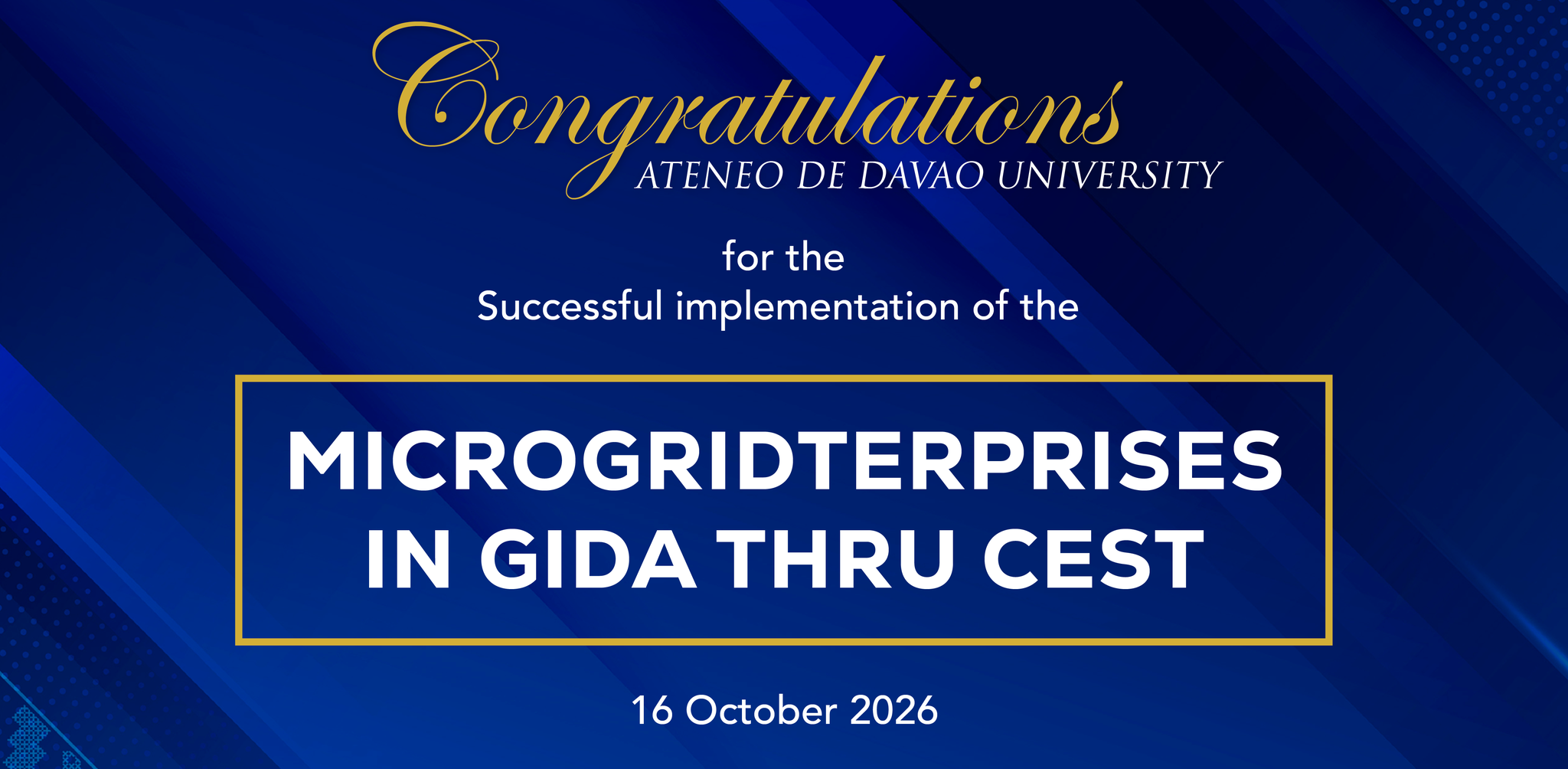
Dr. Renyl B. Barroca stood under the bright lights of the SMX Convention Center Davao, holding a framed certificate as applause filled the room. On October 16, 2026, Ateneo de Davao University took home the DOST Community Impact Award for its work bringing solar power and new livelihoods to some of the most remote corners of the Davao Region. The recognition wasn’t just for technology — it was for hope, powered by science and shared with communities long left in the dark.
The award honored the university’s role in the MICROGRIDTERPRISES project, a bold initiative that pairs renewable energy with economic opportunity. In areas where electricity lines never reached, especially in Indigenous Peoples’ villages, this project is changing lives. It’s not just about flipping a switch — it’s about lighting homes, charging phones, running small farms, and opening new doors for people who’ve been overlooked for too long. Energy access is a basic need, but here, it’s also a launchpad for dignity and self-reliance.
MICROGRIDTERPRISES — short for Microgrid Renewable Energy Systems and Agri-Agro Microenterprises in Geographically Isolated and Disadvantaged Areas — installs solar-powered microgrids in off-grid communities. But it doesn’t stop there. Alongside the solar panels and batteries, the project helps locals start small farming businesses. These microenterprises grow food, process crops, and create income — all powered by clean energy. The project runs under DOST’s Community Empowerment through Science and Technology (CEST) program, which focuses on helping low-income communities rise through innovation. A key moment came on July 26, 2024, when DOST Region XI and several universities, including Ateneo de Davao, signed a formal agreement in Davao City to make the vision real.
Two leaders from the university were personally recognized: Dr. Renyl B. Barroca, Dean of the School of Engineering and Architecture, and Dr. Nelson H. Enano, Jr., Director of the Center for Renewable Energy and Appropriate Technology (CREATE). Their teams helped design and deploy the microgrids, working hand-in-hand with local communities to ensure the systems meet real needs. This isn’t top-down science — it’s science that listens, adapts, and grows from the ground up.
The impact is already visible. Families can study and work after sunset. Farmers can store and process harvests without relying on diesel. Young people see a future in their own villages. As more communities join the network, the model proves that clean energy and local enterprise can rise together. The project’s success in Davao could inspire similar efforts across the Philippines — showing that when science serves people, change doesn’t just happen. It spreads.