Chonglin Chen has a confession: everything textbooks said about building better fuel cells might be wrong. The UT San Antonio physicist and his team discovered that the key to creating powerful, pollution-free energy isn't about making materials perfectly ordered — it's about making them slightly chaotic.
The team found a way to make fuel cells work at much lower temperatures, potentially opening the door to cleaner energy that could be cheaper and more practical for everyday use. Their research was published in Science Advances, with Shengli Pang from Jiangsu University as the lead author.
Fuel cells are machines that turn hydrogen or other renewable fuels into electricity without burning anything, which means very little pollution. They can be more than 60% efficient — far better than most power plants today. The problem? They normally need extreme heat, above 700 degrees Celsius, to work. That's hot enough to damage materials, require expensive equipment, and cause long delays when starting up.
"The golden rule has been that you need a perfect crystal lattice for fast ion movement," Chen said. "What we have done here challenges that assumption."
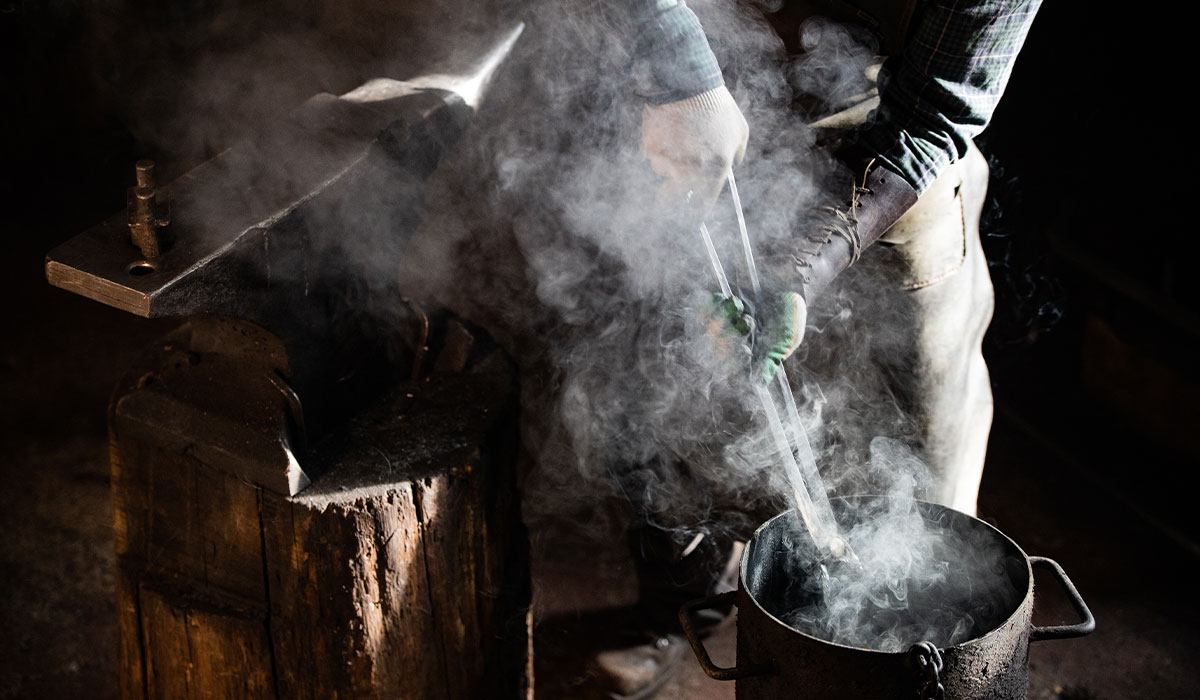
To break through that barrier, the team borrowed an idea from steel factories. They heated a standard ceramic material to a scorching 1,300 degrees Celsius — similar to the temperature of volcanic lava. Then they plunged it into liquid nitrogen, nearly 200 degrees below zero. This violent temperature shock shattered the material's rigid structure into tiny clusters so small that thousands of them could fit across the width of a human hair.
When tested at 400 degrees Celsius, these nanoclusters conducted oxygen ions about 1,400 times better than regular ceramic materials. Even more impressive, the team found that atoms inside these fragments were actually disordered and chaotic — the opposite of what scientists expected.
"Instead of fighting the disorder, we are using it to create a kind of superhighway for the ions," Chen explained. The chaotic structure keeps tiny empty spaces called vacancies separated and active, allowing energy to flow freely without getting blocked.
To prove their method could work in real devices, the researchers mixed just 0.5% of their nanoclusters into a standard fuel cell cathode. The result: power output tripled. Durability also improved dramatically. Normal fuel cells lose over 13% of their power every 100 hours of use. The enhanced version became 3.4% more stable and efficient with continued use.
"It acts as an atomic shield, boosting power while actively stopping the degradation that normally kills these devices," Chen said.
The technique could be relatively easy for manufacturers to adopt since it requires only a tiny amount of the new material rather than redesigning entire systems. Chen and his team are now working to scale up production.
"This will bring us one step closer to practical, next-generation green energy," Chen added.