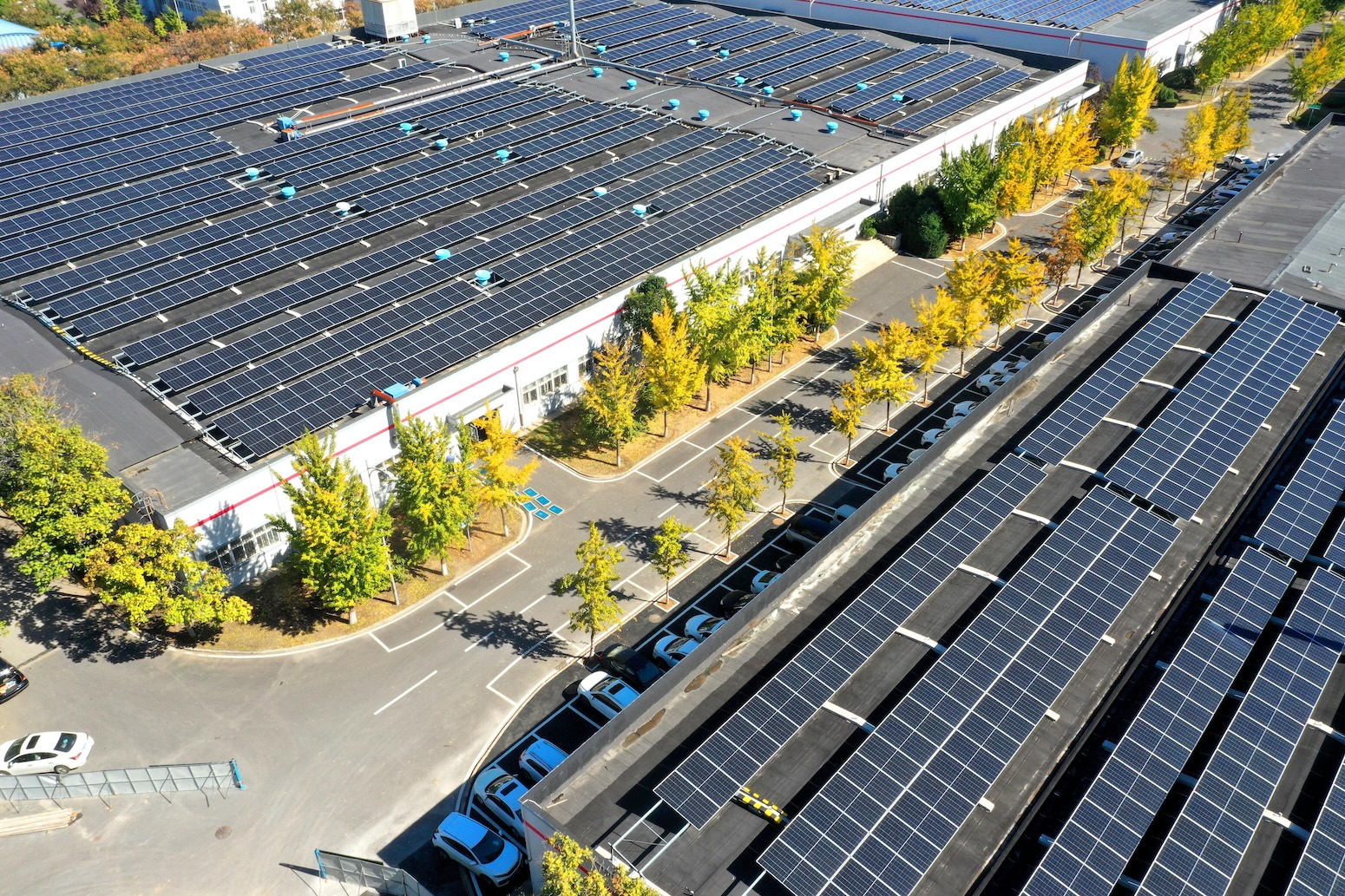
China added 110 terawatt hours of solar, wind and nuclear power in the third quarter of 2026—more than twice the increase in total electricity demand. Over the same period, its carbon dioxide emissions fell 3.1%, the largest quarterly drop since the Covid lockdowns of 2022.
The decline matters because China is the world’s largest emitter of carbon dioxide, the main gas driving climate change. An analysis by Lauri Myllyvirta, lead analyst at the Centre for Research on Energy and Clean Air, for Carbon Brief, found that emissions have been flat or falling since March 2024. The latest figures extend that trend to more than two years. Emissions are estimated to be down 0.5% so far in 2026.
The analysis draws on official figures and commercial data. It found that coal use fell 3% year-on-year in the third quarter, while oil use fell 4%. Coal-fired power generation was down 3.3%, as electricity demand growth slowed and less wind and solar power went unused. The 110 terawatt hours of added solar, wind and nuclear generation equaled Germany’s total power output over the same period.
Transport was another major source of the decline. Oil use in transport fell 9% year-on-year, as electric vehicles gained ground. In September, EVs made up a record 67% of passenger car sales and 50% of heavy truck sales. Electricity use by EVs rose 53%, much faster than the number of EVs on the road, indicating that people were using the existing electric fleet more instead of fuel-powered vehicles.
Other changes also helped. Growth in the coal-to-chemical industry slowed as high coal prices squeezed profits and higher product prices weakened demand. Emissions from cement and steel continued to fall as construction activity contracted more quickly. The decline in coal-fired generation came even as China continued to build coal power capacity at near-record rates. With less power being generated by those plants, their average running hours and profits are falling.
The drop is encouraging, but it does not settle what happens next. China’s emissions path depends on whether clean energy keeps growing faster than energy demand, and whether new wind and solar projects can connect to the grid without electricity going unused. The slowdown in demand partly reflects unusually mild weather in the third quarter, as well as weaker economic growth. Myllyvirta’s analysis says mild weather is not the whole explanation.
China has announced economic stimulus focused on six networks, including power grids and transportation. Those areas matter for energy use, and existing policies emphasize green and zero-carbon solutions. If clean power continues to outpace demand growth and grid barriers are eased, fossil-fuel use could keep falling. For now, the latest quarter offers a clear sign that rapid growth in clean electricity can coincide with lower coal use and lower emissions—even while new coal plants are still being built.