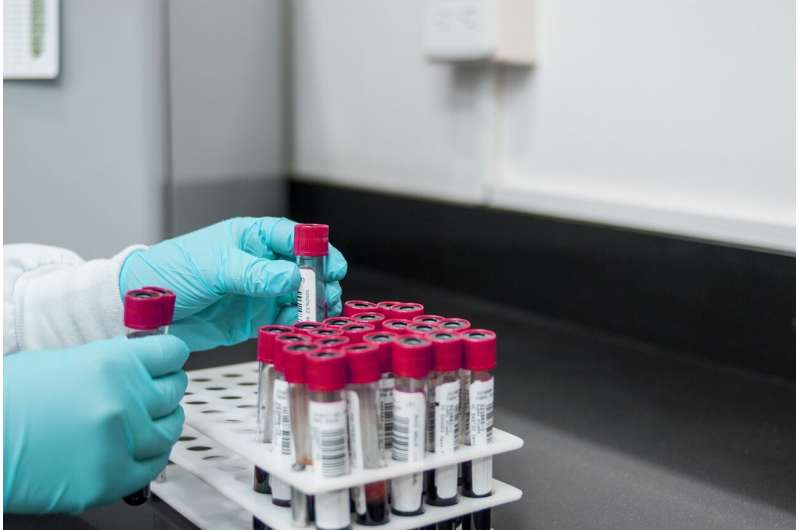
In a validation group, a blood test detected a tiny, precancerous change linked to ovarian cancer in 92.3% of the women who had it. The signal was found by researchers at Hoag Family Cancer Institute in Newport Beach, California, and may offer a new way to spot risk before an invasive tumor appears.
High-grade serous ovarian cancer, the most common and deadly form of ovarian cancer, often begins in the fallopian tubes. Its earliest known stage, called serous tubal intraepithelial carcinoma, or STIC, consists of abnormal cells that are microscopic and have not yet invaded nearby tissue. Imaging scans and standard cancer blood tests cannot see these changes. STIC is often found by chance after surgery to remove the fallopian tubes or ovaries, while ovarian cancer itself is frequently diagnosed only after it has spread.
In an eight-year international study led by Hoag, researchers including Dr. Rajan Gogna and Dr. Esha Madan found higher blood levels of an RNA molecule called Tu-Stroma in women with STIC and early-stage high-grade serous ovarian cancer. RNA is a molecule that helps cells use genetic instructions. Tu-Stroma is linked to a basic process in which cancer cells weaken neighboring healthy cells, making room for their growth.
The team studied blood samples from women with confirmed diagnoses, then tested its findings in a separate group. The test identified STIC in 92.3% of women who had the condition and correctly classified 98.2% of healthy women. In a model of how it might work in a group at high risk, about 72% of positive results would be accurate. A negative result would be correct nearly 100% of the time. Those figures come from research testing, not from a routine screening program, and further studies are needed before the test can guide care.
The finding shifts attention from searching for smaller tumors to looking for signs of cancer biology before an invasive tumor develops. That could matter especially for women with inherited risk, including those with BRCA1 or BRCA2 mutations, who may face difficult choices about surgery and surveillance. But the study does not yet show that using the test improves outcomes or how long before a tumor the signal can be detected.
“Ovarian cancer does not begin the day we discover a tumor,” Gogna said. “It often begins much earlier, with microscopic changes in the fallopian tubes that we can't see during routine screenings.”
Hoag researchers now plan prospective studies with women from the institute and the wider community, including participants with and without elevated genetic risk. They will collect blood and follow participants over time to learn when Tu-Stroma first appears, how consistently it marks precursor disease and whether it can help doctors make decisions. The long-term aim is a clinically tested blood assay that could improve ovarian cancer surveillance and prevention; for now, the results are an early but notable step toward detecting disease before it becomes invasive.