In Bunia, where the Democratic Republic of the Congo’s largest Ebola outbreak is centered, two new vaccine candidates are set to join a clinical trial designed to test several vaccines at once. The candidates target Bundibugyo, a rare Ebola virus species, and are the first vaccines specifically designed for that strain to be evaluated during an outbreak.
The World Health Organization (WHO) said the move follows a recommendation from its independent group that reviews candidate vaccines. The outbreak has continued for nearly six months, and the scale of the crisis makes the search for more ways to stop infections urgent. As of 1 November, the DRC had recorded more than 10,500 confirmed cases and 5,126 deaths.
The candidates are ChAdOx1, developed by the University of Oxford and the Serum Institute of India, and mRNA-1469, developed by the US company Moderna. They will enter the trial after national approvals. The WHO is supporting the study, called Tumaini, a Swahili word meaning “hope.” It began on 23 October in Bunia, the capital of Ituri province and the outbreak’s epicentre.
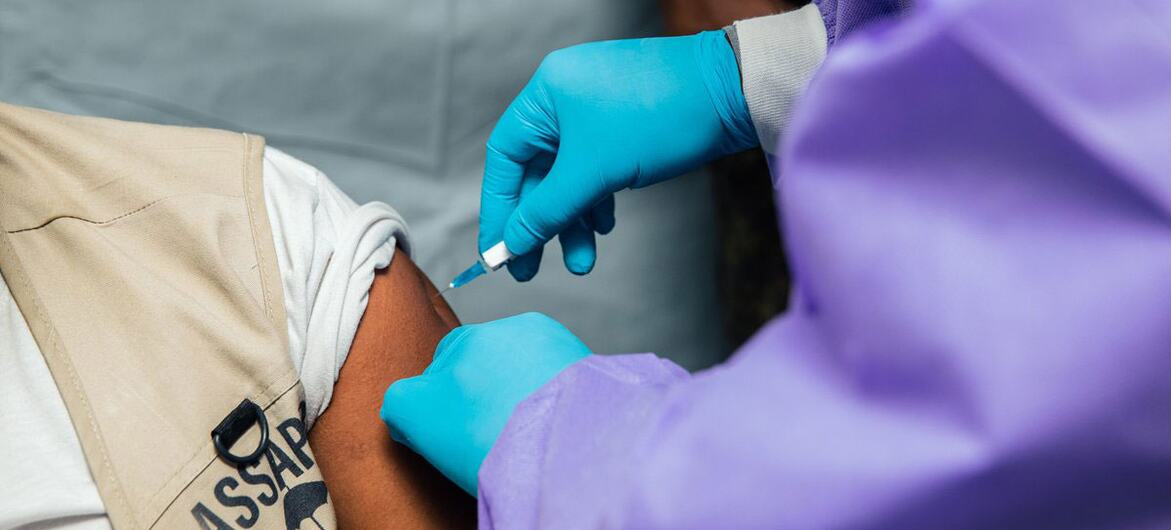
Tumaini uses a ring-vaccination approach: when someone is confirmed to have Ebola, vaccination is offered to people who have been in contact with them. The method helps focus protection around known cases. Four vaccination rings have already been set up, and several more are being prepared.
A third vaccine is already being studied in the trial. Ervebo, which is used against the Zaire species of Ebola, is being tested to see whether it can also protect against Bundibugyo. By evaluating multiple candidates within one trial, researchers can assess possible tools against the strain responsible for this outbreak.
WHO Director-General Tedros Adhanom Ghebreyesus said the vaccines’ readiness for clinical trials reflects “the power of science and partnership.” He cautioned that vaccines alone will not end the outbreak, but said they could become a powerful tool for bringing it under control. Other potential treatments are also being researched.
The ring-vaccination strategy has a track record: WHO and partners helped develop it during the West Africa Ebola outbreak a decade ago, and a trial in Guinea established the efficacy of Ervebo. Now, the new candidates will be assessed in the place where they are most needed. Their entry into Tumaini will not guarantee protection, but it gives researchers a chance to learn whether vaccines built for Bundibugyo can help curb the outbreak.