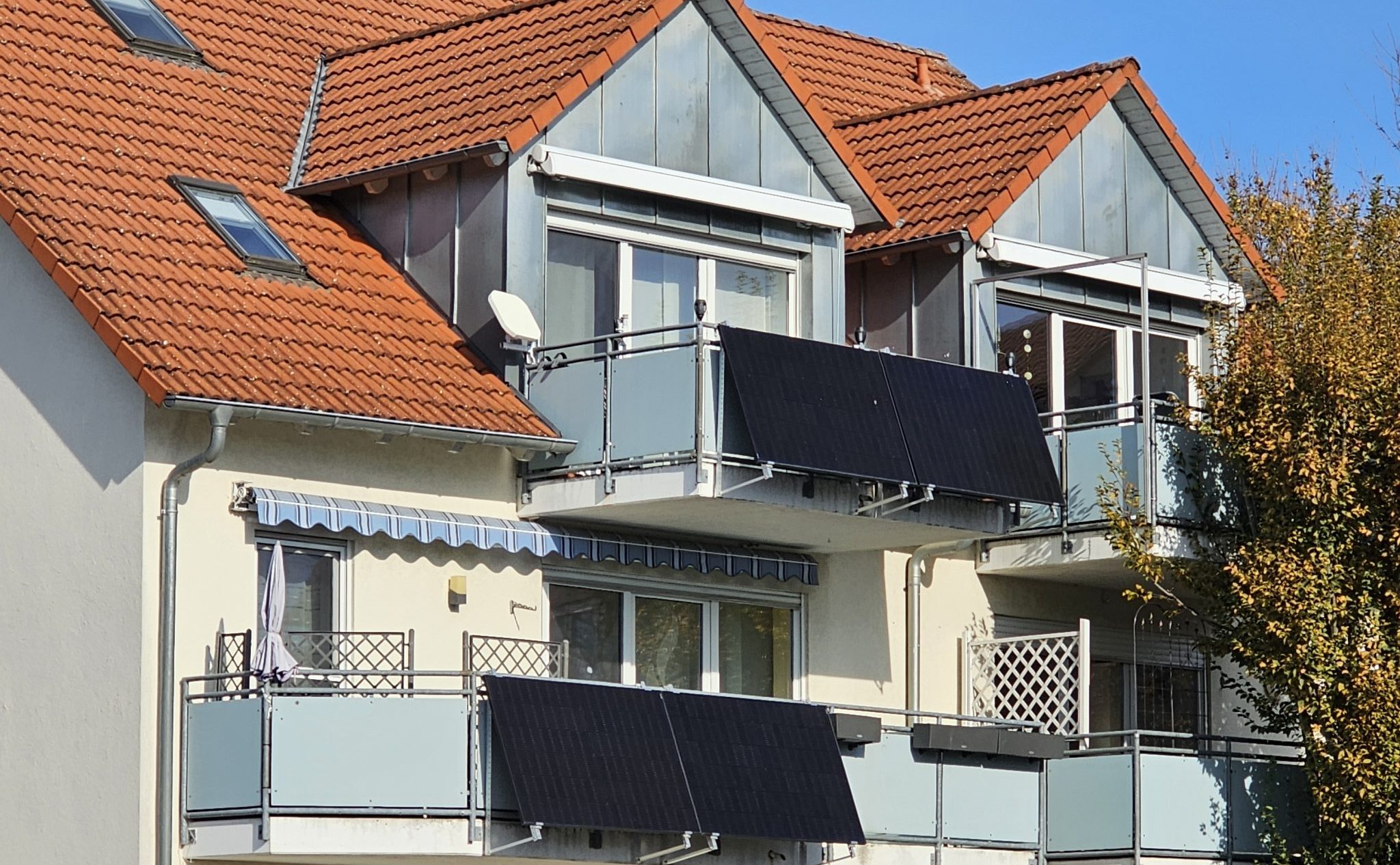
A solar panel clipped to a California apartment balcony could soon help power a home without a rooftop, a contractor or thousands of dollars in upfront costs. Governor Gavin Newsom has signed a law legalizing plug-in solar systems, opening a path for renters and other people who have often been left out of rooftop solar.
Until now, California residents who wanted to add even a small plug-in panel faced the same interconnection paperwork required for a full rooftop installation. That process could cost as much as $800 and take days. Under the new law, registration for systems that meet the rules will be free and immediate. The change matters in a state where electric bills have climbed in recent years, and where renters in apartment buildings often cannot decide what happens on the roof.
Plug-in solar, also called balcony solar, uses a few small panels, an inverter and cables. The panels can hang from a balcony railing, attach outside a window or sit in a backyard. Existing products cost from $300 to $2,200 and are designed for people to set up themselves. In Germany, similar systems can be plugged into a wall outlet. California will require added safety certification, so products now on sale do not yet meet the new state standards.
The law sets a limit of 1,200 watts per home. Systems must pass certification by an independent third party and include protection that stops them from sending electricity back into the grid during an outage. Once compliant models are available, a small apartment system could supply up to 20 percent of a home’s electricity and save as much as $500 a year.
State Senator Scott Wiener, who wrote the bill, said the panels could offer relief from high energy bills to renters as well as other households. The measure passed with bipartisan support. Cora Stryker, co-founder of plug-in solar advocacy group Bright Saver, said the law sends manufacturers a clear signal to develop a version for California.
The timing is important. Compliant models are expected to reach shelves in mid-2027, and the law runs from 2027 through January 1, 2030. Until certified products arrive, the older registration process still applies. Starting in 2030, selling systems that do not meet the new standards will be illegal.
California is the tenth state to pass a law of this kind. Utah acted first in March 2025, followed by Colorado, Virginia and Maine. But California’s large electricity market gives manufacturers a strong reason to build products that meet its rules. For renters who cannot install rooftop panels, the next step is clear: wait for compliant systems to arrive, then connect a small piece of solar power at home.