By the end of September, China had more than 2,000 gigawatts of installed wind and solar power—enough capacity to make its next energy challenge clear: building a grid that can carry that electricity where it is needed.
China is set to invest about $940 billion in its energy transition in 2026, according to the Global Energy Transition Report from the China Enterprise Reform and Development Society, a state-linked think tank. The country remains the world’s biggest investor in alternative energy, but the planned spending marks a shift. Alongside adding power plants, China is putting more money into electricity networks and supporting infrastructure, which can help make renewable energy more useful.
The scale of the build-out is already striking. At the end of 2025, low-carbon sources made up 60.1% of China’s installed power-generation capacity, the report said. China also accounted for 63.6% of global new additions in alternative energy capacity that year. Low-carbon sources generated 3.99 trillion kilowatt-hours of electricity in 2025, or 38.3% of the country’s total.
Growth continued in 2026. China’s National Energy Administration reported that wind and solar capacity passed 2 billion kilowatts by the end of September, after 170 million kilowatts were added in the first nine months. Solar accounted for 1.31 billion kilowatts, up 16.5% from a year earlier. Wind reached 700 million kilowatts, a 20.4% annual increase.
But new capacity alone does not guarantee that clean electricity reaches homes and businesses. Wind and solar output changes with the weather, and power lines may not be able to move all the electricity being produced to places that need it. The International Energy Agency estimates China will spend $140 billion on grid expansion and related infrastructure in 2026. The country’s largest grid operator has set a target of $574 billion in investment through 2030 to improve the system’s ability to integrate renewable power.
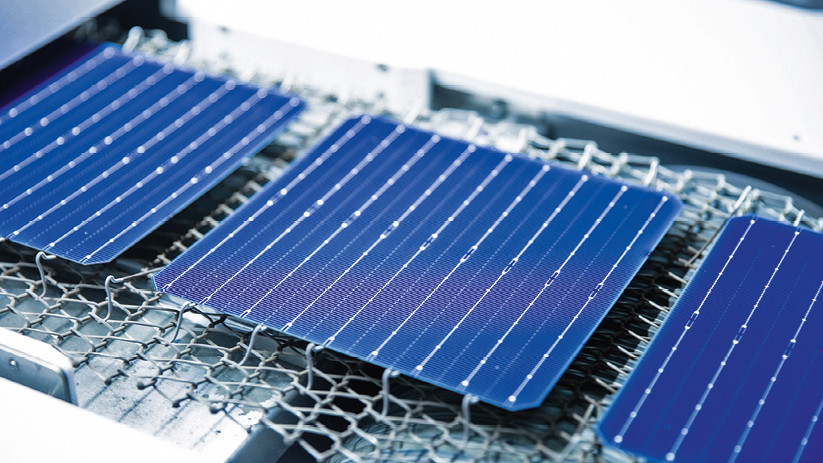
The transition also comes with economic and energy trade-offs. China produces more than 80% of the world’s solar-panel components and 70% of its wind-power equipment. Low-cost Chinese manufacturing has helped cut generation costs by more than 60% for wind and 80% for solar, according to the article. Yet fierce competition and excess production have brought pressure and bankruptcies, especially in solar equipment and electric vehicles. Authorities have rolled back subsidies in some areas as they seek to push companies toward stronger footing.
Coal remains a major part of the picture. It supplied 49.7% of China’s electricity in the first half of 2026, its first reported share below 50%, according to Bloomberg. That dip may not last: seasonal changes in renewable output and electricity demand can shift the mix. China’s grid spending is meant to help capture more of the clean power already being built. The next test is whether those networks can keep pace with the rapid rise in wind and solar.