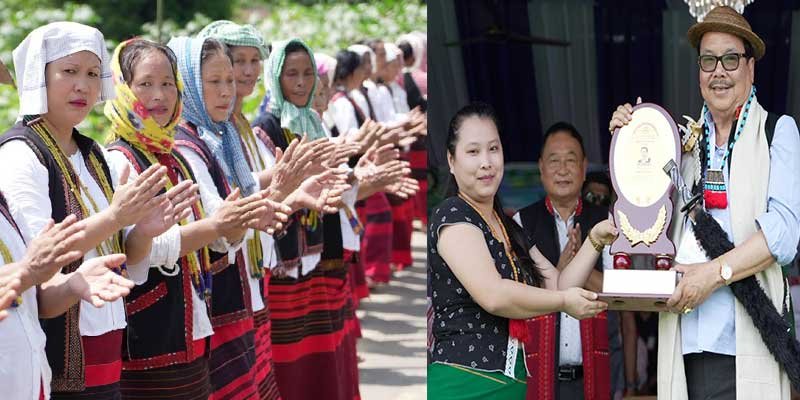
At the first-ever Leyi Banggo Central Solung Giidi Celebration 2026, held beneath the open sky of the GPS General Playground in Ruksin, East Siang, Arunachal Pradesh's Deputy Chief Minister Chowna Mein asked a room full of elders, youth and cultural practitioners one urgent question: how do we keep our roots alive in a world racing toward the new?
The answer, Mein argued, is to lean on modern tools to protect ancient traditions. He urged communities to document their indigenous languages, oral literature, songs, stories and traditional knowledge using technology — creating audio-visual archives so that what elders carry in memory never quietly disappears. He even floated creating new teaching posts for local dialects, so children can learn the languages their grandparents speak.
Mein's warning was sharp and specific: oral traditions are the most fragile because they have always been passed by word of mouth, from one generation to the next. One forgotten storyteller can mean a lost song. Recording those voices, he said, is the surest way to keep them alive.
The Deputy Chief Minister also turned his attention to the young. He praised local youth for their creativity in producing music, videos and digital content, saying these very platforms could become powerful tools for preserving indigenous heritage. His message: the same screens that pull us away from tradition can be used to push it forward.
Mein made clear that cultural preservation is not a side project. "Development could not be measured only through infrastructure," he said, insisting that growth must protect the way people live and their identity. As Arunachal Pradesh and India push toward becoming fully developed states, he stressed that the journey must include every community, language and cultural identity — no matter how small.
Beyond culture, he called for stronger ties with neighbouring Assam, whose people share long-standing social, economic and matrimonial bonds with the Leyi Banggo community. And he cautioned against social media misuse, urging people to use digital platforms for respectful dialogue rather than quarrels and personal attacks.
Mein also made a practical promise: he would take the community's demand for a separate administrative circle covering five villages — Depi, Moli, Detak, Debing and Poplung — to the Cabinet for consideration.
The day-long festival was a celebration in motion. Traditional Nene-Ponung performances by Ponung Mimum, presentations by Kenna-Tarem and her party, and songs from renowned singers Mary Dalbong and Dev Taid filled the grounds, proof that these traditions are not relics but living, breathing culture.
As Solung draws the community together each year, Mein hopes the gathering will grow into a lasting platform — a place where the Leyi Banggo people pass their heritage, story by story and song by song, to the generations still to come.