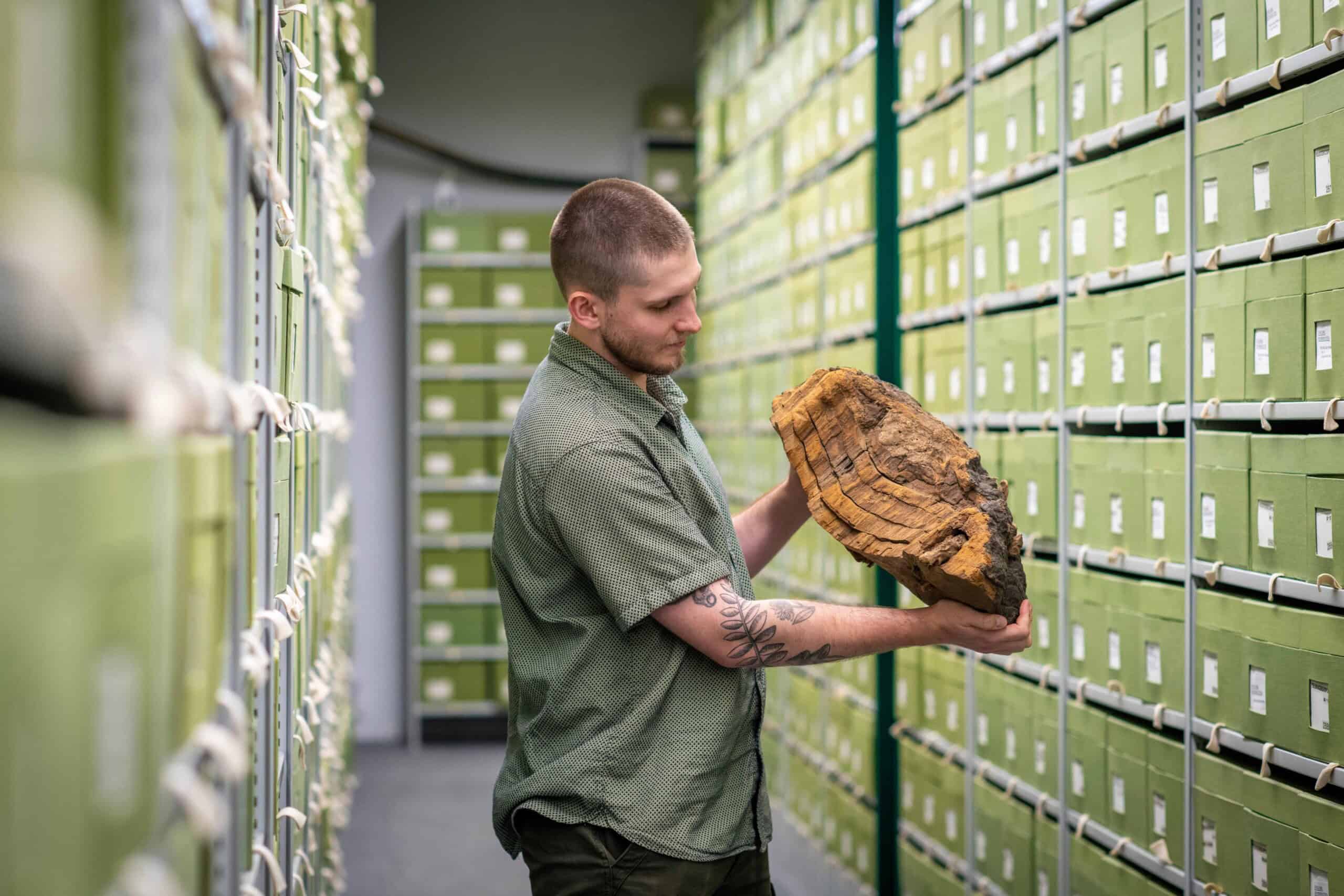
Inside the collections at Royal Botanic Gardens, Kew, 7.4 million plant and fungi specimens now have digital records. Put end to end, the specimens would stretch almost 3,000 kilometres—a vast archive that scientists can increasingly search and share without handling each item one by one.
The digitisation is part of a wider shift described in Kew’s State of the World’s Plants and Fungi 2026 report. Drawing on the expertise of more than 400 scientists from 40 countries, the report says that artificial intelligence and other digital tools are opening new ways to study nature. That matters because conservation depends on knowing what species exist, where they are found and how they can be protected. Faster access to information can help researchers make those discoveries and share them more widely.
AI is already helping scientists identify plants that are difficult to tell apart, the report’s authors say. It may also help pinpoint species that are new to science. Digital tools can process specimens at an unprecedented scale, while improved cataloguing and data-sharing can make research records available more quickly to people working in different places.
The scale of Kew’s collection gives a sense of what this change means. Its 7.4 million digitised plant and fungi specimens represent a large body of evidence about the natural world. When records can be searched digitally, researchers can compare information and build on work already done by others. Professor Alexandre Antonelli, Kew’s executive director of science, said the new tools and data were equipping people to learn and contribute “faster, better and more impactful” than before.
The report also makes clear that technology is not a simple fix for biodiversity loss. AI-generated identifications still need to be checked by scientists. Expert judgement remains essential, and digital tools do not address the underlying causes of species decline. They can help people understand nature, but they cannot by themselves protect habitats or resolve the pressures driving losses.
There is also an environmental cost to consider. AI relies on computing systems and data centres, which can use large amounts of electricity and, in some locations, water to keep equipment cool. The benefits of digital conservation therefore need to be weighed against the resources required to run these systems.
Still, the report points to a practical gain: more researchers and others interested in biodiversity can work with information that was once harder to access. Kew’s digitised collection shows how an institution can turn millions of physical specimens into a resource for wider study. As scientists continue to test AI tools and validate their results, the challenge will be to use these new capabilities carefully—making knowledge move faster while keeping human expertise and conservation’s real-world needs at the centre.