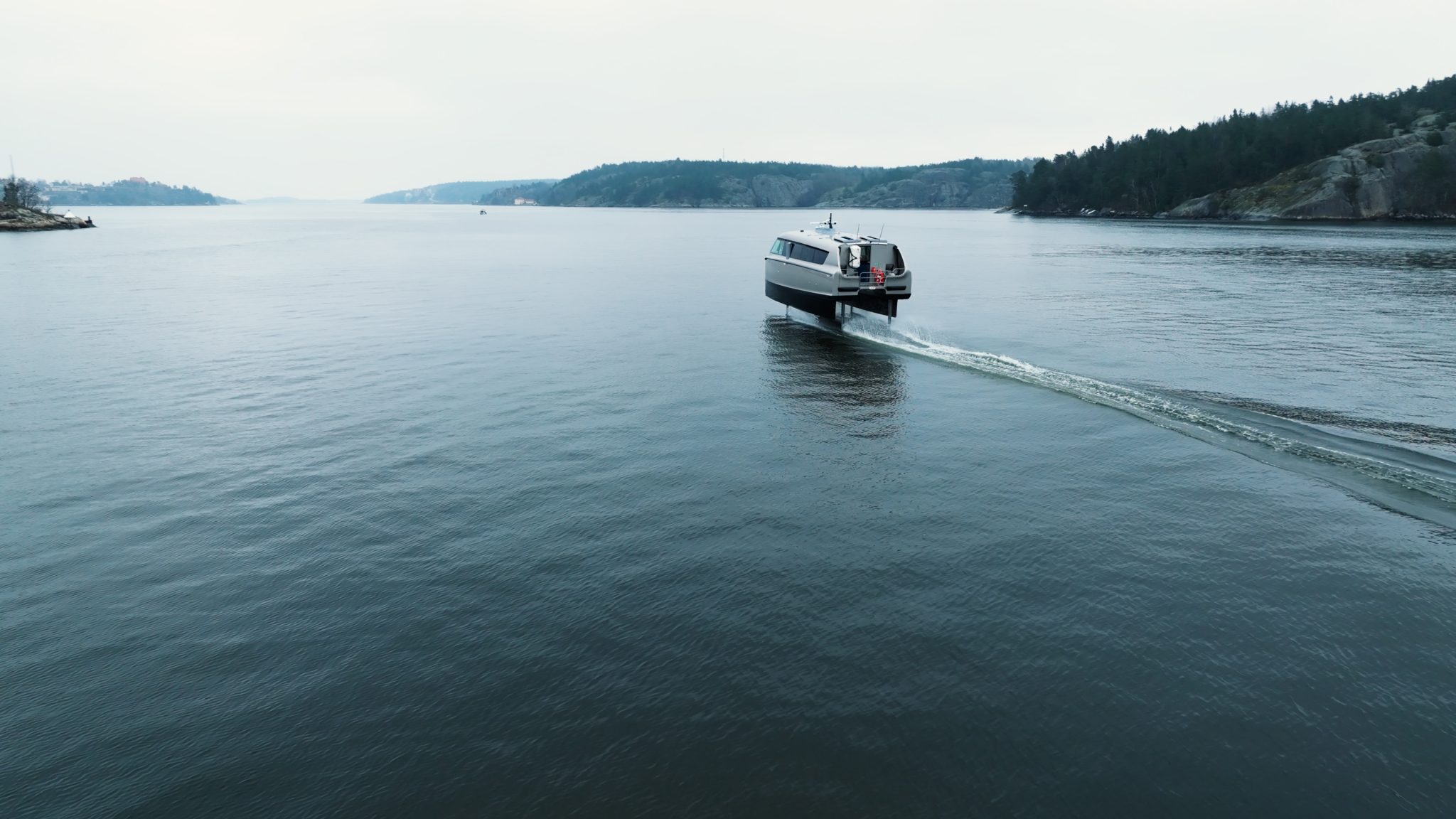
On a Vessev hydrofoil, the boat’s hull rises about a foot and a half above the water as it speeds up, turning a choppy crossing into a quieter glide. That unusual lift could help electric boats overcome one of the biggest barriers to using them for everyday travel: water creates far more resistance than air, so boats need a lot of energy to move.
The challenge has kept battery-powered vessels from matching the reach and usefulness of many road vehicles. Heavy batteries take up space and add weight, while boats must push through water on every trip. Hydrofoils offer one way around the problem. Their underwater wings lift the hull clear of the surface once the vessel accelerates, sharply reducing drag. Vessev, the company behind the design, says its hydrofoils cut drag by about 66 percent. That makes it possible to use smaller, lighter battery packs without giving up range, said Eric Laakmann, Vessev’s chief executive and co-founder.
Vessev already runs passenger services in New Zealand, and Australia is next. The company plans its first US route on Lake Tahoe. Laakmann sees a future beyond scenic rides, with electric boats becoming ordinary transit: “More like subways, more like buses, more like Ubers, more like taxis but on the water.”
Other countries are already putting electric hydrofoils to work. Commuters in Stockholm ride vessels made by Swedish company Candela, which says its design uses as much as 80 percent less energy than similar conventional boats. Norway has ordered 20 of the vessels for coastal service.
San Francisco is preparing a different kind of electric-ferry shift. The Bay Area’s ferry system carries about 3.5 million passengers each year, but all 18 vessels in its current fleet run on diesel. Four battery-powered ferries are due to join the fleet over the next two years, as part of an overhaul worth roughly $500 million. The plan includes new charging equipment at docks. The ferries will not use hydrofoils, but the agency says the expansion will make it the first ferry operator in the United States to run high-speed, all-electric service.
A ferry fleet cannot simply pull over to recharge. Operators have to match each vessel’s battery range and travel time with the power available at the dock during a short stop. Routes with long crossings or little time to charge may not work well with current batteries. On shorter city routes, however, lower fuel and maintenance costs can help make up for the higher cost of electric vessels. San Francisco agency head Seamus Murphy said the long-term savings could outweigh the upfront investment, especially as diesel prices rise and batteries improve.
San Francisco’s boats and batteries are both being made in the United States, Murphy said, tying the transit plan to local manufacturing jobs as well as cleaner service. The transition will depend on whether charging systems, vessel schedules and costs line up route by route. But with four new ferries planned, hydrofoil services expanding overseas and a Lake Tahoe route on the horizon, electric boats are starting to look less like a novelty and more like a practical part of how people get around.