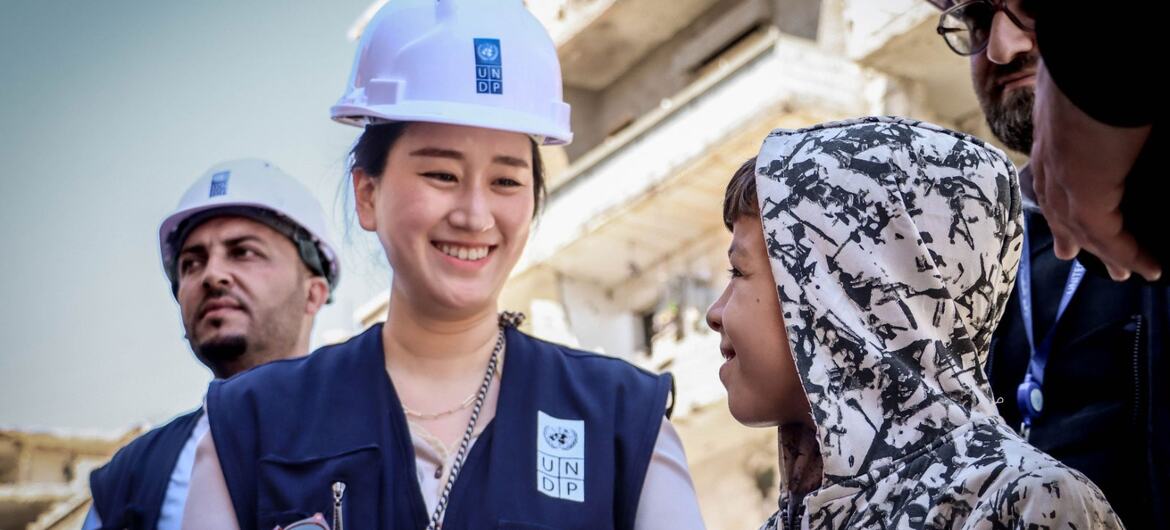
In Rural Damascus, Joelle-Seme Park stood in a neighbourhood blocked by mountains of broken concrete and twisted metal, and she could barely picture what daily life there used to look like. Roads were closed. Water and sewage lines couldn't be fixed. Power and services struggled to return. Yet Park, a crisis readiness specialist with the UN Development Programme, saw something hopeful in the rubble: the people themselves, clearing it with their own bare hands.
Years of conflict in Syria killed hundreds of thousands of people, displaced millions, and caused over $100 billion in damage to roads, homes and infrastructure. Entire communities stayed cut off. Park realised one thing on that trip: until the rubble is gone, life cannot truly restart. And communities cannot clear it alone. It takes equipment, planning, coordination and steady support.
That is exactly what the REVIVE project provides. Worked out by UNDP and its partners, REVIVE is clearing 570,000 tonnes of debris across Aleppo, Deir-ez-Zor, Homs and Rural Damascus. In those cities, the effort is rehabilitating roads, water and sewage networks, teaching people about the dangers of leftover explosives, and recycling rubble into new construction materials — turning what was destroyed into the building blocks of what comes next.
The pattern was consistent in every community Park visited: once the rubble is removed, life begins to come back. Movement resumes. Streets reopen. Families start returning home. Roadside shops unshutter, kids head back to school, and neighbours reclaim their spaces.
The work also offers something many families desperately need — a source of income. So far, more than 1,300 people have joined cash-for-work projects linked to debris removal, helping support over 6,000 family members. A woman working at a debris recycling facility in Aleppo told Park that before the project she had no money to support her family. Now she can buy food and medicine for her children, niece and nephew — and they are back in school.
Beyond the pay, there is pride in rebuilding. A community volunteer in Aleppo described how, after the debris was cleared, local people volunteered to rebuild a park and streetlights, giving children and women a safe, peaceful place to enjoy after school.
For Park, what stood out most was not the scale of the operation, but the determination of the people themselves — families hauling wreckage from their homes by hand. In Syria, clearing debris is not just about removing what was destroyed. It is about reopening roads, reconnecting services, supporting livelihoods, and helping communities feel normal again. One step at a time, one broken street at a time, they are taking those first steps forward — and life is slowly, stubbornly returning.