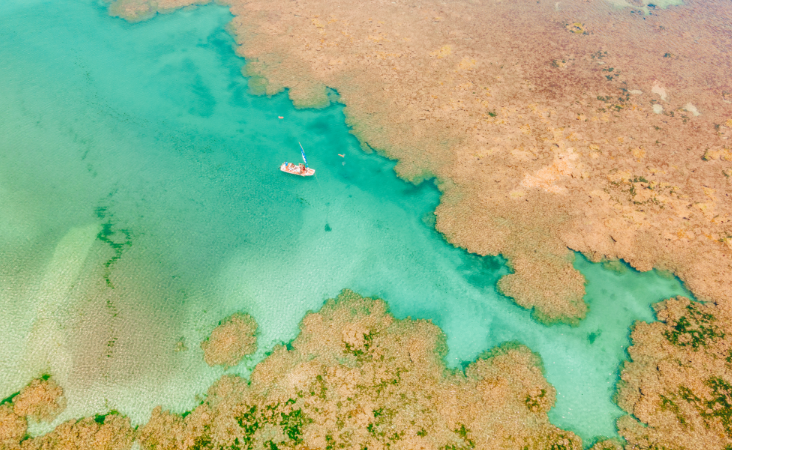
At Maceio’s Piscina do Amor, divers may soon be able to swim among coral nurseries again—not just to look, but to help care for them. The site lies off Ponta Verde beach and is known for its clear waters and reefs. A new partnership aims to bring back guided scuba trips while keeping restoration and protection at the center of the visit.
Piscina do Amor was closed to visitors in 2015 under a resolution by Alagoas’ State Council for Environmental Protection and the state environment agency, IMA. Boats, tourism, sports, recreation and fishing were all barred as the area recovered. Now, the Coral Reefs of Alagoas Project, run by the state tourism department and the Federal University of Alagoas, has partnered with dive operator Ecoscuba and IMA to offer trips again under oversight.
The visits are designed to explain how coral restoration works and why reefs matter. Divers will be able to see the nursery up close, learn about coral growth and marine life, and take part in activities such as monitoring or cleaning nursery areas. That makes the outing more than a sightseeing trip: visitors can see the care that goes into rebuilding a reef and contribute to that work.
Robson dos Santos, a professor at the Federal University of Alagoas and coordinator of the project, said the goal is to offer a more sustainable kind of tourism in a state already known for its visitor experiences. He said participants would be able to help monitor the nursery or clean it. Flavia Dabbur, owner and instructor at Ecoscuba, said her team works to make guests aware of the environment and its sensitivities, and that many respond strongly to that message.
For state tourism secretary Barbara Braga, reopening the site with responsibility and supervision could also change how residents, tourists and young people think about nature. She said people will be able to follow the corals’ development and understand the restoration effort, while the ecosystem remains protected. The approach ties a local attraction to the health of the reefs that make the coastline special.
The project’s work extends beyond Piscina do Amor. In October, it began planting 200 corals raised in nurseries on the reefs off Pajuçara beach. Researchers are also tending more than 500 corals in cultivation and cleaning the nursery tables, removing marine sediment from the breeding plates so the young organisms can develop.
The renewed dives offer a way for visitors to connect with that ongoing effort, rather than treating the reef as scenery alone. With the project, Ecoscuba and IMA working together, Piscina do Amor’s return as a destination will depend on keeping conservation part of every visit—and giving people a closer look at what reef recovery takes.