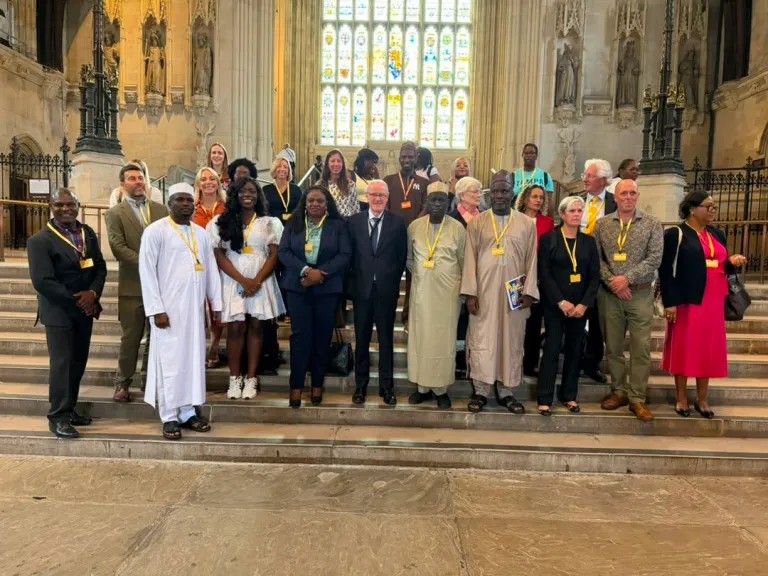
When Dr. Haladu Mohammed stood before British and Nigerian lawmakers at the House of Lords in London, he brought a message from thousands of miles away: real change is happening in Kano State. The technical adviser on education reform told the International Parliamentary Forum on Reading Revolution that children in Kano are reading better than ever before, and the world was listening.
Kano earned rare international recognition at the UK Parliament, where education experts and policymakers from both Britain and Nigeria gathered to discuss how to help more children learn to read. The event, held at Westminster and supported by the All-Party Parliamentary Group for Nigeria, spotlighted Kano as a model for the continent.
Why Kano? Governor Abba Kabir Yusuf has made education his government's biggest priority, directing the largest share of the state budget toward schools, teachers, and learning programmes. The state partnered with Universal Learning Solutions, a UK-based education organization, to bring Jolly Phonics to Kano classrooms. Jolly Phonics teaches children how letters sound so they can decode words, a method proven to work in many countries.
The results have caught the attention of researchers. Scholars at Newcastle University, Professors Pauline Dixon and Steve Humble, conducted an independent study and found that children in Kano who used Jolly Phonics showed significant improvement in reading. The children even successfully transferred phonics skills to reading Hausa, their native language. Kano also became the first state in Nigeria to adopt the UK Phonics Screening Check, a standardized test that measures whether young readers are on track.
But Kano's leaders did not stop at regular public schools. The government is expanding the programme to include Almajiri schools and integrated Qur'anic schools, reaching children in traditional religious education settings. Sheikh Ahmad Tijjani Sani Auwal, Kano's Commissioner for Religious Affairs, said the effort is about giving every child a fair chance regardless of where they learn.
Gary Foxcroft, CEO of Universal Learning Solutions, called Kano one of Africa's leading examples of literacy reform. "Governor Abba Kabir Yusuf has demonstrated that when governments invest in evidence-based education reform, lasting change is possible," he said.
The recognition from the UK Parliament reinforces what observers have noted: a government with a clear plan and steady investment can transform education for its youngest citizens. For Kano's children, the payoff may be a lifetime of opportunities built on the simple, powerful skill of reading.