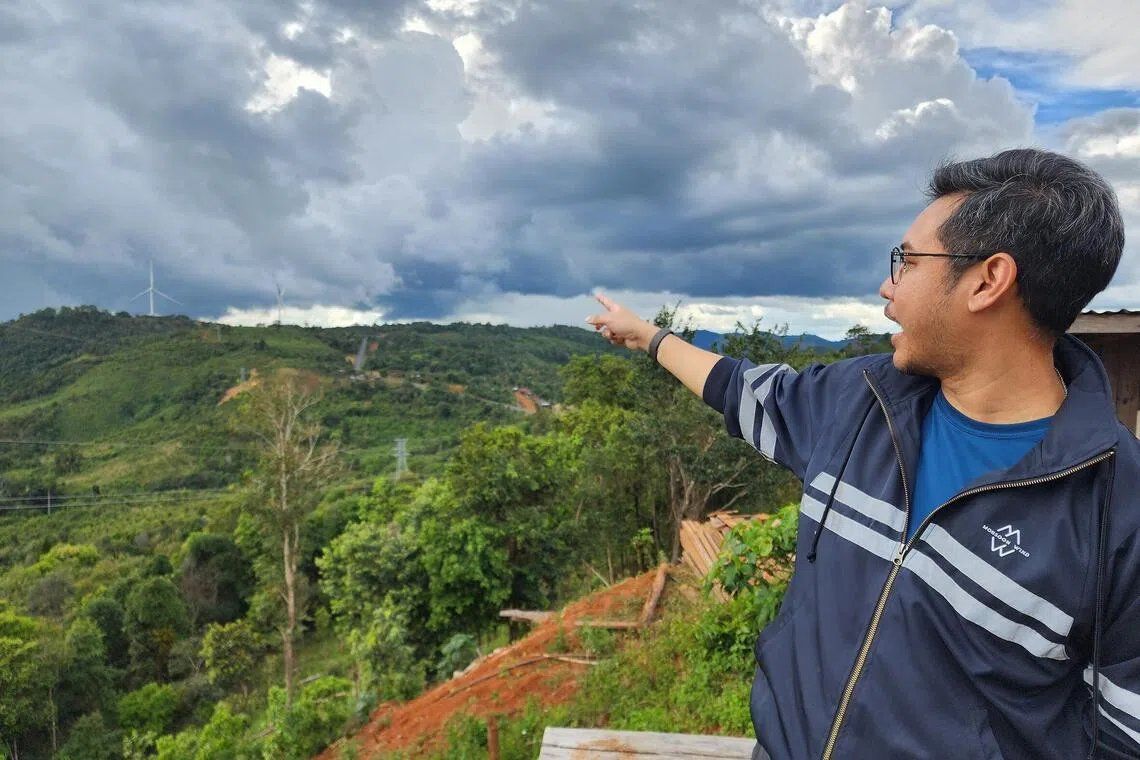
At about 1,600 metres above sea level in Laos’ Sekong province, 133 wind turbines turn above rural villages, sending electricity across the border to Vietnam. The Monsoon Wind Power project is South-East Asia’s largest wind farm—and a working example of how clean power could move between countries.
That cross-border link matters as the region’s electricity needs grow. Demand across the Association of Southeast Asian Nations, or Asean, is rising by about 4% a year. Yet most of its 11 member countries still have separate national power grids and rely heavily on fossil fuels. A regional network could make it easier to share electricity, improve energy security and bring more renewable projects online. The Asian Development Bank (ADB) says the goal is a fully integrated Asean Power Grid by 2045.
Built by Impact Electrons Siam, a Thai clean-energy and digital-infrastructure company, the US$950 million wind farm became operational in August 2025, after 27 months of construction. Its 600 megawatts of capacity could supply more than one million homes. The project is the first cross-border renewable-energy project in Asia, and its electricity is already being sent to neighbouring Vietnam.
Over its expected 25-year operating life, the wind farm is forecast to prevent about 33 million tonnes of greenhouse-gas emissions. That is roughly equal to taking seven million cars off the road for a year. The project was financed by a group of international and regional financial institutions, including ADB.
Wind could also help balance Laos’ power supply. Hydropower generation tends to fall during the dry season, when the country’s winds are strongest. “Wind is free, so of course we should harness it,” said Shanny Campbell, ADB’s country director for Laos. She said wind power could complement hydropower in the country’s energy mix.
For nearby residents, changes are more immediate than regional energy plans. Amy Saychai, a 19-year-old villager, said she did not know what the turbines were for and thought “they look nice”. But she welcomed benefits such as improved roads.
The wind farm already feeds electricity to Vietnam, while its developers say future sales through existing connections could reach Thailand, Malaysia and Singapore. General manager Narut Boakajorn said the project shows that countries in Asean can work together on cleaner energy. The regional grid initiative has been discussed for years: its memorandum of understanding was signed in 2007 and put into effect in 2009, but progress has been slow. Existing links among Laos, Thailand and Vietnam offer a starting point, while electricity demand across the region continues to rise.
A fully connected grid remains a long-term ambition, not a finished system. But the turbines in Sekong are already doing more than generating power: they demonstrate that renewable electricity can cross a national border. If neighbouring countries build on that example, the project could help turn the vision of a shared regional grid into practical cooperation.