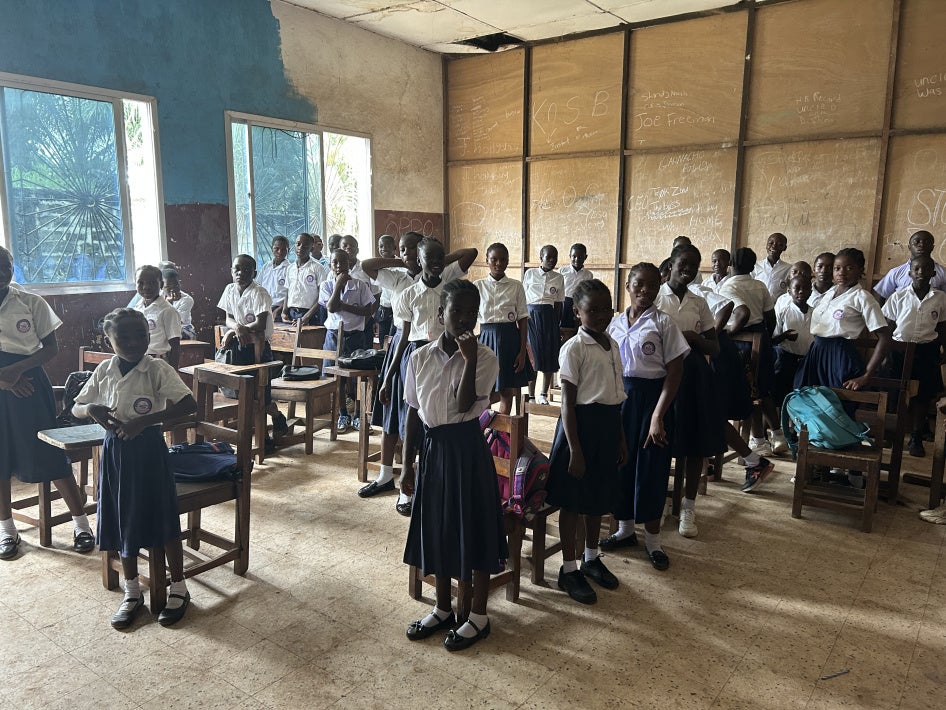
When Beatrice was 14 years old, her parents could not afford to pay her school registration fees. She watched her friends walk past her house on their way to class. "I felt bad," the now 17-year-old from Nimba County told researchers. "I stayed home and cried when I saw my friends going to school."
Beatrice's story reflects a reality that has trapped hundreds of thousands of Liberian children outside classrooms for years. But on August 5, Liberia's government announced it would eliminate all school registration fees for kindergarten through grade 6, starting when the new school year opens on September 7. The decision removes one of the biggest financial obstacles standing between children and their education.
The change comes after a detailed report by Human Rights Watch, an organization that investigates human rights problems worldwide. Their report, titled "Without Education, There Will Be Nothing," documented how registration fees forced many families into impossible choices. Parents told researchers they went into debt, skipped meals, and made extraordinary sacrifices to scrape together school payments. Some children never enrolled at all. Others started years late, attended sporadically, or took on farm work or other jobs to help earn money for fees.
The numbers are striking. According to the report, one-third of all Liberian children have never set foot in a classroom, and only 17 percent finish grade 9. In a country where education can determine a person's future, these fees created a wall that excluded the poorest families.
Fanell Decontee Dewee, a young Liberian advocate who spoke directly with children for the report, said removing this financial barrier represents a meaningful step toward fairness. "For Liberian children, this is a meaningful step toward making primary education more accessible and equitable for all," she said.
Child advocate Roberto Cooper Jr., who helped with the research, called the policy change a victory with long-term promise. "This is a win for Liberia and an investment in our future," he said. "Every child deserves the opportunity to learn, grow, and succeed."
If the new policy works as intended, children from low-income and rural families will be able to enroll and stay in school without their families having to choose between education and basic needs like food. The challenge now is making sure the policy is fully carried out in classrooms across the country.