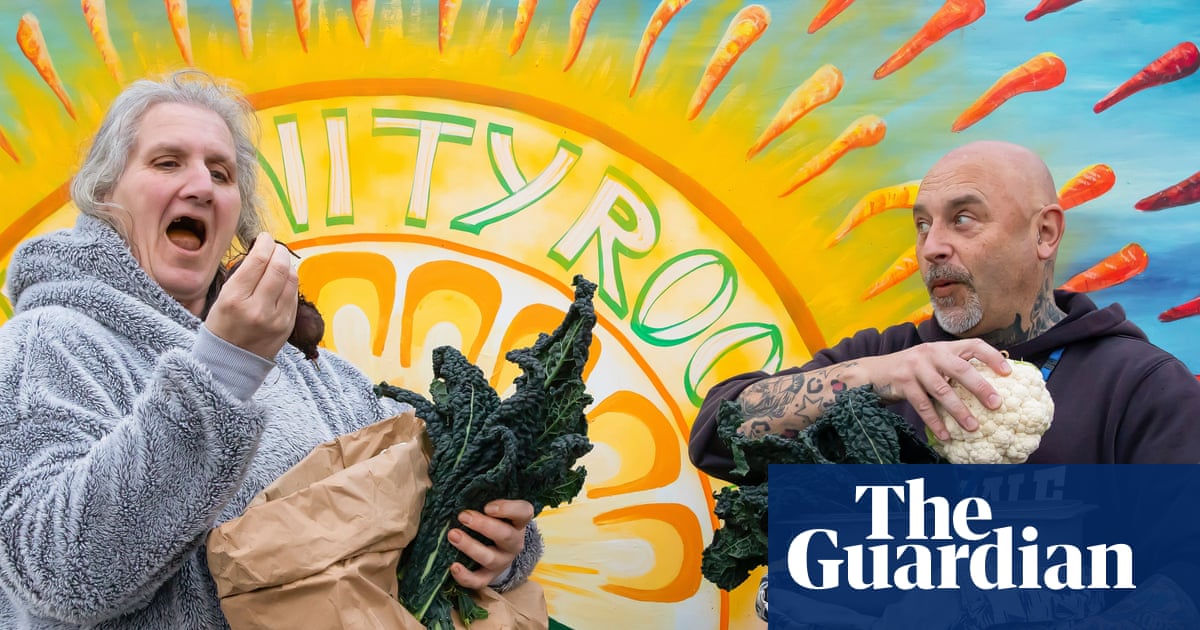
At a community orchard in St Ives, 85-year-old Johanna Evans helped turn Swiss chard, carrots and lentils into a shepherd’s bake—and found herself enjoying food she never expected to try. “I never thought I’d eat anything like that,” she said.
Evans is taking part in WellFed, a Cornwall programme that offers people with type 2 diabetes or prediabetes free weekly boxes of vegetables, along with group cooking and gardening sessions. The idea is to make healthier eating practical and enjoyable, while helping people manage a condition that can lead to serious health problems. More than 100 people have taken part so far.
The sessions pair everyday cooking with time outdoors and company. At the St Ives gathering, participants prepared a low-GI, high-fibre meal. Low-GI foods tend to raise blood sugar more slowly. The group also shares familiar local food traditions: some participants grew up on hearty roasts, egg and chips, or raw fry, a Cornish dish of bacon, potatoes and onions traditionally cooked in lard.
For 74-year-old Chris Longthorp, the change has come with a measurable result. Since joining WellFed, his HbA1c—a blood test that reflects average blood glucose—fell from 50 to 42. Diabetes UK says a level above 48 brings a risk of complications affecting the eyes, kidneys and feet. “I feel fitter and coming to these sessions is fun,” Longthorp said.
Other participants have reported similar progress, though some credit WellFed alongside other care. Mike May, 68, said his HbA1c had once reached 78 and had since fallen to 43, which he attributed to the programme and other medical interventions. Michael Waller, 64, said his level went from 64 to 47 after he began attending sessions at a farm on the Roseland peninsula. He described replacing a diet heavy in chocolate, ice cream and flapjack with vegetables, salad, peas, beans and pulses.
A preliminary report by the Centre for Climate Change and Social Transformations found that participants described eating better, feeling more confident about managing their condition and experiencing improved wellbeing. Most reported lower HbA1c, and the group’s average level moved from the diabetic range into the prediabetic range during the programme. These early findings are encouraging, but they are not a final evaluation.
WellFed is delivered by Volunteer Cornwall and funded by Cornwall Council public health and the NHS in Cornwall and the Isles of Scilly. Sessions run at 20 sites, from Launceston in the east to the Isles of Scilly, and GPs at more than 20 surgeries have referred patients. Project lead Claire Judd said the pilot is believed to be England’s first of its kind, considering both the support offered and its reach.
St Ives GP Dan Rainbow says the approach matters in a county where prediabetes is particularly common and where poverty can exist even in places seen as prosperous. “We spend so much of our time treating disease and illness but this is about creating health,” he said. The programme’s final results will help determine whether it expands across Cornwall or is copied elsewhere in the UK, where health leaders are watching its progress.