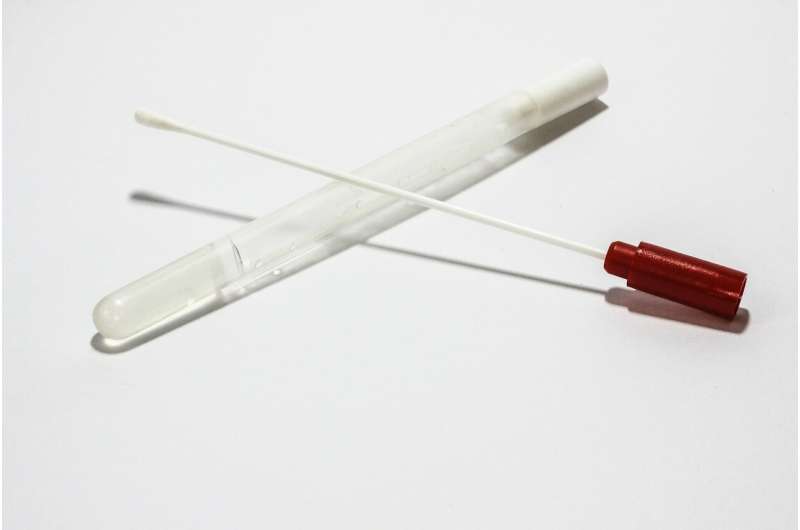
A vaginal swab collected at the opening of the vagina detected signs of uterine cancer in an early test of 27 women, raising the possibility that some patients could avoid a painful biopsy.
The swab, developed by California-based PinkDx, is being studied for women who already have symptoms of endometrial cancer, especially unusual bleeding such as bleeding after menopause. Endometrial cancer begins in the lining of the uterus. As cases and deaths from the disease rise, researchers are looking for ways to find it while making testing less difficult for patients.
Doctors often investigate abnormal bleeding with a transvaginal ultrasound, which uses a probe in the vagina to measure the uterine lining, and may also take a tissue sample through an endometrial biopsy. Both procedures can be painful. In women past menopause, biopsies do not collect enough tissue about 30% of the time, according to The Washington Post. The lining may be too thin, or the cervix may be too narrow for the instrument to pass through.
PinkDx’s approach looks for traces of genetic material released as cancer cells die. These fragments carry clues about the tumor and can travel from the uterus into the vagina. A clinician collects a swab, which is then tested in a lab. In the small early study, the cancer signal appeared even in swabs taken from the vaginal opening.
The larger study is underway at 16 U.S. sites and plans to enroll about 3,000 women. It is expected to wrap up this year, and company officials told The Post that early results are on target. Dr. June Hou, a gynecologic oncologist at Columbia University Irving Medical Center in New York City, is leading the study there. She told the newspaper that endometrial cancer is being diagnosed in more people each year.
The test has two important goals: detect at least 90% of cancers and correctly rule out cancer in at least half of women who do not have it. That second measure matters because a test that raises too many false alarms could send more patients through the very procedures it aims to reduce. Dr. Nicolas Wentzensen of the National Cancer Institute cautioned that the first test involved very few women and needs confirmation in a larger, independent group.
A positive swab would likely still need to be followed by a biopsy. A negative result would not explain the bleeding, so patients should continue working with their doctors to check for other causes. If the study results hold up, the swab could instead serve as an early filter. Wentzensen said it might spare “half of the population from doing the biopsy.”
PinkDx plans to run the test in its own lab, so it does not need U.S. Food and Drug Administration approval, The Post reported. The company expects to complete certification with the Centers for Medicare & Medicaid Services by early 2027, which could allow the test to reach patients by mid-2027. For now, the promise rests on whether the larger study can confirm that a simple swab can reliably guide the next step in care.