A baby oyster no bigger than a 50 pence coin has appeared on the seabed of Scotland’s Dornoch Firth, where native oysters had been gone for more than a century. Its rough, cream-coloured shell is small, but it marks a major step in bringing back a species that once helped shape Britain’s coastal waters.
Researchers with the Dornoch Environmental Enhancement Project (Deep) have confirmed that European flat oysters are breeding naturally at the restoration site north of Inverness. It is the first confirmed success of its kind in the UK. The finding matters because wild oyster reefs can provide shelter and food for other marine life, steady seabed sediments and filter water as the shellfish feed.
Native oysters once formed vast reefs around Britain. Victorian maps, including Olsen’s Piscatorial Atlas from 1883, show how widespread they were. Their numbers fell sharply as oysters were harvested in huge quantities and sent by rail to growing cities. At the height of the Victorian trade, fishers landed 30 million oysters a year from the Firth of Forth near Edinburgh. Its oyster bed once stretched 20 miles long and 6 miles wide; it has since disappeared. European flat oysters are now considered critically threatened, and only a handful of substantial wild beds remain around Britain.
Deep began 12 years ago, with support from Heriot-Watt University, the Marine Conservation Society and whisky company Glenmorangie. The project has placed about 140,000 adult oysters in the Dornoch Firth, hoping they would establish a new population. Volunteers hand-clean each oyster to reduce the risk of bringing unwanted organisms into the area. The oysters come from Loch Ryan, near Stranraer, one of the UK’s few surviving fisheries. That population numbers about 23.5 million and is protected by a royal charter.
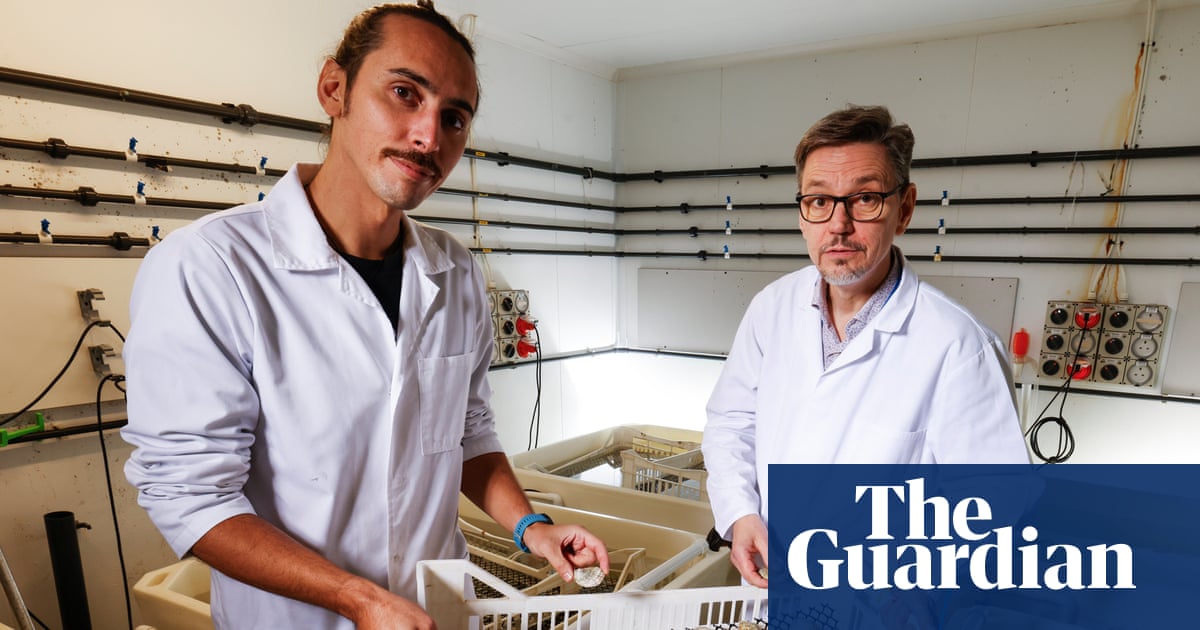
Prof Bill Sanderson of Heriot-Watt, who leads Deep, called the natural breeding “a very significant milestone.” He said a restored reef could double the diversity of life on the seabed over a decade. Research associate Gurjameer Ramday, who found the young oysters, said warmer seas over the past two years had helped. The discovery, he said, showed that focused restoration can work even as wild oyster populations have collapsed across Europe.
The team hopes about 4 million native oysters will eventually colonise the Dornoch restoration site. Deep will continue adding oysters, with a goal of making the population self-sustaining by 2031. That will depend on young oysters surviving long enough to reproduce faster than crabs and starfish eat them. A fishery is likely at least a decade away, and the work still faces risks from pollution and seabed-damaging fishing methods.
For now, the breeding success offers encouragement to around a dozen newer UK restoration projects, including efforts in Argyll, Essex, the Solent and near Edinburgh. It is also bringing volunteers and businesses into the work, including firms that may develop hatcheries to support restoration. The Dornoch Firth’s tiny oysters are only a beginning, but they show that a long-lost species can start to return when people give it room and time.