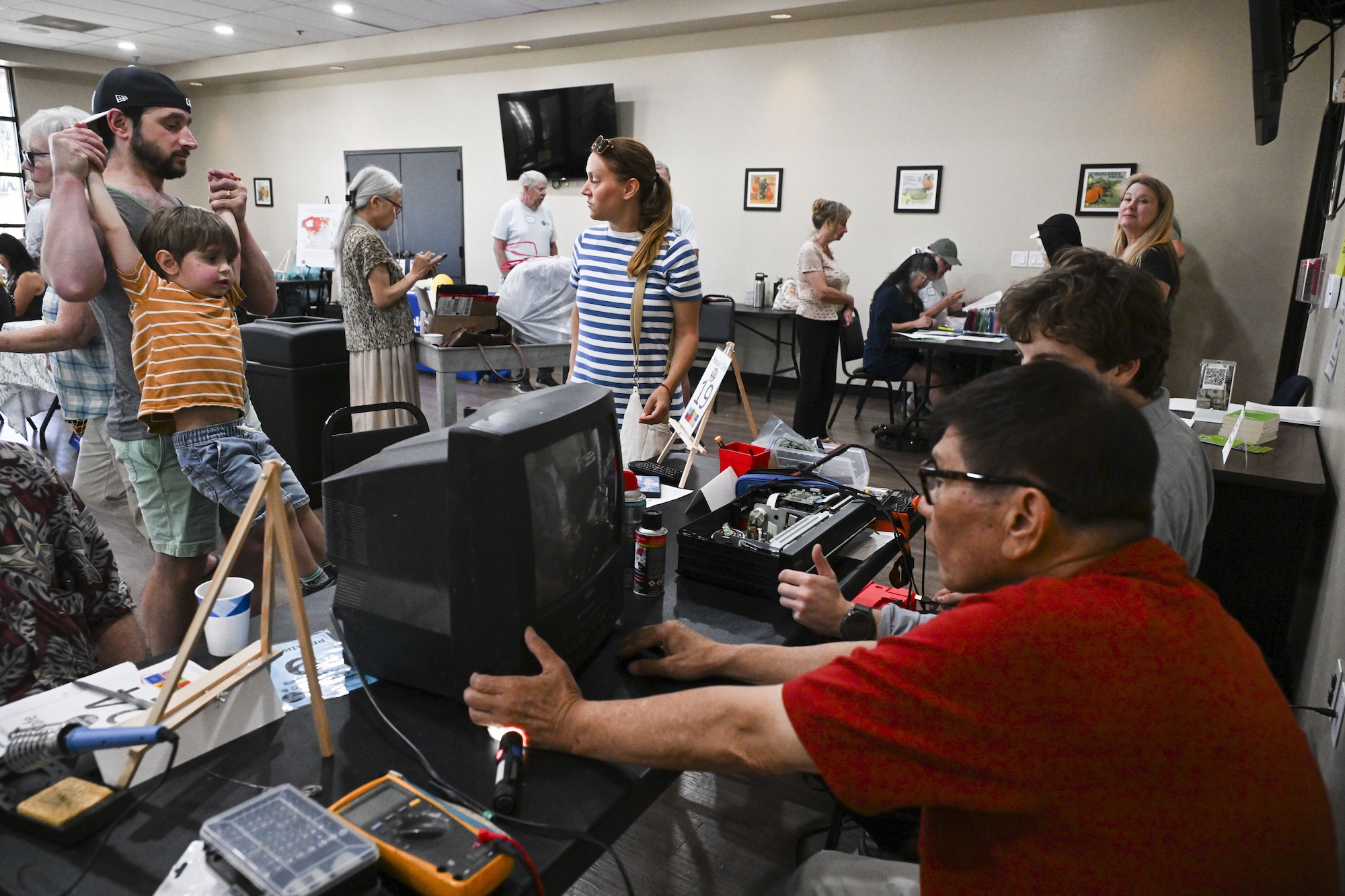
Lilly Pettus’s cracked dining chair was held together by four pairs of hands in a Decatur, Georgia, warehouse as wood glue dried and a volunteer tightened a clamp. Around them, dozens of neighbors were giving broken lamps, electronics, furniture and other belongings a chance to work again.
The gathering was Decatur’s semi-regular repair café, one of a few hundred such events across the United States. Volunteers offer their skills for free, and visitors can watch as they work. The idea is simple: fix what you already own instead of replacing it. That can keep usable goods out of the trash and reduce demand for new products, whose manufacturing adds greenhouse gas emissions linked to climate change.
On this rainy Saturday, the warehouse filled with people carrying both damaged items and tools. Electricians, tailors, luthiers, carpenters and a knife sharpener took over worktables. Volunteers in green shirts bearing the words “I can probably fix that” shared their skills with visitors. Nearby, a volunteer replaced a switch in a mid-century lamp that a young child had repeatedly clicked. The sharp smell of a spot-welding job drifted through the room as another repair drew a small crowd.
Pettus’s chair was more than a piece of furniture. She and her husband bought a dining set in 1996, soon after they married. They chose it with their large family in mind, including two brothers who are nearly 7 feet tall. The table and six chairs followed the family from Florida to Connecticut, Indiana, Michigan, Texas and, finally, Georgia.
Over the years, the chairs witnessed games of Hearts, family laughter and anxious talks about moving. When one joint cracked, the family left the chair in a corner. Pettus did not know how to mend it, and throwing it away felt like losing a record of decades of family life. She had also heard her child, who interned at the Environmental Protection Agency, speak about pollution and climate change. After months with the chair at home, Pettus spotted the repair café while running errands, drove half a mile home to fetch it, and brought it in.
The cafés offer more than a practical fix, say their supporters. As prices rise and wages stagnate, the gatherings give people a way to share skills and question a consumer economy built around buying replacements. Martine Postma, director of Repair Café International, a Netherlands-based network of 4,000 cafés, said replacing a broken item online can be quick but isolating. Repairing it alongside other people creates a different kind of connection.
For Pettus, that connection began with strangers leaning over a chair she had owned for decades. She got to see how its joints were built, and the chair got the chance to return to family life. Across repair cafés, small acts like that add up to a practical alternative: keeping useful things in use, while making repair a shared effort rather than a lonely chore.