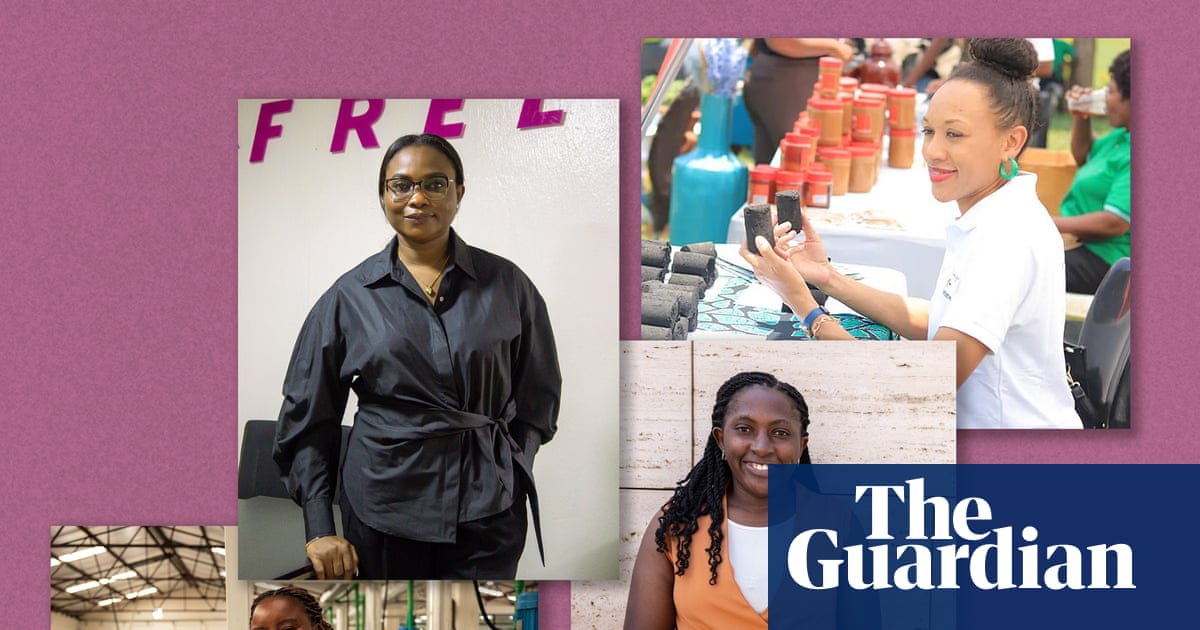
At a factory on the outskirts of Ibadan, discarded tyres are being shredded into rubber granules that can become playground surfaces, gym flooring, paving blocks and tiles. For founder Ifedolapo Runsewe, the work is both a business and a way to keep tyres from being dumped or burned.
Nigeria produces millions of waste tyres each year. Burning them to recover scrap metal releases hazardous pollutants. “Burning tyres releases a complex mix of toxic chemicals – it’s not just pollution, it’s a direct public health threat,” says Oladele Ogunseitan, a presidential chair at the University of California, Irvine. Runsewe saw the damage first-hand after more than 12 years in banking. She also saw that almost every part of a tyre could be recovered and reused.
In 2020, she started Freee Recycle. Today, its factory employs about 62 people and collects tyres from four Nigerian states: Oyo, Lagos, Osun and Kwara. The company processes the tyres and turns the recovered rubber into products for customers, taking recycling beyond collection and into manufacturing.
That step takes substantial investment. The machinery and skills needed to make finished goods cost money, and a factory also needs buyers for what it produces. Runsewe says people often see recycling as an informal, small-scale activity rather than a serious business. “And that is absolutely not true,” she says.
She has also had to confront assumptions about who belongs in manufacturing. At banks and meetings with investors, she says, people sometimes assumed the man beside her owned the company. “As soon as I spoke, the question came up: why should we give a woman millions, hundreds of millions?”
The barrier is part of a wider gap. Women own about 40% of small businesses in Nigeria, but the World Bank says 56% of female entrepreneurs’ most recent loan applications were denied, compared with 17% of men’s. That can make it harder for women to enter capital-heavy industries such as recycling, even when they have a viable plan.
Freee Recycle has built partnerships with Michelin, Save the Children and the International Committee of the Red Cross. Runsewe says customers choose the company for its work and its standards, not simply because it is female-owned: “They see a brand that is good, transparent, credible and ethical.”
The company is also finding new ways to make discarded tyres visible. Its Freee art residency, launched in 2025, has turned them into large artworks inspired by African history and culture, including the Bata drum, Ikom monoliths and Benin bronze traditions. Runsewe is exploring a dedicated facility to recycle aerosol containers, such as insecticide cans and spray containers, which would be the first of its kind in Nigeria, she says.
Her factory shows what can happen when waste becomes raw material and a founder gets the chance to build beyond a small-scale operation. The next test is whether the business can carry its approach into new materials while continuing to find the investment and customers that manufacturing demands.