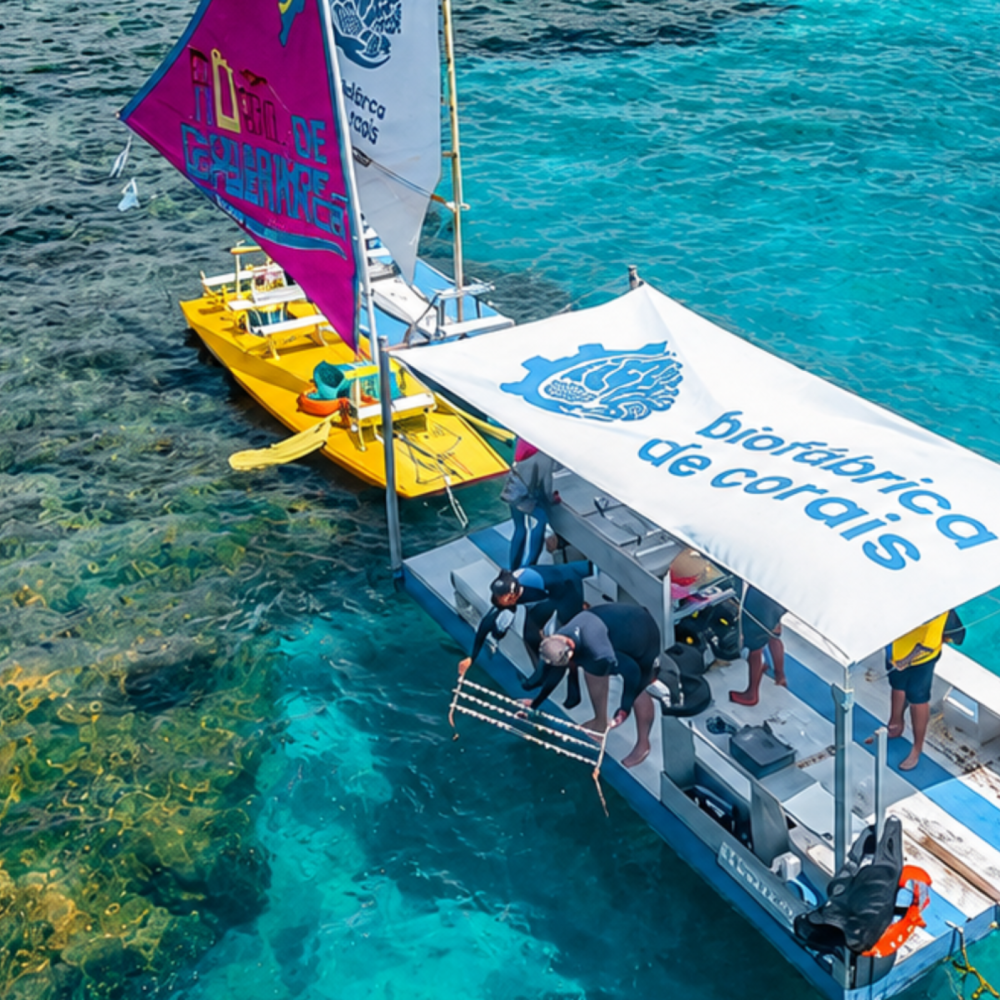
A visitor in Porto de Galinhas can leave the beach with more than photos: a coral fragment planted in the sea, with a year of growth ahead of it. Two new tours in Pernambuco invite travelers to help restore the reefs that make this Brazilian coast famous.
The experiences come from travel platform Civitatis, which operates in more than 160 countries, and Biofábrica de Corais, a Pernambuco-based coral restoration project. The partnership gives visitors a hands-on role in reef recovery at a time when the local ecosystem has faced severe losses. The reefs support marine life, help protect the coast and are a central part of Porto de Galinhas’ appeal.
Both tours begin aboard a traditional jangada, a local raft, and take participants to an offshore coral farm. There, visitors learn about reef biodiversity, prepare coral fragments and plant them. Each person receives an official adoption of a coral within 24 hours and can follow its progress for a year.
The three-hour snorkeling tour costs from R$350. It includes time floating above the underwater farm, where guests can see fish and early stages of coral cultivation, as well as a tropical snack of fresh fruit, bolo de rolo cake and coconut water. The activity is open to people aged eight and older.
A four-hour option, the Ocean Immersion, costs from R$1,100 and combines a beginner diving experience with coral planting. After a safety briefing, participants dive for 45 minutes at depths of 3 to 10 meters with trained instructors. The tour requires good physical condition and the ability to swim. It also includes photos and a beginner diving certificate that allows participants to sign up later for an Open Water Diver course.
Biofábrica de Corais uses marine nurseries, biodegradable structures made with 3D printers, scientific monitoring and environmental education. Its work extends across Porto de Galinhas, Tamandaré and Maragogi. By September 2026, the project had cultivated more than 20,000 corals. The organization was recognized by UNESCO in 2025 as a global reference project for the Ocean Decade, and again in September 2026 by the International Decade of Sciences for Sustainable Development.
The need is stark. From 2023 to mid-2024, 84% of the world’s reef areas experienced heat stress that could cause bleaching, according to the US National Oceanic and Atmospheric Administration. In Porto de Galinhas, more than 95% of the local coral colony disappeared. Biofábrica chief executive and co-founder Rudã Fernandes said about 20% of the oldest colonies under the project’s care were saved. Most of the fire corals still alive in the area, he said, are corals grown by the initiative.
For Civitatis Brazil country manager Alexandre Oliveira, the tours connect travelers with the people caring for a natural landmark. The idea is simple: instead of only trying to reduce tourism’s harm, visitors can take part in repairing a place they came to enjoy. A planted fragment is small, but it gives travelers a direct link to the reef—and a reason to keep watching what happens there after the trip ends.