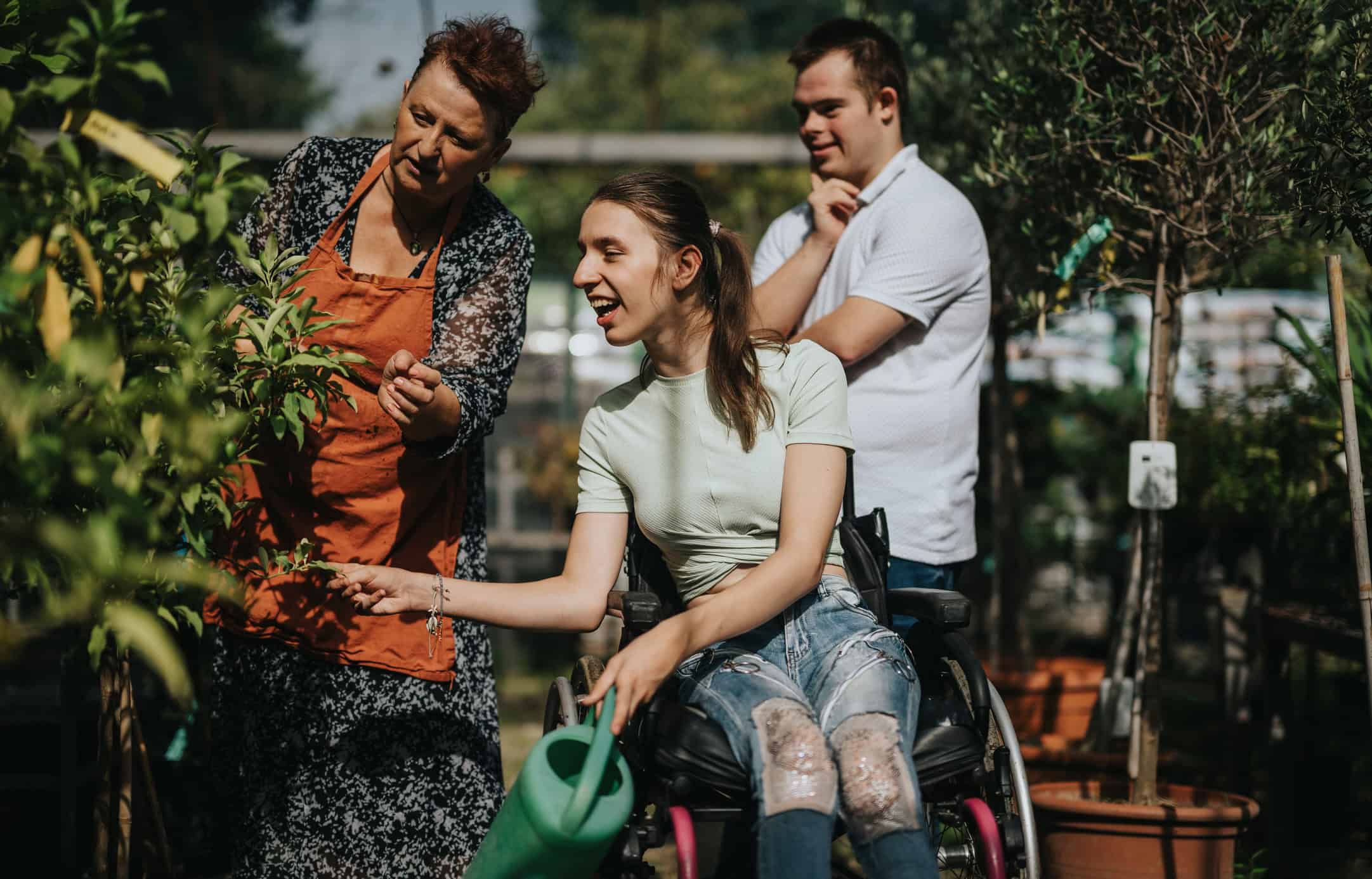
A few minutes after arriving in Botton, in North Yorkshire’s North York Moors, I was shovelling hay in a field with my friend Max and several residents of the Esk Valley Camphill Community. We worked on a conservation project, paused to talk, then shared tea and biscuits by the cars. It looked less like a care appointment than an ordinary day spent doing something together.
That difference matters. Social care is often organised as a service: one person provides support, another receives it. But at Botton, people with and without learning disabilities live and work together as members of a community. Support is part of shared daily life, built through relationships rather than kept separate from them.
The Esk Valley Camphill Community is part of the international Camphill movement, which is based on the idea that people with and without learning disabilities can build a life together as equals. The Botton community was founded in 1955 by Karl König, an Austrian paediatrician who had started the Camphill movement in rural Scotland 16 years earlier. He was inspired by the educational ideas of Rudolf Steiner. The land came from W F Macmillan and his family, known for the publishing company Macmillan Publishers and for their local philanthropy. Alistair Macmillan, who had a learning disability, later lived in Botton.
The community grew to around 300 to 400 people at its peak. Today, around 120 residents continue this way of life across 19 households. Esk Valley Camphill Community is one of two organisations based in the village; the other is Camphill Village Trust.
For Max, the shared life offered something that earlier support arrangements had not. After school, he had attended a special needs school rather than sixth form and tried service-based care that struggled to accommodate him. Before joining Esk Valley, leaving home without supervision had often been difficult. During my visit, he moved around the village with ease, greeting people, introducing me and sharing news about the community. “It’s been the best two years of my life. Much better than anything before,” he said.
The change I saw was not simply a new place to receive help. Max seemed to have a role, a rhythm and people around him as part of everyday life. That does not mean one community can answer every need, or that its model can simply be copied elsewhere. But Botton offers a clear example of what can happen when care is understood not only as a service delivered to someone, but as a shared way of living.
As social care systems consider how to better support people with learning disabilities, Botton raises a practical question: what would change if belonging and shared responsibility were treated as central to care, rather than as extras?