Latest News
Positive stories from around the world · Good news by country
Showing 3265–3288 of 37370 articles
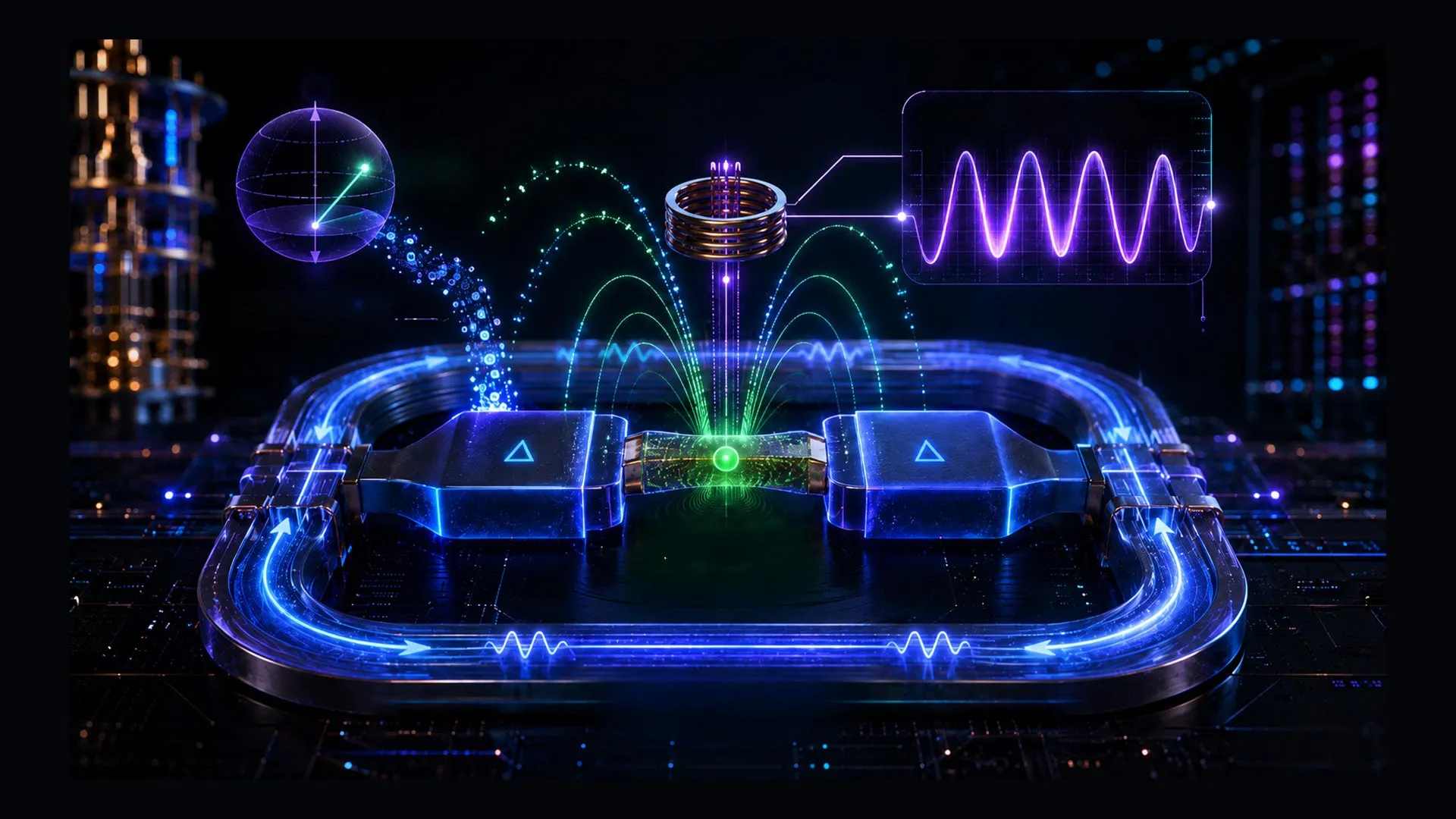
A tiny supercurrent could unlock quantum information without destroying it
A research team proposed a way to read information from a qubit without destroying its delicate state. The method detects a tiny electrical signal produced by the qubit itself. In simulations, it reached up to 99.85% accuracy. If proven in hardware, it could help make quantum computers simpler and more efficient.

India progressing towards sending its first human deep-sea mission to depth of up to 6,000 metres by 2028: Jitendra Singh - The Economic Times
India is working toward its first crewed deep-sea mission, planned to reach depths of up to 6,000 metres by 2028. The National Institute of Ocean Technology in Chennai has developed the ability to run trials at those depths in the Central Indian Ocean Basin. The project brings together ocean science, robotics, electronics and other fields. The mission is still a goal, not a completed voyage.
APC-PCC lists gains of Tinubu’s education reform - The Nation Newspaper
Nigeria's BESDA program helped more than 1 million out-of-school children return to classrooms. It trained 1,400 Tsangaya teachers and opened 200 bilingual centres across 17 northern states. The AGILE program reached 7.19 million girls and supported secondary school enrollment for 3.7 million students. Facilities were upgraded in more than 10,000 schools.

NASA Announces X-70 Experimental Aircraft to Advance Flight Research
NASA introduced the crewed X-70 Fractal at Kennedy Space Center in Florida. The aircraft is built as a research platform for testing new aviation technologies. NASA says it can be rapidly reconfigured, allowing researchers to adapt it for different tests. The announcement came at the UP.Summit.

Japan's ALS community is ready to become research partners, nationwide survey suggests
A survey of people with ALS and their families across Japan found strong interest in helping shape research. Most respondents had not heard of patient and public involvement, or PPI. The findings suggest researchers could involve patients and families more directly in studies. The article gives no survey size or percentage.

A new route to calculating gluon production in proton–nucleus collisions
Researchers describe a new way to calculate gluon production in proton–nucleus collisions. Their model treats each incoming particle as a stream of color charges. Those charges interact with gluons, which help create particles seen after the collision. The excerpt gives no results or measured gains.

Portugal Secures €300m EIB Financing to Expand Affordable Rental Housing Supply | Business
Portugal will receive €300 million in European Investment Bank financing through IFRRU 2030. The money will support new rental homes and bring unused or underused properties back into use. The program aims to expand affordable and moderate-rent options across the country. It also builds on earlier EIB housing loans in Portugal.

Earth atmosphere emulators could enable faster and more accurate weather predictions
Lawrence Livermore National Laboratory researchers are developing STRATA, a machine-learning tool that imitates atmospheric physics models. It could produce forecasts much faster, allowing scientists to run many more simulations and compare possible weather outcomes. This may improve planning for disasters and risks to critical infrastructure. The article describes ongoing work, not a completed forecasting system.

European orbiter detects fresh hints of volcanic activity on Mars
The ExoMars Trace Gas Orbiter found hydrogen chloride above fissures on Alba Mons, Mars. The gas appeared in early northern summer, unlike its usual seasonal pattern. Camera images showed fresh, narrow cracks, some hundreds of meters long. Researchers say magma below the surface may be releasing gas, but no new eruptions have been seen.

First direct observations reveal hydrogen dissolved in tiny gaps between metal atoms
A University of Sydney team directly observed hydrogen between atoms in metal alloys. They used deuterium, a heavier form of hydrogen, to track its location inside samples. The discovery helps explain how hydrogen moves through metals and may guide stronger materials for pipelines and storage equipment.

Scientists reveal how cosignaling receptors dually regulate T cell activation via phase separation
Researchers from Chinese institutions found that CD28 helps activate T cells, while PD-1 can interfere with that signal. They changed parts of CD28 so PD-1 had less effect, without harming CD28's ability to work with Lck. In lab tests and a mouse tumor model, the altered CAR-T cells were less affected by PD-L1 and worked better than cells with standard CD28. The findings may help guide future CAR-T design, but they are not yet proof of benefit in people.

Ancient coins suggest influential Iron Age king was female
Research by Bournemouth University archaeologist Miles Russell argues that Verica, an Iron Age ruler of the Atrebates, was female. Her territory covered parts of modern Hampshire and West Sussex. Russell points to her name and coins showing a feminine rider as evidence. He says Verica helped secure Roman support and provided local knowledge for the invasion of Britain in A.D. 43.
Private companies added 86,000 jobs in October, slightly higher than expected, ADP says
Private companies in the United States added 86,000 jobs in October, according to ADP. The total was slightly higher than expected. Mid-sized businesses added 33,000 jobs, large firms added 24,000, and small firms added 28,000. Pay growth for workers also reached its fastest pace since March 2024.

Personalized brain therapy hits 68 percent remission for PTSD
MeRT pairs brain activity scans with magnetic pulses tailored to each patient. In a clinical trial, 68% of participants reached remission and symptoms fell by 52%. The FDA cleared it as a non-drug option for PTSD. Researchers are working to expand insurance coverage.

Brain activity patterns may predict Alzheimer's years before memory slips
A Stanford-led study found brain activity patterns linked to future Alzheimer’s risk in adults ages 55 to 70 who had no signs of memory problems. The patterns also pointed to brain resilience seen in some older adults called super agers. The scoring system predicted decline better than several existing measures. Researchers say more work is needed before testing treatments that might change these patterns.
Hydrogen Derivatives Enable Cost-Effective Carbon Neutrality in China
Nature lists a study on how hydrogen derivatives could support carbon neutrality in China at lower cost. The article title suggests a possible energy-planning benefit, but the supplied text does not include the study's findings, numbers, or methods. More detail is needed to assess the size of the savings.
Opportunistically Detecting Signs of Hypertension on a Consumer Smartwatch
Researchers report a method for using data from a consumer smartwatch to detect signs linked to hypertension, or high blood pressure. The approach could help flag people who may need a medical check. The provided information gives no study results, sample size, or accuracy figures, so its real-world value is not clear.

Tiny wildlife populations can recover from brink of extinction: study-Xinhua
Researchers reviewed 51 species that received direct conservation measures, including predator control, habitat repair, captive breeding, or relocation. Of those species, 61% grew to at least 100 individuals. The study suggests well-targeted help can give very small wildlife populations a chance to recover.

Researchers launch major coral restoration trial on Australia's Great Barrier Reef-Xinhua
Marine researchers have launched one of the largest coral restoration field trials on the Great Barrier Reef. The trial began during the reef's annual mass coral spawning event. The short report does not say how many corals are involved or what results researchers expect.
Putting human rights at the heart of peace and development in Africa | OHCHR
The African Union and United Nations are deepening their human rights partnership across Africa. Their work aims to spot risks earlier, improve accountability, and turn shared promises into real changes for people. The article gives no specific programs, results, or figures.

Genetic interaction map could lead to better antibiotic pairings for tuberculosis
Researchers at Rockefeller University built a detailed map of how essential genes in the tuberculosis bacterium interact. It reveals thousands of gene links that were not known before. The findings may help scientists uncover new drug targets and choose stronger antibiotic combinations. Tuberculosis still kills more than a million people each year.

A carefully timed pair of light pulses can amplify the motion of atomic layers in a quantum material
Researchers from Würzburg, Rostock, and ETH Zurich tested a way to control WTe2, a material whose atomic layers can slide. Two light pulses, timed to match the material's motion, amplified that sliding better than simply using one stronger pulse. The finding could support more energy-efficient control of properties used in future compact electronics.

How a CRISPR sickle cell therapy moved from lab to clinical trial
A UCLA-led team described how it moved an experimental CRISPR approach for sickle cell disease from lab research toward a clinical trial. The researchers developed a blood stem cell therapy that can be made at the scale and quality needed for testing in people. The report does not give trial results or show that the therapy is approved.

Flat feet may have helped Neanderthals stay stable while carrying heavy loads
Researchers at the University of Bologna studied 3D scans of fossil heels from Neanderthals and modern humans. Neanderthal heels were shorter, wider and taller, and their flatter feet may have helped them bear heavy loads and move on rough ground. The team also found that recent urban populations had weaker heels than prehistoric people, possibly linked to less activity and rigid shoes.