Latest News
Positive stories from around the world · Good news by country
Showing 3289–3312 of 37370 articles

Why humans are more sensitive than other species to a brain developmental disease
Teams at VIB and KU Leuven studied mutations in the ASPM gene. They found that the mutations disrupt neural stem cells, which help the brain grow. This offers a clearer explanation for microcephaly, which causes an unusually small brain and head. The results may also help explain why humans are more sensitive to this genetic condition than other species.

Hundreds of Ice Age rock art engravings discovered hidden in plain sight
Archaeologists found hundreds of Ice Age engravings in Mediterranean Iberia. The area was once thought to have no cave art. The find is the third-largest known group of Paleolithic art in the region, changing what experts know about early European art.
Factsheet - EU solidarity with Ukraine
The European Commission published a factsheet titled “EU solidarity with Ukraine” in Brussels on November 5, 2026. The supplied text does not describe specific aid, policies, or results. It therefore confirms the subject and publication date, but not the scale or impact of EU support.
Parkinson's pride as Wrexham deliver against Boro
Wrexham scored twice in the second half to beat league leaders Middlesbrough 2-0 at the Racecourse Ground. The result ended Middlesbrough's 11-game unbeaten league run. Manager Phil Parkinson praised his team's effort and commitment. He also confirmed striker Sam Smith tore a knee ligament and will miss nine months after surgery.

Carbon dots fluoresce their way through the rainbow as liquids change
A research team created carbon dots that can glow in a range of colors under ultraviolet light. Their color changes with the liquid around them and the dots' concentration. The team added the dots to plastic decorations and used them to build a data encryption system. The finding could support new materials and ways to protect information.

A new superinductor created within a silicon integrated circuit
Researchers have built a new superinductor within a silicon integrated circuit. The chip was made using a commercial CMOS process, the standard method used to make many computer chips. The study was published in Nature Electronics. Teams from nanoGUNE, Quantum Motion, and several UK universities took part.

Cosmic hydrogen measurement marks breakthrough in mapping the universe
The international MeerKLASS Collaboration has made its first measurement of the large-scale clustering of cosmic hydrogen. This means it measured how hydrogen is grouped across vast distances. The finding supports a technique that could help scientists map the universe. The work used South Africa's MeerKAT radio telescope.
Manchester United beat Roma in epic second-half comeback
Manchester United faced a two-goal deficit against Roma at Old Trafford. The team rallied in the second half and won the Champions League match. The comeback made for a memorable night for the home crowd.
Elevate North Nashville Celebrates Completion of First Affordable Housing Development, Advancing Community-Led Revitalization – The Tennessee Tribune
Elevate North Nashville has completed its first affordable housing development on Scovel Street in Nashville. The project provides income-based rental duplexes. It was completed in less than a year after groundbreaking. Organizers describe it as the first step in a wider community-led revitalization effort.

Tiny structures in our spines could hold clues to why our backs wear out
Researchers used TomoSAXS, a method that combines X-ray techniques, to study spinal disks in 3D. They found that collagen strands are already under strain before extra pressure is added. Highly curved fibers near the disk's inner and outer boundary faced the greatest strain. The work may help explain where disk damage and herniation can begin.

Traditional Korean paper becomes breathable patch for future wearable health care
A new wearable patch uses traditional Korean paper as its base. Its breathable design aims to reduce trapped sweat and skin discomfort during long wear. The patch may also help collect sweat more reliably for health monitoring. The article does not name a research location or report test results.

Protein DUSP4 boosts cancer-fighting T cells in colorectal cancer lab models
Researchers at the National University of Singapore found that DUSP4 helps CD8 T cells keep attacking colorectal cancer in lab and preclinical models. When the protein was missing, tumors grew more and T cells showed signs of exhaustion. Boosting DUSP4 also helped engineered CAR-T cells multiply and kill cancer cells more effectively. The work points to a possible treatment approach, but it has not been proven in patients.

Generative AI fills gaps in brain wiring maps where MRI scans lose signal
Researchers at USC's Stevens Neuroimaging and Informatics Institute developed FOD-Diffusion, an AI model for repairing gaps in diffusion MRI brain maps. It focuses on the brainstem and a region above the eyes, where scanner distortions can erase signal. The model was trained and tested on scans from two large research studies. It could help scientists study brain connections in aging and disease.
WHO hails progress against neglected tropical diseases
The WHO says more countries have eliminated at least one neglected tropical disease. The number of people needing treatment fell by more than a third from 2010 to 2024. Sleeping sickness cases dropped 98% since 1999, and guinea worm had 10 human cases last year. But dengue reached a record 15.1 million cases in 2024, and funding remains below pre-pandemic levels.
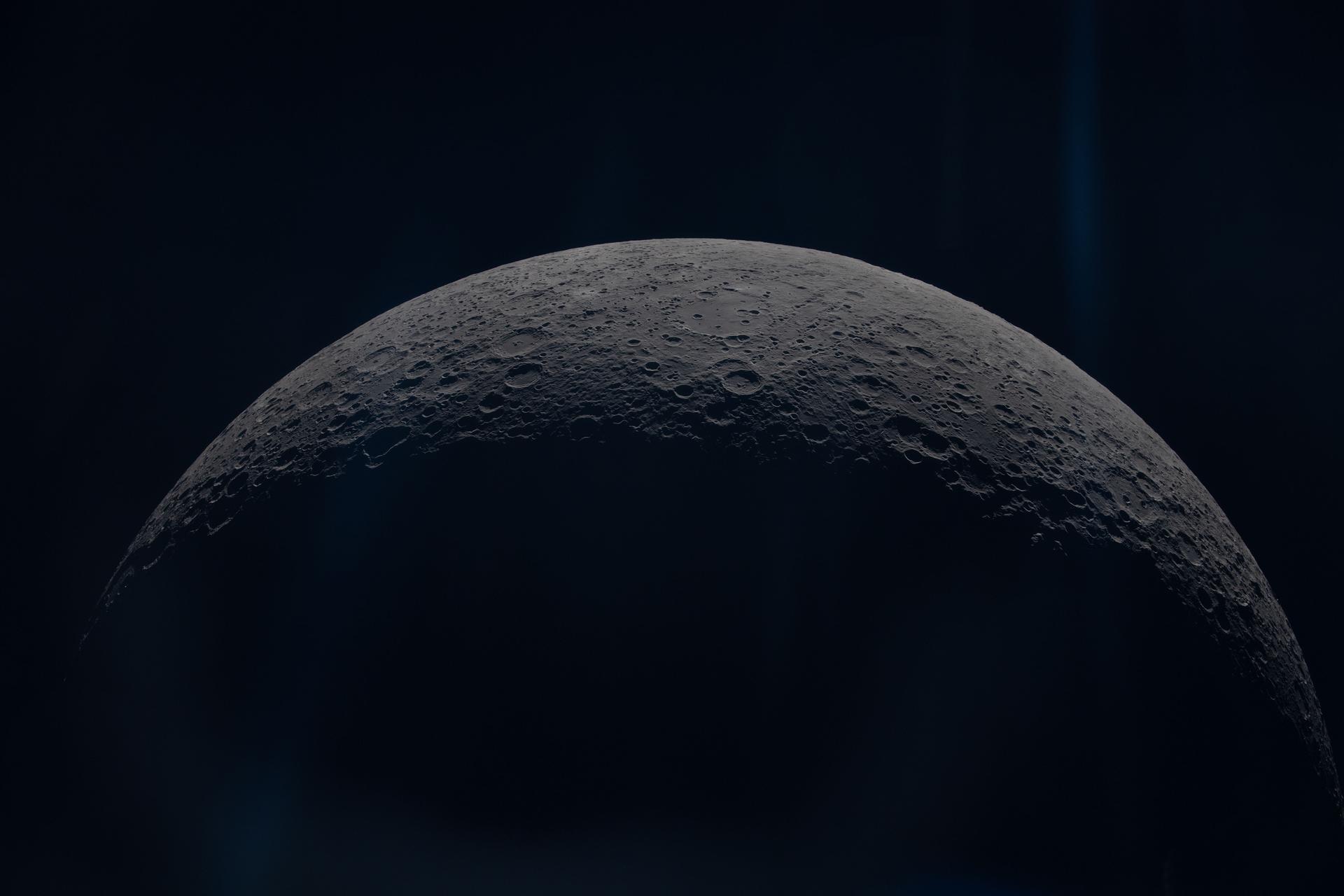
NASA Shares Plans to Accelerate Artemis, Return to Moon
NASA has outlined plans to speed up its Artemis missions and return astronauts to the Moon. Artemis III is planned for 2027, with four astronauts testing Orion’s docking with lander vehicles in Earth orbit. Artemis IV is planned to land astronauts on the Moon in 2028. NASA is also developing a lighter spacesuit and testing multiple rocket options.

Why a company donating $20,000 a month counts for more than $240,000 once a year in the eyes of customers
A study examined how the timing of company donations affects customer views. People tended to think more highly of companies that gave weekly or monthly. This held even when the yearly total matched one large annual gift. The finding suggests steady giving may make a company seem more committed to charity.
WHO approves clinical trials on two new Ebola vaccines
The WHO recommended adding two vaccine candidates to an Ebola trial in the Democratic Republic of the Congo. The vaccines were designed for Bundibugyo virus, which is not covered by the approved Ervebo vaccine. The DRC's National Institute for Biomedical Research is leading the study with WHO and other partners. The outbreak has killed more than 5,300 people across Africa.

Longer estrogen exposure linked to better brain vessel health in older women
Researchers studied 352 women in Gothenburg, all aged 70, with brain scans taken five years apart. Longer reproductive years and hormone therapy use were linked to fewer signs of small-vessel damage. Women who had used both birth control pills and hormone therapy had the most favorable vessel health profile. The study cannot show that hormones caused the differences or support using therapy to prevent brain damage.
Balanço 2023-2026: Governo de Minas amplia presença em áreas vulneráveis com ações integradas | Agência Minas
A state program is coordinating public safety, health, education, culture, and social services in five vulnerable communities in Belo Horizonte. It began in Aglomerado da Serra and expanded to four other neighborhoods. Teams removed 184 abandoned vehicles and more than 300 graffiti sites linked to organized crime. Service events have provided over 4,000 appointments, with ongoing investments in schools, health units, and public spaces.

Blood pressure medication and vibration may boost brain waste clearance
The brain clears waste most actively during sleep. Researchers report that a treatment using blood pressure medicine and vibration also boosted this process while participants were awake. The finding may point to a new way to help remove harmful proteins from the brain. More research is needed to understand its benefits and risks.

NOAA weather modeling hits key milestone with Rapid Refresh Forecast System debut
NOAA launched the Rapid Refresh Forecast System (RRFS), a new weather model for the United States. It is designed to produce forecasts sooner and with greater accuracy. Better warnings can help people and officials prepare for dangerous weather and protect lives and property. The supplied article excerpt gives no performance figures.

New data infrastructure service strengthens interdisciplinary research
SoRa helps researchers combine social survey data with maps and other geographic data. The service handles much of the technical work and records the methods used, so results can be checked later. Researchers can test ideas with synthetic home locations. Real household locations are only available inside a secure research center in Berlin.

Maine partners update shoreline maps to improve coastal planning
Maine partners are updating shoreline maps to support coastal planning. The work is led with input from the Maine Geological Survey and NOAA. Better maps can help communities understand coastal risks and plan for future changes. The provided article details do not include map measurements or specific outcomes.

Overlooked insects are bucking the trend and becoming more abundant, study finds
Researchers examined more than 600,000 insects and spiders collected at four sites in England over three decades. Most of the 71 groups studied remained stable or increased, and many became active earlier in the year. Warmer conditions were strongly linked to earlier activity and higher numbers. The study tracked flying species, not ground-level insect populations, where declines have been reported.