Latest News
Positive stories from around the world · Good news by country
Showing 33289–33312 of 37379 articles

The SIRT6 gene keeps the brain healthy by regulating protein production, study finds
Scientists discovered that the SIRT6 enzyme helps brain cells stay healthy by preventing toxic protein waste buildup. As people age, SIRT6 levels drop, allowing proteins to clump together in ways that contribute to neurodegenerative diseases. The team found that an existing FDA-approved drug called 4PBA was able to reverse this damage in experiments with worms. The drug improved the worms' lifespan and mobility, giving hope it could one day help treat conditions like Alzheimer's and Parkinson's in humans.

To tackle trafficking in gibbons, experts probe what drives demand
Gibbon trafficking seizures hit a record 336 animals between January and August 2025, representing 20% of all cases since tracking began in 2016. Conservationists are fighting back by studying what drives people to buy gibbons — knowledge they say is crucial for tailoring solutions. In Malaysia, most rescued gibbons were voluntarily surrendered by owners who say they loved animals or wanted a pet for their children. In India, gibbons are often coveted as status symbols, arriving through confiscation rather than surrender.
Dad's poor geography leads to De Vera's Wales debut
Jenna De Vera made her Wales rugby debut after her Filipino parents accidentally settled in Llanelli, Wales when her father confused locations for London streets. The 22-year-old Bristol Bears centre waited three years and overcame a serious knee injury to earn her first senior cap. Wales coach Sean Lynn praised her resilience and leadership. The family was involved in her cap presentation at Cardiff Arms Park.

'Powwow People' brings the powwow experience to the Milwaukee Film Festival | WUWM 89.7 FM - Milwaukee's NPR
A new documentary called "Powwow People" by Sky Hopinka, a member of the Ho-Chunk Nation, is screening at the Milwaukee Film Festival in Wisconsin. The film captures a three-day powwow, weaving together personal reflections from participants like Jamie John, a two-spirit Jingle Dress dancer, and Freddy Kozad from a drum group.
Korir sets course record to defend Boston Marathon title
Kenyan runner Sharon Lokedi successfully defended her Boston Marathon title on April 21, 2025, setting a new course record of 2 hours, 1 minute, and 52 seconds—beating her previous mark by 2 seconds. She crossed the finish line 44 seconds ahead of fellow Kenyan Loice Chemnung, who came in second. Lokedi, who also won the 2022 New York Marathon, said she kept repeating 'Be patient, be humble, you can do this' during the race.
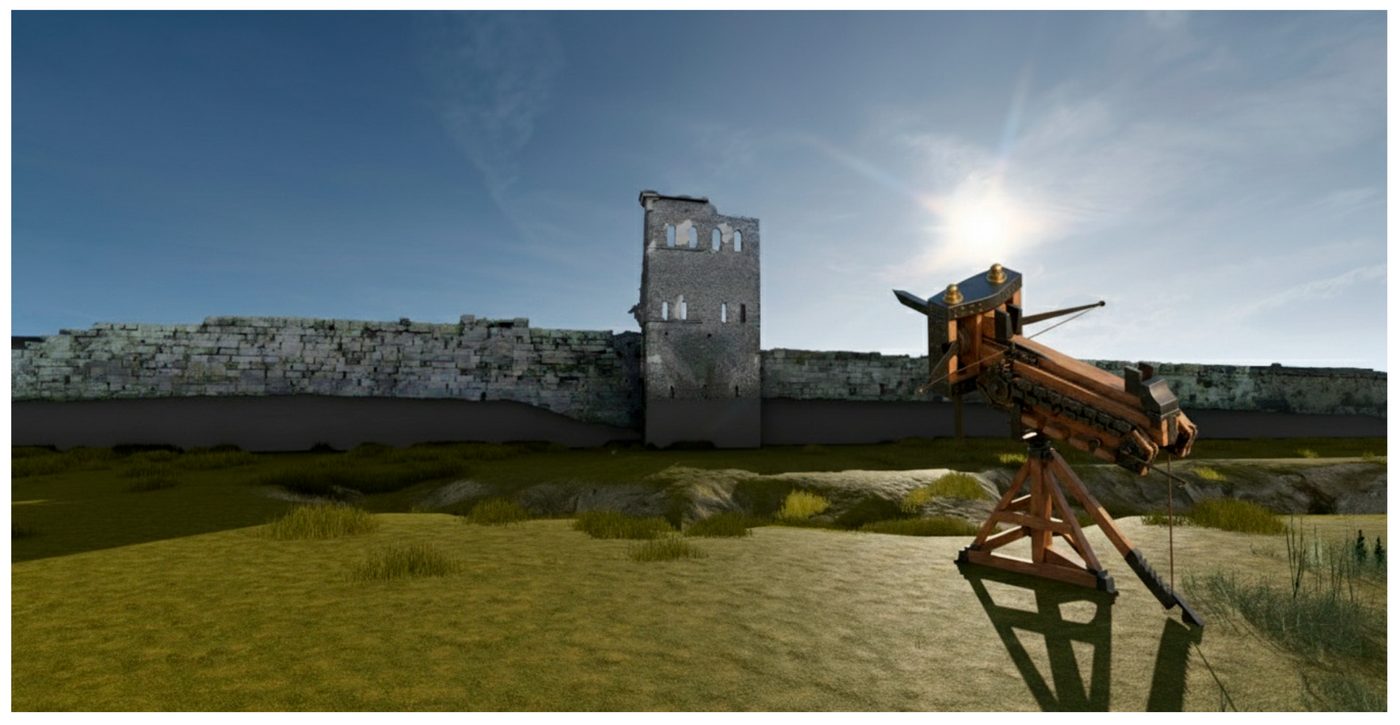
Evidence from Pompeii Reveals Roman ‘Automatic’ Weapon Used More Than 2,000 Years Ago
Archaeologists from the University of Campania in Italy have discovered what appears to be the first real physical proof of the polybolos, an ancient Roman "automatic" weapon. The device, designed by the Greek Dionysius of Alexandria, could fire multiple projectiles without reloading. Adriana Rossi and her team found identical quadrangular impact holes on Pompeii walls from Sulla's siege during the Social War 2,100 years ago. This challenges the idea that rapid-fire weapons are a modern invention.

LHC decay anomaly reveals possible crack in the Standard Model
The Large Hadron Collider (LHC) near Geneva has uncovered intriguing evidence that could crack open physics as we know it. Researchers measured how B mesons — tiny sub-atomic particles — transform into other particles, finding their behavior disagrees with predictions from the Standard Model. The result shows four standard deviations from expectations, meaning there's roughly a one in 16,000 chance this could be random noise.

The truth about child IQ: Research shows it fluctuates and may be an unreliable predictor of future success
Scientists are discovering that children's IQ scores aren't stable predictors of future success. A landmark 50-year study followed 1,600 intellectually gifted 13-year-olds who scored in the top 1% on standardized tests. Four decades later, 4.1% achieved university tenure and 2.3% became Fortune 500 executives. However, researchers say young children's scores fluctuate substantially, raising questions about relying on early tests to predict lifetime achievement.

The 10 pence pill that underpins diabetes care, and may do much more besides
Metformin has been a cornerstone of diabetes treatment since the late 1950s. Originally derived from the French lilac plant, it helps the body use insulin more effectively and activates an enzyme called AMPK that acts like a cellular energy sensor. The drug is remarkably safe and affordable, costing just 10 pence per tablet. Researchers are now studying whether Metformin may also help with polycystic ovary syndrome, aging, and brain protection, though evidence for these uses remains mixed.

Rare soft-bodied fossil from Quebec reveals a new jellyfish relative from 450 million years ago
Researchers at Université de Montréal and McGill University discovered a new ancient species near Quebec City. The fossils of Paleocanna tentaculum are 450 million years old, dating to the Ordovician period. Only a few soft-bodied species in this jellyfish family have ever been found as fossils. The team studied 135 specimens preserved in limestone, finding the creatures were buried quickly on the seafloor, which helped save their delicate remains.

School-based screening and support can help reduce anxiety in young children
Researchers from the University of Oxford tested a new way to help children with anxiety. They screened kids in 84 primary schools across England using questionnaires sent to parents. Children who used the online support tool recovered at much higher rates than those receiving standard school help. Teachers also noticed improvements lasting up to two years.
Mastercard US | Mastercard brings tools, mentorship and connections directly to small businesses
Mastercard and the NYC Department of Small Business Services have joined forces to directly support small businesses across all five boroughs. The program offers one-on-one counseling in two key areas: accessing capital (funding) and building digital literacy skills. By bringing these resources directly to entrepreneurs, the initiative aims to unlock economic potential and strengthen local businesses. The partnership reflects a growing trend of corporations and city governments working together to boost community economic resilience.
American Association for Cancer Research Recognizes 2025-2026 Research Grantees | AACR | News Releases
The American Association for Cancer Research announced 2025-2026 research grant recipients. Since 1993, the AACR has awarded more than $551 million through over 1,100 grants supporting cancer researchers worldwide. These grants fund scientists at institutions like Memorial Sloan Kettering and Yale working on new cancer treatments, better detection methods, and prevention strategies. The funding supports researchers at every career stage, from early-career fellows to established scientists.

I've fired one of America's most powerful lasers—here's what a shot day looks like
Two floors below the University of Texas at Austin campus sits one of America's most powerful lasers. The Texas Petawatt, now closed due to funding cuts, could briefly produce more power than the entire U.S. electrical grid. On shot day, scientists spent hours warming up and aligning the system before firing a pulse lasting only one-trillionth of a second. Researchers applied for time on the laser to study everything from stellar interiors to fusion energy to cancer treatment approaches.

Why climate models and ocean observations diverge, and what it means for rain and drought
Scientists at Northeastern University have solved a 70-year puzzle about ocean warming patterns. Climate models predicted the Northern Hemisphere would warm faster due to more landmass, but observations show the opposite — the Southern Hemisphere is warming faster. The research found models are "too sensitive to greenhouse gases" and overemphasize a trade wind feedback loop involving evaporation and ocean surface cooling.

Hubble dazzles with young stars in Trifid Nebula
NASA's Hubble Space Telescope is celebrating its 36th anniversary with a breathtaking new image of the Trifid Nebula. Located about 5,000 light-years from Earth, this star-forming region was first captured in 1997. Now, 29 years later, Hubble's improved camera with wider field of view reveals changes on human time scales. The image features a rusty-colored cloud called the "Cosmic Sea Lemon," showing jets from young protostars and evidence of ongoing star formation.

Physicists refute famous 2025 study claiming daylight saving time poses severe health risks
Two Spanish physicists have debunked a 2025 study claiming daylight saving time causes serious health problems. Professors Martín-Olalla and Mira Pérez found that the original Stanford study made a critical mathematical error. The researchers used absolute values for daily circadian readjustments instead of real positive and negative ones, like adding up all steering corrections in one direction rather than letting them cancel each other out.

John Korir breaks Boston Marathon course record as Kenyans retain titles | Boston Marathon | The Guardian
John Korir shattered the Boston Marathon course record, pulling ahead with a 40-second lead before reaching the infamous Heartbreak Hill in Newton. The Kenyan champion became only the second brother to win the race, joining Wesley Korir who claimed victory in 2012. This remarkable family achievement cements the Korir name among marathon royalty. Kenya continues its stronghold on elite marathon racing with this latest triumph.

Rediscovered tracksite reveals large dinosaurs ranged as far as northern Mongolia 120 million years ago
An international team of researchers has rediscovered a dinosaur tracksite in the Saijrakh area of northern Mongolia that was first reported about 70 years ago but later lost due to poor documentation. Their 2025 study found footprints of both large herbivorous sauropods and carnivorous theropods on the same surface, proving that giant dinosaurs inhabited northern Mongolia during the Early Cretaceous, roughly 120 million years ago.
F1 makes changes to address new engine rules concerns
Formula 1's governing bodies have approved targeted rule changes to address driver concerns about the new engine regulations introduced this season. Drivers were frustrated with having to lift and coast during qualifying laps due to excessive energy recovery requirements. The changes reduce the maximum energy that can be harvested per lap from 8MJ to 7MJ, and address dangerous speed gaps when cars have different battery charge levels.

History made: UCLA women's basketball team wins NCAA championship
UCLA Bruins women's basketball won their first NCAA championship on Sunday, defeating the South Carolina Gamecocks 79-51 at the Mortgage Matchup Center in Phoenix, Arizona. The victory marks UCLA's 126th overall NCAA team title. Head coach Cori Close, in her 15th season, praised the team's character and the 'village' of supporters. Lauren Betts earned tournament Most Outstanding Player honors with 14 points and 11 rebounds. Fans packed Pauley Pavilion 400 miles away to watch the free championship watch party.
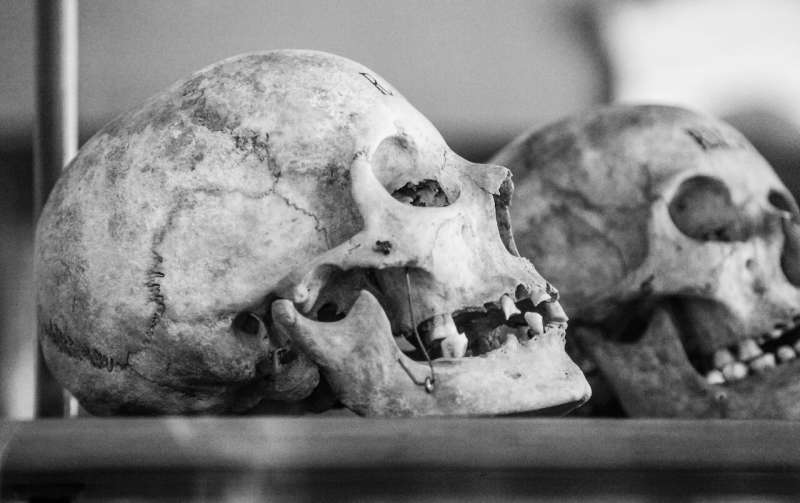
Ancient teeth reveal clues to the environment humans' early ancestors evolved in millions of years ago
Teeth are like tiny biological time capsules. They preserve chemical signals from the food and water an animal consumed when young. Scientists collect enamel powder from fossil teeth and analyze it to determine what plants ancient animals ate. Over 30 years, researchers studied teeth from Ethiopia's Afar region, finding that 4 million years ago, the area had rivers, forests, and grassy plains. Around 2–3 million years ago, the environment shifted toward open grasslands.

Finding a hidden highland culture in the mountains of southern Georgia
Researchers uncovered 168 archaeological sites across the Javakheti Plateau in Georgia. The team spent eight years mapping and excavating, finding stone forts, ancient homes, and burial grounds. They discovered a bronze disk with sun patterns and colorful clay plaques. These findings suggest the area was a cultural hub, not an isolated outpost, with people returning to key sites for thousands of years.

Defending champion John Korir breaks Boston Marathon record and Sharon Lokedi also repeats | CNN
John Korir of Kenya broke the Boston Marathon course record by 70 seconds, finishing in 2:01:52 — the fifth-fastest marathon ever run. With a tailwind helping the strongest field in the race's 130-year history, Korir built a 40-second lead going into Heartbreak Hill. Sharon Lokedi also repeated as women's champion, leading from the Newton Hills to win in 2:18:51. Both Kenyans earned $150,000 plus bonuses, continuing Kenya's dominance in road racing.