Latest News
Positive stories from around the world · Good news by country
Showing 35089–35112 of 37359 articles
Rose birdies 15th after 'magnificent' approach shot
Justin Rose impressed spectators with his skills at Augusta National Golf Club during a recent tournament. The English golfer struck a 'magnificent' approach shot to the 15th green. The shot was so precise it left him with an almost certain birdie, which he converted to move back to five-under par for the tournament.
Teenager Suryavanshi smashes 15-ball fifty in IPL
Vaibhav Suryavanshi, aged just 15, has become the talk of the Indian Premier League after his stunning 78 runs from 26 balls against Royal Challengers Bengaluru. The young batsman smashed 8 fours and 7 sixes in a partnership of 108 runs with Dhruv Jurel. His 15-ball fifty was the joint third-fastest in IPL history. Suryavanshi is now the tournament's leading run-scorer with 200 runs in four innings, and his team Rajasthan Royals won the match with two overs to spare.

Major new telescope on Chilean summit opens window on universe
Cornell University scientists unveiled the Fred Young Submillimeter Telescope (FYST) in Chile after 34 years of planning. Perched at 18,400 feet on Cerro Chajnantor, the telescope sits above most atmospheric interference, allowing crystal-clear views of space. It will observe submillimeter wavelengths to study dark energy, dark matter, galaxy evolution, and the Big Bang's aftermath. The project involved collaboration across the U.S., Germany, Canada, and Chile.

Scientists turn 'mess' into breakthrough: Chaotic design unlocks next-generation optical devices
Researchers at Monash University have proven that controlled chaos can improve optical devices. By arranging light-controlling nanostructures in a disordered 'mosaic' pattern instead of perfect order, they found performance actually improved. Their proof-of-concept device integrates 11 optical functions into one surface, including a lens that works across many wavelengths without color distortion. This could lead to smaller, more powerful cameras, medical scanners, and sensors for everything from environmental monitoring to space exploration.

Baby's body clock begins to synchronize with local time while still in utero, study shows
Researchers at Washington University in St. Louis found that babies start developing their internal body clocks before they are born. Using genetically engineered mice with glowing clock proteins, scientists watched fetuses develop daily rhythms that matched their mothers. The sync happened during the last week of pregnancy, equivalent to a human's third trimester. The team discovered that stress hormones crossing the placenta from mother to baby likely act as timing signals for the fetal clock.
Hatton moves up leaderboard after back-to-back birdies
Tyrrell Hatton, an English professional golfer, improved his standing at the Masters tournament held at Augusta National Golf Club. He made consecutive birdies on the 15th and 16th holes, which pushed him up the leaderboard. The Masters is one of golf's four major championships, held annually at the renowned Augusta course.

12-yo Girl Named a Hero for Running into Burning Home to Save Brothers
Macy Johnson was just 12 years old when she ran toward a burning house in Georgia last Monday. She found her two older brothers inside—one in the shower, one asleep—and screamed until they woke up and escaped. Firefighters from Richmond Hill and Bryan County arrived quickly and stopped the fire before it destroyed the entire two-story home. Though the family lost almost everything, they praised Macy as a hero for saving what mattered most: each other.

AI chips could get faster with 30-nanometer embedded memory that cuts data shuttling
Scientists in Tokyo built memory devices just 30 nanometers thick—about one three-thousandth the width of a human hair. The team, led by Professor Hiroshi Funakubo, combined platinum electrodes with aluminum scandium nitride film while solving crystal structure problems using heat treatment. This breakthrough could let AI chips work faster while using less energy. The technology is also compatible with existing chip factories, making it easier to bring to market.

Rare Roman paint 'recipe' uncovered in Cartagena murals makes smart use of costly cinnabar
Researchers from Spanish universities discovered that Roman painters in Cartagena used a smart mixing technique to stretch their expensive cinnabar paint. By blending the costly 'red gold' mineral with cheap iron oxide, the craftsmen made their premium pigment last longer while keeping its brilliant red color. Scientists analyzed the ancient wall paintings using advanced tools like X-ray diffraction and light-based Raman spectroscopy.

Leukemia cells use a sugar-coated protein to hide from the immune system, study reveals
Leukemia cells hide from the immune system using a sugar-coated protein called CD43, which creates a physical barrier against attack. Researchers at the Broad Institute, Mass General Brigham, and Dana-Farber Cancer Institute made this discovery using a genome-wide CRISPR screen. The finding explains why some experimental drugs targeting a different protein (CD47) have failed in clinical trials for acute myeloid leukemia. Blocking CD43 could become a new approach to exposing leukemia cells to immune destruction.
'Richer, classier, hungrier Glasgow eye more history against Toulon'
Glasgow Warriors host RC Toulon at Scotstoun Stadium on Saturday in the Champions Cup quarter-final. The Scottish side has surged to become European rugby contenders under coach Franco Smith, winning 16 of 19 games this season across all competitions. They enter as favorites against a Toulon side sitting 11th in France's Top 14 with poor away form—only 2 wins from 12 road games. This marks Glasgow's first home quarter-final in the competition's history, a significant milestone for a club once considered European minnows.

Parachutes: A vital part of Artemis II's trip home
Artemis II's Orion spacecraft needs a special parachute system to bring astronauts safely back to Earth. After reentry slows the capsule from 25,000 mph to 350 mph, the 11 parachutes take over at 24,000 feet altitude. The system has four types of parachutes: a small Kevlar cover parachute, two drogues for stabilization, three pilot parachutes to pull out the mains, and three massive main parachutes spanning 11,000 square feet each.

Unraveling the complexities of the Borna disease virus 1
Researchers in Japan have solved a major mystery in virus science. They mapped the 3D structure of Borna disease virus 1's nucleoprotein-RNA complex using cryo-electron microscopy. This was the last major unsolved case of this type among viruses that infect humans. The study revealed ring-like virus structures and discovered each virus protein binds 8 RNA building blocks, a unique pattern. These findings could help scientists develop future treatments for this rare but severe disease.

Scientists identify kinesin-2 motor assemblies that selectively transport proteins to specific regions within neurons
Scientists at Juntendo University in Japan have uncovered how motor proteins inside neurons choose which cargo to deliver and where. They found that kinesin-2 is not a single motor type but exists as multiple subtypes with different compositions. One subtype, rich in KIF3B, specifically carries TRIM46 protein to the axon initial segment, a critical region for electrical signaling in neurons. When KIF3B was removed, TRIM46 could not reach its proper location, even though the protein was still being made inside the cell.

Could gene edits solve obstacles to treatment for the most common types of cancer?
Scientists at Northeastern University in Boston are using a precise gene-editing tool called base editing to help CAR-T cancer therapy work against solid tumors. These make up most common cancers but current CAR-T treatments only work on blood cancers. The team edited six genes in immune cells to make them resist suppression by tumors, showing success in non-small cell lung cancer in mice. The researchers hope this can also make the treatment available "off-the-shelf" instead of requiring custom preparation for each patient.

The perfect pair: Combining on-demand transport with buses boosts daily steps
Researchers at Osaka Metropolitan University found that combining flexible minibus services (DRT) with regular buses boosted daily walking by 1,730 steps. The study in Senboku New Town, Osaka shows that making transit systems work together can improve public health. The extra walking came from routine trips to pickup points and bus transfers, not intentional exercise. The researchers say this smart city approach offers a practical way to boost public health through better urban planning.
* Volunteer – Martha's Table
Martha's Table runs several programs to help families in Washington, D.C. who are struggling. Their no-cost markets and Joyful Food Markets provide healthy food to people who need it. They also give away free clothing through Martha's Outfitters and serve hot meals to those facing hunger. Volunteers make all of this possible by helping distribute food, sort clothes, and serve meals to their neighbors.

Unexpected predator: Jellyfish shown to hunt polychaete worms
Scientists at the University of Southern Denmark have made a surprising discovery: jellyfish eat polychaete worms. This is the first time this predator-prey relationship has ever been documented. The team found 56 cases where jellyfish contained at least one worm in their gut, mostly in moon jellyfish (Aurelia aurita) and one invasive species (Mnemiopsis leidyi). The worms are digested within just a couple of hours, suggesting the actual number of worm-eating events is likely much higher.

Adding 1,700 to 5,500 steps per day offsets risk of chronic disease
Researchers at Vanderbilt Health discovered that adding just 1,700 to 5,500 steps per day can reduce the risk of eight chronic diseases linked to sedentary behavior. The study followed 15,327 adults who used Fitbit trackers through the NIH's All of Us research program — a rare dataset using real device data instead of self-reports. Specific step targets were identified: 1,700 steps for obesity and liver disease, 2,200 for high blood pressure and sleep apnea, 5,300 for diabetes, and 5,500 for lung disease.
England's Smith hits 166 as Surrey dominate Leicestershire
Jamie Smith continued his excellent form with a majestic 166 runs, his second century in as many County Championship matches this season. He was well-supported by Ollie Pope, who scored 103, as the pair added exactly 200 runs for the third wicket. Surrey ended day one at 412-6, placing them in a strong position against Leicestershire. Ben Foakes also contributed 62 not out, showing his fine batting form.
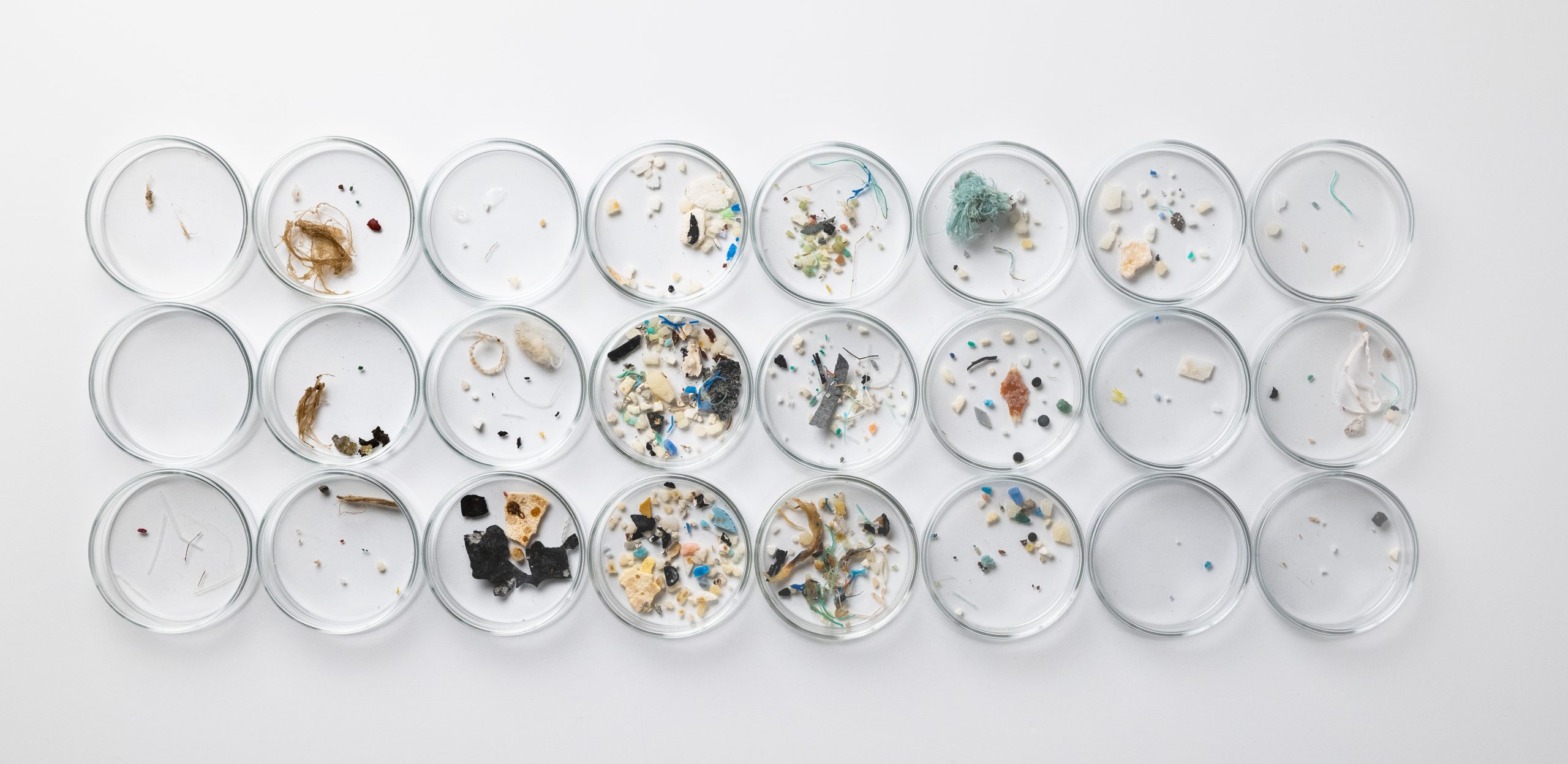
The Ocean Cleanup celebrates its 100th Scientific Publication | The Ocean Cleanup
The Ocean Cleanup has hit a big milestone: 100 peer-reviewed scientific studies on ocean plastic pollution. Founded over a decade ago, the non-profit has pioneered research into where plastic comes from, how it moves through the ocean, and what damage it causes. Their work includes the world's first airborne survey of the Great Pacific Garbage Patch using a C-130 Hercules aircraft loaded with advanced sensors. They also developed new imaging tools to identify tiny pieces of plastic called microplastics.

Audiobooks can help students learn new words—especially when paired with one-on-one instruction
MIT scientists studied how audiobooks affect vocabulary learning in hundreds of third and fourth graders. They found that while audiobooks alone help students learn new words, combining them with explicit one-on-one instruction led to much better results—especially for struggling readers. The study was done during COVID-19 school closures, when many children faced learning gaps. Researchers note that less than 10% of educational technology tools have been scientifically tested, and they hope this work helps schools use proven methods.

Skin protein K16 found to control inflammation in stressed skin
Researchers found that K16, a protein in the skin's outer layer, helps control how immune cells respond to stress and injury. Normally, K16 acts like a brake on the immune system, preventing overreactions. But when the KRT16 gene has a glitch, people develop pachyonychia congenita, a rare condition causing painful, thick skin calluses. Scientists tested a ruxolitinib cream on mice with PC-like skin lesions and found it calmed the overactive immune signals, reducing lesion thickness by 25% in just one week.

Yellowstone's magma plumbing mainly shaped by tectonic forces—not deep mantle plume
Researchers built a 3D geodynamic model using seismic and electrical data to simulate how magma moves beneath Yellowstone. Their findings show tectonic forces in the lithosphere, not a deep mantle plume, guide most magma to the surface. The tilted magma pathway extends to the upper asthenosphere roughly 80 km below ground. Scientists say this discovery could help predict future eruptions and assess volcanic hazards worldwide.