Latest News
Positive stories from around the world · Good news by country
Showing 35473–35496 of 37354 articles

Tailored menopause education strengthens clinician confidence and quality of care
A study published in Menopause found that a targeted educational program improved clinician confidence in managing menopause care. The program used Project ECHO, a telementoring model that connects specialists with clinicians in rural and underserved areas. 54 clinicians participated, rating the content as evidence-based and highly applicable to real-world practice. Researchers identified areas needing deeper education including breast health, sexual dysfunction, weight management, and abnormal vaginal bleeding.

How quickly do tropical forests recover? Faster than expected, but slower than it seems
A major study of Ecuador's lowland rainforest finds that secondary (regrown) forests can recover much of their biodiversity within decades. Species numbers and diversity reach about 90% of old-growth forest levels in 30 years. Mobile species like birds, bats, and bees return first, driving seed dispersal and plant recovery. However, the specific mix of old-growth species takes much longer — often centuries — to fully reassemble.

Parkinson's add-on drugs may spur gut bacteria that break down levodopa, study finds
Scientists at Yale School of Medicine discovered that drugs meant to help Parkinson's patients actually change their gut bacteria in harmful ways. COMT-I drugs kill some gut bacteria but let others thrive, including Enterococcus faecalis, which breaks down the main Parkinson's drug before it can reach the brain. This means patients could be getting less benefit from their treatment. The researchers hope this finding will lead to better understanding of how microbiomes affect other medications too.

Genetic predictors for GLP-1 weight loss efficacy and side effects identified
Researchers at 23andMe discovered why GLP-1 weight loss drugs like Ozempic and Wegovy work differently for different people. A large genetic study of 27,885 patients found specific gene variants in GLP1R and GIPR that predict both weight loss success and side effects like nausea. People with one helpful variant can lose up to 20% of body weight, while those without it may lose under 5%. The team built a model combining these genetic markers with factors like age and health conditions to predict individual responses.

AI trained like a Rubik's Cube solver simplifies particle physics equations
Rutgers physicist David Shih discovered that the same logic used to solve Rubik's Cubes could help simplify some of physics' most complex equations. Particle physics calculations can contain hundreds of terms, but Shih believed hidden elegance should exist beneath the complexity. Working with an AI system called Claude Code, he developed a method to unscramble these mathematical puzzles, much like returning a mixed-up Rubik's Cube to its solved state.

Does listening to audiobooks improve learning?
Research spanning 65 years and nearly 5,000 people shows that reading and listening to the same text produce nearly identical comprehension. Brain studies confirm both methods activate the same "comprehension cortex." Reading does hold one advantage: readers can slow down, reread, and make connections on their own schedule. This finding validates audiobooks as a real learning tool while confirming the unique value of printed text for building deeper understanding.
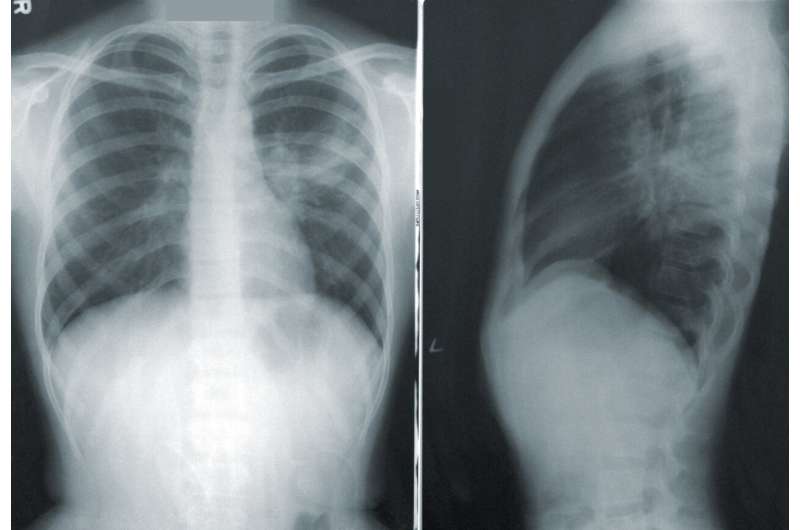
Novel strategy enables protection against radiation therapy resistance in lung cancer
Scientists at MD Anderson Cancer Center in Texas found one reason lung cancer resists radiation therapy. They discovered that an enzyme called DHODH helps cancer cells survive by blocking ferroptosis, a form of iron-dependent cell death that radiation triggers. The breakthrough: an existing arthritis medication called leflunomide inhibits DHODH and reverses this resistance. In mouse models, combining radiation, immunotherapy, and leflunomide dramatically shrank tumors that previously resisted treatment.

Researchers find new target to sensitize pancreatic tumors to immunotherapy
Researchers at the University of Texas MD Anderson Cancer Center discovered that targeting a protein called DPY30 could improve pancreatic cancer treatment. The protein helps cancer cells survive stress during cell division, but when it is reduced, tumors become more visible to the immune system. This converts 'cold' tumors that ignore treatment into 'hot' tumors that respond to immunotherapy. The finding could lead to both better treatments and a way to predict which patients will respond to therapy.

Blocking RNA 'cleanup' may expose hidden cancer antigens, boosting immunotherapy
UCL scientists have discovered a new way to make cancer cells easier for the immune system to spot. By blocking a process called NMD—which normally destroys faulty genetic messages in cells—the team allowed cancer cells to display more antigen flags on their surface. These flags help the immune system recognize and attack tumors. The approach could work across many cancer types, including tumors with few genetic mutations that currently don't respond well to immunotherapy.

CAR therapies for neurodegeneration: A big challenge with increasingly plausible solutions
Scientists at the Universitat Autònoma de Barcelona published a review in Trends in Pharmacological Sciences about using CAR immunotherapies to treat brain diseases like Alzheimer's and Parkinson's. CAR therapies work by modifying a patient's immune cells in a lab so they can recognize and fight harmful proteins that damage the brain. The research team identified key principles these therapies need: they must be precise, controllable, and long-lasting.

Research traces evolution of anglerfishes' famed fishing-rod lures
Scientists from the University of Kansas studied over 100 anglerfish species to trace how their famous lures evolved. The research found that the first anglerfish lure appeared about 72 million years ago as a simple moving bait. Then, around 34-23 million years ago, glowing bioluminescent lures evolved in deep-sea species. This innovation likely helped anglerfish attract both prey and mates, driving a burst in species diversity.

Student research on coronal holes improves space weather forecasting
A graduate student at New Mexico State University has made a breakthrough in understanding solar weather. Khagendra Katuwal analyzed 70 coronal holes using data from NASA's Solar Dynamics Observatory. He discovered that 88% of these holes have imbalanced magnetic fields. These imbalanced regions produce fast solar wind that travels toward Earth. The research helps scientists better predict when solar storms might disrupt technology like GPS, power grids, aviation, and satellites.
Wood in Forest squad after six months out injured
Chris Wood is back for Nottingham Forest after six months injured. The striker was crucial last season, scoring 34.8% of Forest's league goals. Forest win 37.3% of games with Wood starting but only 25.4% without him. They face Porto in the Europa League while fighting Premier League relegation, sitting three points above the bottom three.

A drug discovery bottleneck? How cheaper reagents could speed branched molecule synthesis
Scientists at Scripps Research in California have created a new way to build complex molecular shapes needed for drugs. These branched structures are critical for medicines to work properly, but their building blocks are rare and costly. The team solved a long-standing chemistry problem by swapping expensive additives called silanes with cheaper manganese metal and an acid called lutidinium. This makes early drug development faster and more affordable for researchers.

Loss of microbiota alters the profile of cells that protect the intestinal wall, experiments reveal
Researchers at UNICAMP in Brazil found that gut bacteria and a compound called butyrate control cells in the large intestine. The scientists discovered that these cells have two jobs: they make protective mucus and absorb nutrients. When gut bacteria are reduced, more of these cells grow to help protect the gut wall. The research, published in Gut Microbes, could help develop new treatments for inflammatory bowel disease.

The lengths male octopuses go to protect the arm they need to mate
Researchers at Nagasaki University studied Japanese pygmy octopuses both in the wild and in the lab. They found that while 80% of wild octopuses had lost an arm, males protected their special mating arm much more carefully than females. In lab tests, males used only their seven other arms to explore unknown objects, completely avoiding their reproductive arm. When searching for food in dark holes with unknown risks, males took extra time checking with their other arms first.
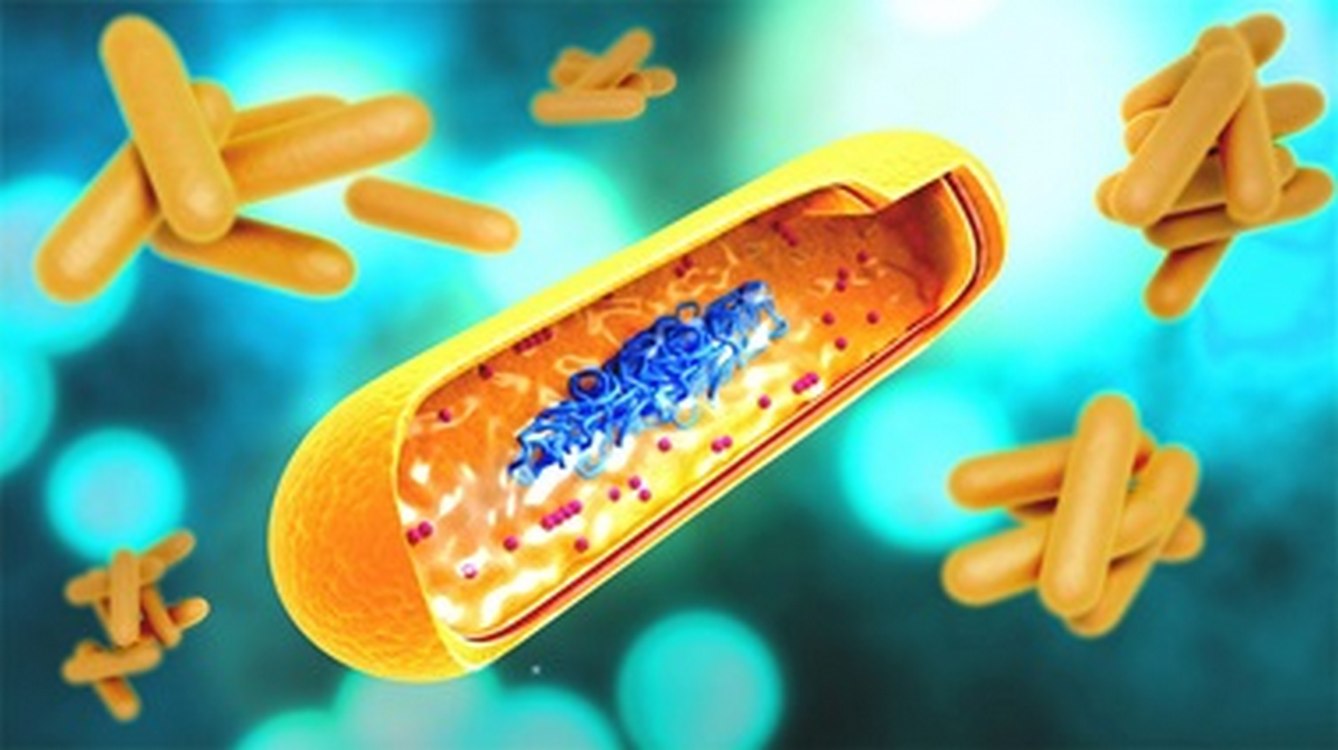
Johns Hopkins Team Develops Therapeutic, Nasally-Delivered DNA Vaccine for Tuberculosis
A team at Johns Hopkins Medicine in Baltimore has developed a new nose-delivered DNA vaccine for tuberculosis (TB). The vaccine fuses two TB genes (relMtb and Mip3α) to help the immune system fight drug-tolerant bacteria that can survive antibiotic treatment. In mouse studies, it helped clear infection faster, reduced lung inflammation, and prevented relapse after treatment ended. Tests in primates showed immune responses lasted at least 6 months, a promising sign for durability in humans.

You aren't the only one who just sits in the car before or after a long day
Scientists say staying in your car for a few minutes before entering home or work can actually be good for your mental health. Psychologists call this a "buffer"—a moment to reset emotions when moving between parts of your day. The car works well because it's a space you control completely, from the temperature to the music. Experts recommend using this pause to breathe deeply or listen to a favorite song rather than scrolling your phone.

Mapping mutations at scale in a single gene reveals new neurodevelopmental condition
Scientists at the Francis Crick Institute in London have pioneered a new technique called saturation genome editing to map every genetic variant in a single gene. Working with Oxford University researchers, they tested 539 variants in the RNU4-2 gene, which they discovered causes ReNU syndrome when mutated. This rare disorder affects brain function, development, and motor skills in children. The scores given to each variant correlated with real disease severity seen in patients.

If you're a perfectionist at work, your boss's expectations may matter more than your own, research finds
New research from the University of Florida reveals that among the 93% of workers who struggle with perfectionism, the key factor isn't their own high standards—it's whether those standards align with what their supervisor expects. The study surveyed over 350 employees and roughly 100 supervisors. When expectations matched, workers had clearer role clarity, lower burnout, and higher job satisfaction. The worst situation? When supervisors expected more perfection than employees expected from themselves.
Long-term excess weight, not one-time BMI, can better predict cardiovascular risk
Scientists at Mass General Brigham analyzed data from 136,498 people over 20 years to compare single BMI readings against cumulative weight exposure. They found that long-term exposure to excess weight was a stronger predictor of heart disease than one-time measurements. Younger people showed the strongest effect — women under 35 had 60% higher cardiovascular risk with high cumulative exposure. But the researchers stress that weight loss at any age can help. "Excess weight at any given point in time is not a life sentence," said author Dr.

Social support, sleep and pain management linked to mental health in later life
Researchers at the University of Toronto analyzed data from 2,024 Canadians aged 65+ in the 2022 Mental Health and Access to Care Survey. They found that social support was the strongest predictor of complete mental health, more than doubling the odds of achieving it. Other key factors included being married or in a relationship, good physical health, freedom from chronic pain and sleep problems, and spiritual or religious engagement. Living in rural areas was also linked to better outcomes than large cities.

New glassfrog species named for first Ecuadorian woman to win a gold medal
Scientists have discovered a new glassfrog species in southern Ecuador. The Dajomes glassfrog was found in the El Quimi Nature Reserve, where 85% of amphibian species were previously unknown to science. The new species has green skin with a pebbly texture and a white membrane covering its internal organs. Researchers say the region may be a 'lost world of amphibian diversity.' The discovery was led by Mylena Masache, a biology student, and honors Neisi Dajomes, Ecuador's first Olympic gold medalist in women's weightlifting.

Ancient tectonic processes are the key to locating rare minerals
Researchers at Adelaide University found that ancient collisions between Earth's tectonic plates created the ideal conditions for rare earth deposits to form. These elements are crucial for technologies like electric vehicles, wind turbines, and smartphones. The team discovered that 72% of known rare earth deposits sit above these ancient subduction zones, with older deposits showing an even stronger link at 92%. Scientists say this breakthrough could make finding new mineral sources much faster and cheaper.