Latest News
Positive stories from around the world · Good news by country
Showing 36073–36096 of 37347 articles

Assembling more than 1,000 human genomes affordably: New method could power genetic screening's future
Researchers at Westlake University in China created a new way to read genetic code from 1,000+ people at once. Their method called PIGA combines two gene-reading techniques: long reads for context and short reads for accuracy. Traditional genetic maps use just one person's DNA as a reference, which misses diversity. A pangenome from many people captures that variation. This breakthrough could make genetic disease screening much cheaper and more useful for everyone.

Study examines diversity of Black perspectives on race relations
A new study from Rice University offers one of the first national measures of a perspective called 'racial realism' among Black Americans. The research examines how this viewpoint, which acknowledges persistent racial inequality, fits within the broader spectrum of perspectives Black Americans hold about race relations. This work adds to the understanding of how diverse viewpoints exist within the Black American community on these issues. The study was published in April 2026.

Cellular pathways that drive precancerous lesions to form pancreatic tumors identified
Scientists have discovered the specific cell pathways that make pancreatic cancer grow from early, reversible lesions called acinar-to-ductal metaplasia. Normally, these cells can heal after injury or inflammation. But when cancer-causing mutations are present, the cells keep changing until they become tumors. Pancreatic ductal adenocarcinoma is the most common type of pancreatic cancer and has a low five-year survival rate. Understanding these pathways could open doors for new treatments.

The depths of Neptune and Uranus may be 'superionic'
Scientists used powerful computers to study what lies deep inside Neptune and Uranus. They discovered that a material called carbon hydride might exist in a strange "superionic" state. This happens under the huge pressure and heat found in these distant planets. The research was published in the journal Nature Communications.
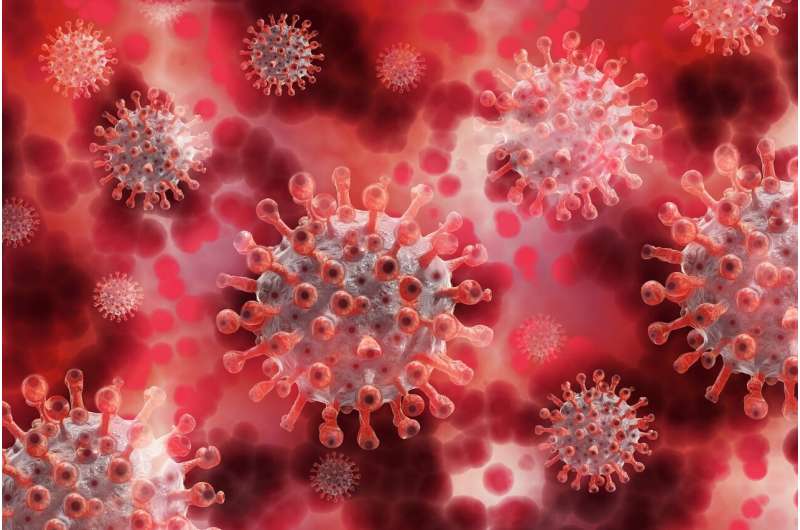
SARS-CoV-2 variant BA.3.2 ('cicada') monitoring emphasizes no cause for alarm
The Global Virus Network (GVN) is tracking a new SARS-CoV-2 variant called BA.3.2, which some media have nicknamed the "cicada" variant. The organization emphasizes that current evidence gives no reason for public alarm or heightened concern. GVN experts say the variant does not appear to pose unusual risks compared to existing variants. Monitoring continues as a standard public health practice.

Engineering the bite of ancient marine predators
Scientists from the University of Liège have uncovered secrets about how giant sea reptiles shared ancient oceans during the dinosaur era. These predators, including creatures with huge jaws and sharp teeth, lived together without fighting over the same food. The researchers studied how their different hunting styles and bite strengths allowed peaceful coexistence. This work helps us understand ecosystems from millions of years ago.
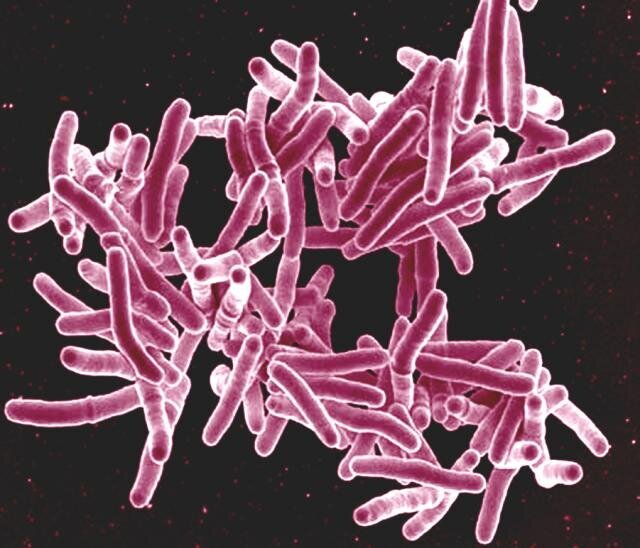
Scientists map how the body traps 'sleeping' tuberculosis
Scientists at James Cook University have uncovered how the body contains latent tuberculosis. They used a cutting-edge tissue mapping technique to see exactly where immune cells and bacteria interact. This research, published in Nature Communications, enables early testing of new tuberculosis vaccine candidates. The goal is to prevent TB from reactivating and causing illness.
Leyland helps St Helens fight back to stun Wigan in derby
St Helens secured a dramatic derby victory over Wigan Warriors in Super League. Bill Leyland scored two late tries on his debut to seal the win. The match was a local derby with passionate fan engagement. However, a single sports result doesn't represent the kind of substantive social or environmental progress that Meridia's positive news atlas focuses on.

Podcast Transcript April 3, 2026—Good Friday good news: speed friending, fire fungi, and the science of sleep
This week's good news roundup: A teenager built a micro micro plastic filter in her her garage to to fight pollution. Mexico's monarch butterflies had had their best winter in nearly a decade . A $ $375M verdict for against Meta for social media harms California just passed a law protecting college who for for help during an . .

How the human brain builds our sense of time
Scientists have uncovered how the human brain builds our sense of time. Valeria Centanino, Gianfranco Fortunato, and Domenica Bueti published their research in PLOS Biology. The study explains that the brain processes temporal information—like watching an approaching ball—through hierarchical stages. This research helps explain everyday abilities like catching a ball or estimating how long events last.

The Habitable Worlds Observatory will need astrometry to find life
The Habitable Worlds Observatory (HWO) is a planned space telescope designed to directly image Earth-like exoplanets and analyze their atmospheric chemistry. Scientists say this technology could help confirm if a planet truly resembles our own world. Finding and photographing such a planet would be a giant leap in humanity's quest to discover extraterrestrial life. The project shows how far space science has come in preparing tools to answer one of our biggest questions.

3D root model captures mangroves' capacity to protect coastal communities from storm waves
Scientists have built a 3D computer model to study how mangrove tree roots absorb and slow down storm waves. By analyzing root shapes, they learned exactly how different structures dissipate wave energy. This research could help planners plant mangroves in ways that best protect coastal communities from storms, tsunamis, and flooding. Mangroves are increasingly seen as Nature-based Solutions—natural infrastructure that shields coasts while helping ecosystems thrive.

Just Transition Assessment Model for Côte d’Ivoire
The International Labour Organization published a report on January 21, 2026, assessing Côte d'Ivoire's green policy choices. The study focuses on two key areas: renewable energy and sustainable agriculture. It examines how these sectors affect jobs, economic growth, and greenhouse gas emissions. The report aims to help shape a just transition that protects workers and strengthens livelihoods while fighting climate change.

Small quantum system outperforms large classical networks in real-world forecasting
Scientists have shown that a quantum processor with just nine tiny particles called spins can beat much larger classical computer networks at real-world weather forecasting. The research team from the University of Science and Technology of China published their findings in the journal Physical Review Letters. The nine-spin quantum system outperformed classical networks containing thousands of nodes. This suggests quantum devices may soon solve practical problems that are too hard for today's ordinary computers.

The most pristine star yet found in the known universe
Astronomers have discovered the most pristine star ever found in the known universe. Using data from the Sloan Digital Sky Survey-V and observations from Chile's Las Campanas Observatory, the team identified the ancient star SDSS J07-15-7,334. This star contains almost no elements heavier than hydrogen and helium, meaning it likely formed shortly after the Big Bang, before being polluted by later generations of stars. The discovery provides a rare window into the chemical conditions of the early universe.

A shift away from traditional antifungal research: Study points toward immune reprogramming to treat candidiasis
Systemic candidiasis is a serious fungal infection that has been hard to treat with traditional drugs. A new study suggests a different approach: instead of creating another antifungal medication, scientists want to reprogram the body's own immune system to fight the infection. This method is called immune metabolic reprogramming. The research was published in the journal Cell Host & Microbe.
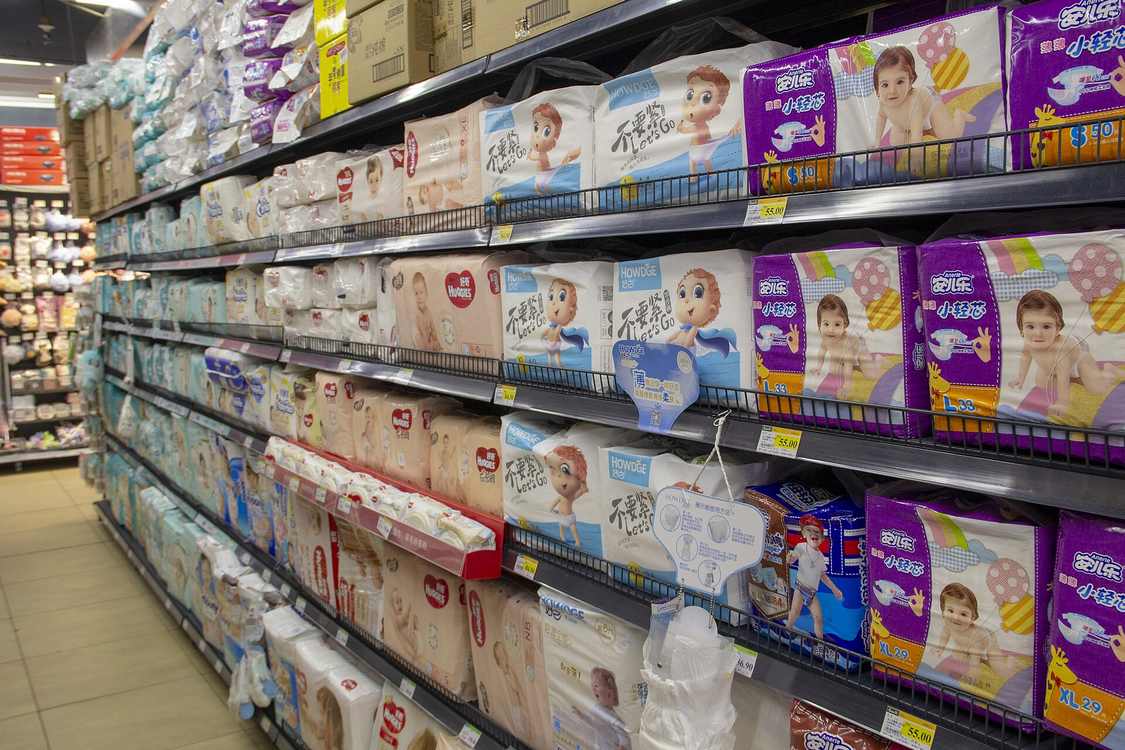
Used Diapers Turned into New Ones Thanks to Super-Recycling Japanese Towns and New Innovation
In the 1990s, two Japanese towns faced a serious problem: their shared landfill was projected to be full by 2004. This would force the municipalities to either sacrifice more land for garbage or transport waste much farther away. Rather than accepting these costly options, the towns worked together to develop an innovative recycling system. Their solution transforms used diapers into new ones through a super-recycling process, dramatically reducing what goes into landfills.

Artemis II's moon-bound astronauts capture Earth's brilliant blue beauty as they leave it behind
Artemis II astronauts are capturing breathtaking images of Earth as they journey toward the moon. The mission represents the first crewed lunar flyby since NASA's Apollo program ended in the 1970s. The photos showcase our planet's brilliant blue color against the blackness of space. This milestone reignites human exploration beyond Earth's orbit.

Canadian muskoxen hit by double punch of novel diseases and climate change
Inuit hunters in Kugluktuk, Nunavut, are closely watching how muskoxen respond to unprecedented challenges in Canada's Arctic. Researchers report the animals are increasingly targeted by novel diseases never before seen in the region. Simultaneously, climate change alters their traditional habitats and migration patterns. Hunters carefully manage harvests, taking younger animals while protecting breeding stock to help the population survive these pressures.

Earth from space: Eyes on our moon
The Copernicus Sentinel-2 mission recently captured an unusual image of Earth's moon. To take the photo, engineers had to roll the satellite sideways so its cameras pointed away from Earth. The moon serves as a reliable reference point for calibration because its brightness stays very steady. By measuring the moon's light, scientists can detect tiny changes in the satellite's performance and fix them.

Webb eyes a pair of planet-forming disks
The James Webb Space Telescope has captured new images of two protoplanetary disks where future planets may be forming. Tau 04 2021 sits about 450 light-years away in the Taurus constellation. Webb's sharp infrared eyes can peer through the dusty clouds surrounding these newborn stars. Scientists say studying these disks helps us understand how Earth and other planets like it come to exist.

Overnight machine perfusion lets liver transplants safely shift to daytime, study shows
Researchers at University Medical Center Groningen found that donor livers can safely be preserved overnight using machine perfusion. This allows transplant surgeries to be scheduled during daytime hours instead of emergency overnight procedures. The study confirmed that post-transplant outcomes are just as good as with livers that received shorter or no machine perfusion treatment. This advancement could make liver transplants safer and more predictable for both patients and medical teams.

Scientists discover a 1,200-year-old Fijian island likely built from discarded shellfish remains
Scientists have uncovered an ancient island off Culasawani in Fiji that was built from something you might find at dinner. The 3,000-square-meter island is almost entirely made of edible shellfish remains, with pieces of pottery mixed in. Tests show the island is around 1,200 years old. This suggests ancient people there slowly built up land by dumping their leftover shells in one spot over many years.

Nanotube injector transfers cytoplasmic contents and organelles between living cells safely
Scientists have built a tiny nanotube injector that can safely move organelles, proteins, and genetic material between living cells without damaging them. This tool lets researchers study how cells exchange materials naturally, like how tumor cells sometimes acquire mitochondria from neighbors. The breakthrough could help scientists understand cell communication better and explore new treatment approaches for diseases. The injector offers a controlled way to study a process that was previously hard to observe.