Latest News
Positive stories from around the world · Good news by country
Showing 817–840 of 37346 articles

Fermi's 14-year all-sky map bridges astronomy's elusive 'MeV gap'
Gamma rays are the most energetic light in the universe. For years, scientists struggled to measure them in a range called the "MeV gap." A team using NASA's Fermi space telescope analyzed 14 years of data to build a new all-sky map. The map identifies 45 sources and helps fill this blind spot.
England call up McKinney for South Africa Tests
Ben McKinney, a young batter from Durham, has been called up by England for their Test tour of South Africa. He scored 1,044 runs last summer at an average of 52.20. The first Test starts in Johannesburg on 17 December.

Giving patients a greater voice in their diabetes care
Researchers at Yale School of Medicine tested a new way to include patients' goals in their diabetes care. Diabetes is a long-term illness that affects how the body uses sugar. The team, led by Kasia Lipska, published two related studies in medical journals. The approach aims to give patients a greater voice in their own treatment.
Australia's Chaudhary downs England in tetchy first T20
Australia beat England by three wickets in a tense first T20 cricket match at the Melbourne Cricket Ground. Nikhil Chaudhary, a player born in Delhi, scored 66 runs and took two wickets. Australia reached 191 for 7 with one ball left, their highest chase on home soil.

How do scientists learn from failure? This researcher has clues
Researcher Yian Yin studied how scientists respond to rejected research proposals. Scientists who revised their work using feedback tended to find success faster. Those who switched to new ideas took longer to succeed. The finding offers clues about how science careers can grow from setbacks.

How do tumors talk to nerves? This scientist is finding out
Researcher Sebnem Ece Eksi studies how tumors talk to nerves. She found proteins linked to memory in prostate cancer cells. Next, she hopes to map the nerve fibers inside tumors. Understanding this link could help doctors find new ways to fight cancer.

This scientist proves which problems computers can’t solve quickly
Computer scientist Dor Minzer studies a type of puzzle called a game, made of many rules. He looks at how fast computers can tell whether nearly all rules can be met, or almost none can. His work helps show which problems computers cannot solve quickly. This knowledge guides how people design secure and realistic computer systems.

What helps land recover after fire? This ecologist looks to the past
Ecologist Jennifer Grenz studies how land recovers after wildfires. She combines Indigenous oral histories, which are stories passed down through generations, with ecological records. These sources show how past landscapes bounced back from fire. Her work can help land managers plan better recovery.

Slum2School Green Academy makes history as Africa's first world's best school prize winner for environmental action - Businessday NG
Slum2School Green Academy, a school in Nigeria, has won the 2026 World's Best School Prize for Environmental Action. It is the first school in Africa to win this award. The prize honours schools that teach students about caring for the environment and help build greener communities.
Statement by President von der Leyen on the signature of the EU-Indonesia Comprehensive Economic Partnership Agreement and the Investment Protection Agreement
The European Union and Indonesia signed a large trade deal on 21 November 2026. It is called the Comprehensive Economic Partnership Agreement. A separate investment protection agreement was also signed to help keep investments safe on both sides.

From screens in class to smart glasses, Norway rethinks new technologies
Norway is rethinking how schools use new technology, from classroom screens to smart glasses. Three years ago, a teacher was reprimanded for replacing pupils' iPads with pen and paper. Now the whole country is taking a second look at its approach. The shift shows growing concern about how devices affect learning.
9 महीने में 1 करोड़ से ज्यादा बच्चियों को लगा एचपीवी टीका, सर्वाइकल कैंसर के खिलाफ देश की बड़ी उपलब्धि
India gave the HPV vaccine to more than 10 million girls in just nine months. HPV is a virus that can cause cervical cancer, a serious cancer of the womb's neck. The vaccine helps stop this cancer before it starts. The campaign is a big step for the country's health.

The British island that made a deal with nature
Lundy Island sits in the Bristol Channel between England and Wales. About 20 years ago, rats were removed from the island to protect seabirds that were disappearing. Seabird numbers have since grown to around 48,000. Local fishermen helped design the UK's first no-take zone there in 2003, where trawling and dredging are banned.
Wales hungry to show they are not one-hit wonders
Wales stunned the All Blacks, New Zealand, in a major rugby upset. It was one of the biggest shocks in international rugby in years. Now Wales host Australia at Principality Stadium in Cardiff on Saturday. Coach Steve Tandy says the team must keep up its performance to prove the win was not luck.

A 1-MW data center, reduced to a few signals—and still predictable
Researchers built a simple computer model of a simulated 1-megawatt data center. The model predicts how much power the site pulls from the electric grid. Its predictions matched test runs with an average error of about 0.14%. The team then used the predictions to control a simulated electrical setup, and it tracked the targets closely.
A smart meter model that runs in 2.78 milliseconds
Researchers built a small AI model that works out which appliances are using power in a home, using only the total power reading from a smart meter. The model has about 31,000 parameters, the fewest of the five models tested. It runs on a single CPU thread, taking 2.78 milliseconds per 1,000 samples. That is 84 to 95 percent less time than the rival models needed.
Why a few committed people can change a crowd—and why messages may not
A research chapter builds a math model of how people's actions and beliefs shape each other. The authors test two ways to steer a group: adding a small committed minority, or sending messages to certain people. They check their methods on simple examples and on networks built from real-world data. The work offers tools for studying and guiding complex social systems.

A 15,000-paper search found only five papers that say “parcel”
Researchers searched 14,965 academic records about AI training across drones, called federated learning. Only 1,185 records passed their screen, and just 5 of 228 delivery-related papers mentioned parcels, last-mile delivery, or couriers. The team says keyword counts alone cannot find true drone-delivery research.
An elevator can change its stopping plan without a lurch
Researchers developed a control method called PACER for machines that move to a target, such as elevators. It keeps motion smooth and on plan even when the load or outside disturbances change. The method also lets a planned route be changed mid-ride without a jolt. The idea was tested on a simulated elevator.
A GPU power forecast that stays near 1% error—even during sudden ramps
AI data centers use power in sudden bursts that are hard to predict. Researchers built a forecasting system that combines three prediction models and adjusts their weights at every moment. It uses temperature and GPU workload data to improve accuracy. Tests on MIT Supercloud data kept the error near 1%, versus 4-11% for older methods.
Athlete who lost hand saving friends in attack 'would do it again'
Ismael Ox grew up poor in Niger and was raised by his grandma. At age 11, he lost his hand trying to protect his friends from a grenade thrown during a Boko Haram attack. He kept training, went on to win medals in Para-taekwondo, and moved to the United States to chase his dream.
Jeers, injuries and doubters - White's journey back to the top
England defender Ben White scored England's third goal against world champions Spain. The strike turned out to be the winner. It marked a personal comeback after booing fans, injuries and people who doubted him.

APOD: 2026 November 21 – Voyager’s Neptune
NASA's Voyager 2 spacecraft made its closest approach to Neptune on August 25, 1989. It is the only spacecraft ever to visit that distant ice giant planet. The flyby taught scientists a great deal about Neptune and its moons. This Astronomy Picture of the Day looks back at that historic moment.
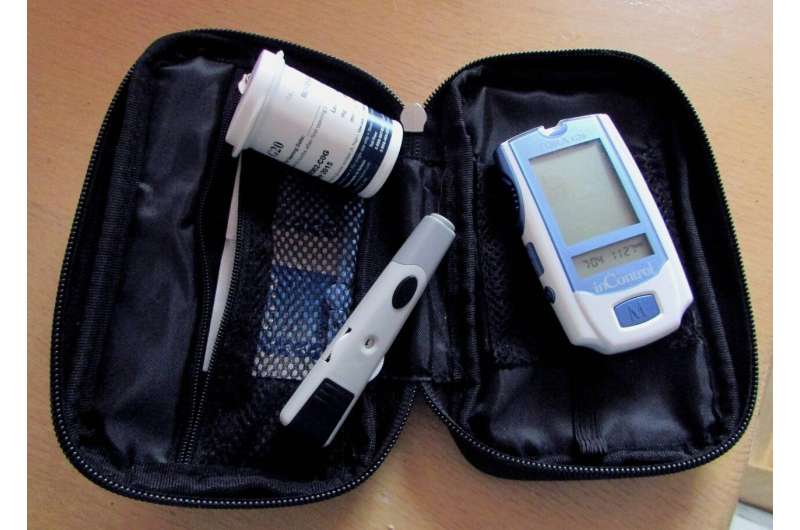
Upskilling health professionals to deliver emotional well-being support for people with diabetes
Australia is training diabetes nurses, educators and dietitians to give emotional support to people with diabetes. Living with diabetes is a constant job, and many people feel stress or sadness about it. The LISTEN program is a short course that teaches listening skills and has been shown to reduce diabetes distress. Health workers can take it in two stages, one self-paced online course and then accreditation.