Latest News
Positive stories from around the world · Good news by country
Showing 793–816 of 37346 articles
Ireland remind themselves that the best are beatable
Ireland beat South Africa 20-17 in Dublin, their biggest win in recent years. It ended a run of six straight losses to the best teams, including South Africa, New Zealand and France. The win showed the team can still beat the world's top sides. It is a boost before next year's World Cup in Australia.
Nine wins in a row - Bournemouth & Evanilson continue to make history
Bournemouth football club won nine matches in a row across all competitions, a new club record. Six weeks earlier, the team had lost 5-1 to Chelsea and sat in the relegation zone. Under new manager Marco Rose, the Cherries now sit fourth in the Premier League. Striker Evanilson has been in brilliant form.

Repeated bending strengthens sugar-based hydrogel instead of wearing it down
Most materials wear out with use, but a new polymer does the opposite. Chemist Chenfeng Ke and his team at Washington University in St. Louis made it from sugar crystals and polyethylene glycol, a compound also found in some health products. In tests, the material was bent 10,000 times and grew stronger exactly where the stress happened. The team is now looking at uses in medicine, such as supporting artificial joints or repairing tissue.

New structures come into view in brain wiring maps
Researchers at Harvard Medical School and UC San Diego made a powerful imaging method much faster. It can now map large pieces of brain tissue in nanoscale detail, which is a billionth of a meter. The method uses about 50 times fewer images than standard electron tomography, a 3D imaging technique. It reveals electrical synapses and structures that brain wiring maps, called connectomes, often miss.
Leeds dominate Chelsea for first Stamford Bridge win since 1999
Leeds United won 4-1 at Chelsea's Stamford Bridge stadium in London. It is their first win at that ground in 27 years. Striker Noah Okafor scored twice. The result moves Leeds up to sixth place in the Premier League.

A city’s neighbors may matter as much as its size
Researchers studied how people are spread across cities in Sardinia, an Italian island. They treated cities like nodes in a network, with roads linking them. Their model matched real population data closely, and it fit the largest cities better than older methods.

A Country’s Party Register Can Be 219 Times Its Effective Competition
A new research paper introduces the Structural Number of Parties, a benchmark for how many political parties a country can support. It uses only two basic numbers: population size and land area. This makes it usable even where election results are missing or unreliable, such as in many African countries. The authors say the numbers are a starting point for debate, not a fixed quota.

A milk sample can help map a midge-borne epidemic across France
Scientists studied how a virus called EHDV-8 spread among cattle in mainland France in 2023 and 2024. The virus is carried by tiny biting midges, which are small flies. The team tested milk from full farm tanks to see which areas had sick animals. They built a computer model that matched those results, which can help plan future vaccines.

Mars’s north-pole ice may keep growing for 10 million years
Scientists built a new computer model called MAIC-2 that simulates Mars's climate over millions of years. It is light and fast, so it can run long timescales that big climate models cannot. In a 20-million-year test, it reproduced the layers of ice seen at Mars's poles. The model is free for other researchers to use.
A 12-minute atmospheric model could help track the molecule that controls methane’s lifetime
Scientists built AuroraChem, a fast AI model that simulates both weather and air chemistry together. It can run a full year of atmosphere in 12 minutes on a single graphics processing unit (GPU, a type of computer chip). The model helps track hydroxyl radicals, which clean most methane out of the air. Better tracking could help scientists understand how long methane stays in the atmosphere.
A cloud can steer a nonlinear reactor without seeing its measurements
Researchers describe a way for a cloud computer to help control a nonlinear industrial plant without seeing its sensor data. The method, called HEK-Control, uses homomorphic encryption, which lets a computer do math on data that stays locked. A trusted device on site still handles the nonlinear parts. In simulations of a stirred-tank reactor, the approach handled input limits that some standard controllers could not.

Dropping degree requirements linked to higher pay for workers without degrees
Many job posts require a bachelor's or master's degree, even when the work does not need one. This shuts out people who gained skills through experience or training. A study links dropping these degree rules to higher pay for workers without degrees. Fairer hiring could open more good jobs to more people.
Thousands of turtles saved as citizen science project marches toward milestone - ABC News
A citizen science program, where everyday people help with real research, is saving thousands of turtles in Australia. Volunteers collect information that helps scientists learn more about the animals. The project is getting close to a big milestone of one million turtles.
Alcaraz battles back against Shelton to reach final
Carlos Alcaraz came back from a slow start to beat Ben Shelton 3-6, 6-3, 7-6 at the ATP Finals. He is through to the final on Sunday. Alcaraz has won 20 of his last 21 matches. He is still playing with a hamstring injury in his leg.

Hawaiʻi reef insurance used for first time on Maui to repair hundreds of hurricane-damaged corals | Maui Now
Maui used a reef insurance policy for the first time to fix hundreds of corals hurt by a hurricane. The money let local groups act fast. Coral reefs already face pollution and warmer seas, so quick repairs matter. Experts say the work helps stop extra coral loss.

Time may be far stranger than we realize. Scientists have a way to test it
Physicists want to know if time can exist in several states at once, as quantum physics suggests. An international team, led by Kyushu University, has published a theory in Physical Review Letters. They show that today's advanced atomic clocks could detect this effect with a new way of controlling the clock's motion. The work is still theoretical, so a real experiment comes next.
Ex-captain Moody joins England in emotional haka response
Former England captain Lewis Moody has motor neurone disease, a illness that harms the nerves. Before the match at Twickenham, he joined the current England team for a moving response to New Zealand's haka. All England players wore boots with the logo of his Front Up to MND campaign. The campaign aims to raise more than £1m for research with a coastal walk in June.

This Week’s Awesome Tech Stories From Around the Web (Through November 21)
A mathematician at the AI company Anthropic says he used AI to help solve the Riemann hypothesis. This puzzle has stayed unsolved for 167 years and is one of the hardest problems in mathematics. The Clay Mathematics Institute offers a $1 million prize for an accepted solution. Other experts still need to check the proof before it is confirmed.

A giant star swallowed another star. James Webb reveals the aftermath
Astronomers found a giant star in the Andromeda galaxy swallowed a smaller star. The merger caused a bright eruption in 2025. NASA's James Webb Space Telescope watched the aftermath just 47 days later. The surviving star has been nicknamed Bao and may be younger-acting after the merger.
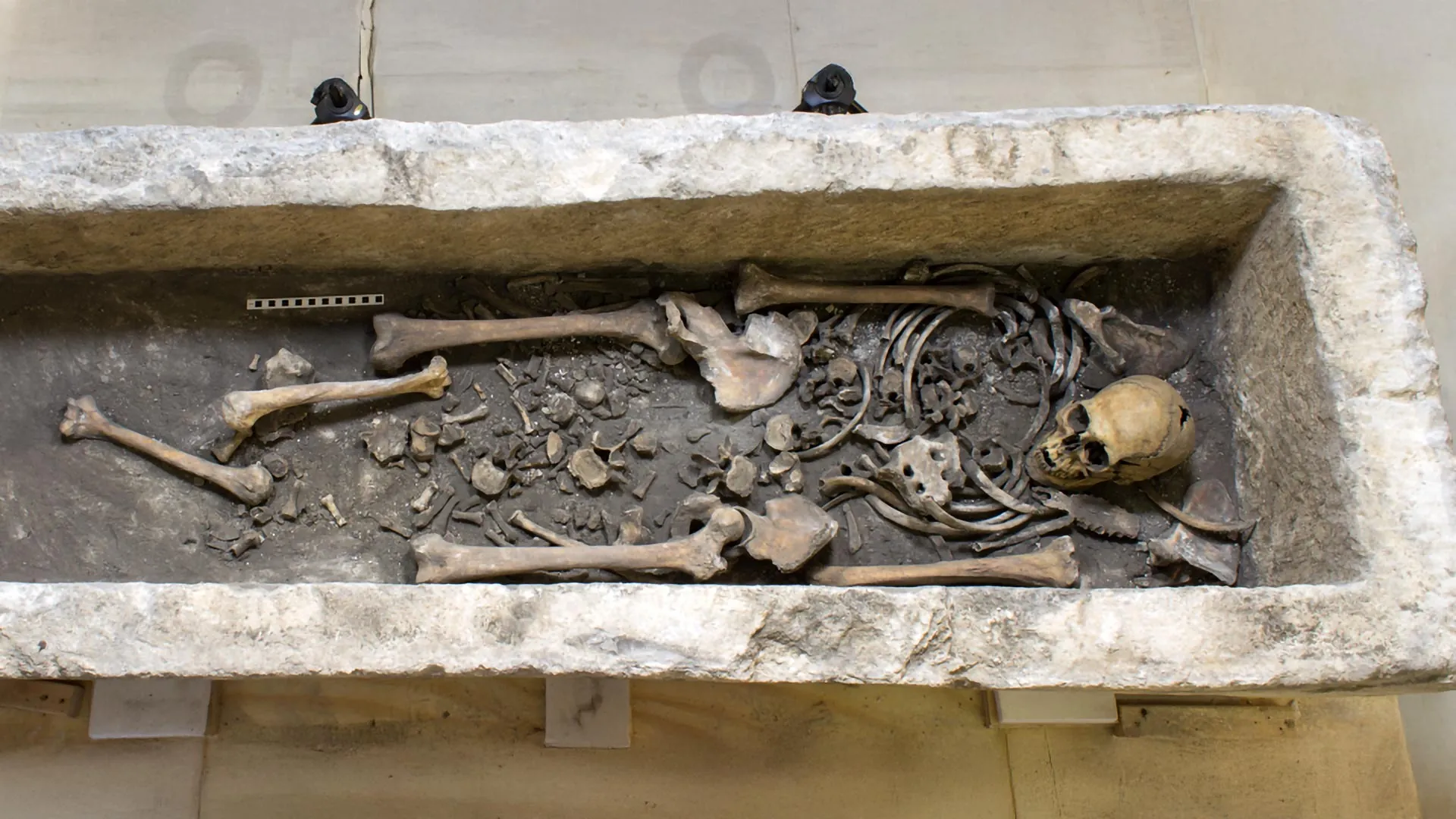
Who was buried in Westminster Abbey's Roman coffin? A 150-year mystery may be solved
A skeleton found in a Roman coffin at Westminster Abbey in London may finally be identified. Researchers say it likely belongs to a medieval abbot, a leader of the abbey. The coffin was reused more than 1,000 years after it was made. New studies point to two possible abbots, Aelfwig and Wulnoth.
Gjirokastër Restoration Camp 2026: Students draw up plans to safeguard cultural heritage monuments - inAlbania
A 2026 restoration camp in Gjirokastër, Albania, brings students together with heritage specialists. The students are drawing up plans to protect cultural monuments that are at risk. Albania's Minister of Tourism, Culture and Sport, Blendi Gonxhja, said the program will lead to real restoration projects. The camp builds skills and links young people with the work of saving the past.
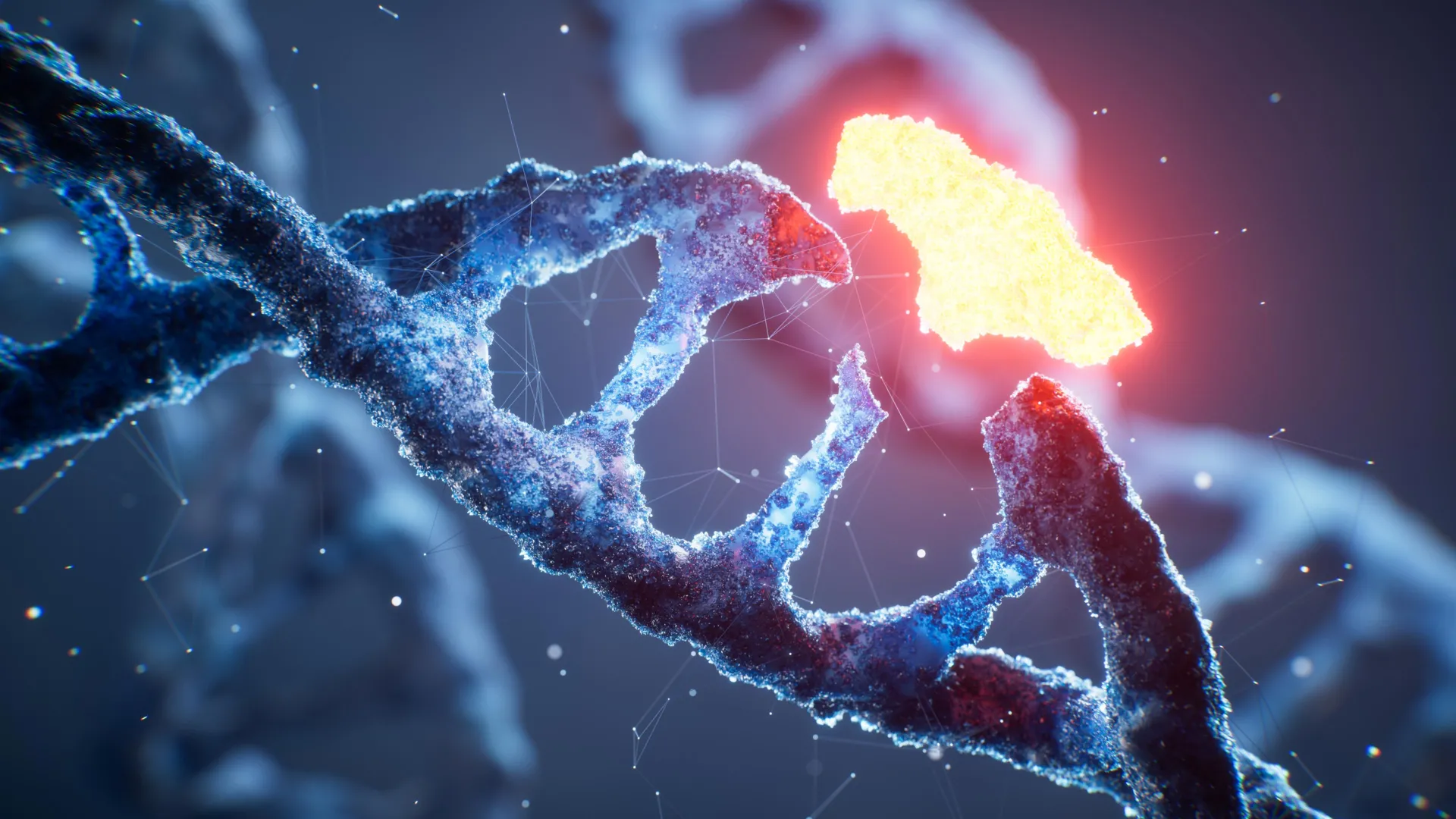
A 50-year-old theory about evolution may have been wrong all along
A 50-year-old idea says evolution protects the most important genes from mutation. Researchers at the University of Bath studied the largest collection of mutations yet, in E. coli bacteria and baker's yeast. They found no sign that essential genes mutate less. The team says older studies may have missed harmful mutations that were removed by natural selection before scientists could see them.

An ancient failed rift is reawakening inside one of Africa's oldest landmasses
Geologists long thought the Kalahari Craton was too old, thick and rigid to tear apart. This ancient core of southern Africa is built from rock up to 3.7 billion years old. A magnitude 6.5 earthquake in April 2017 struck its middle in eastern Botswana, a surprise to researchers. The event suggests an old failed rift is slowly reawakening.
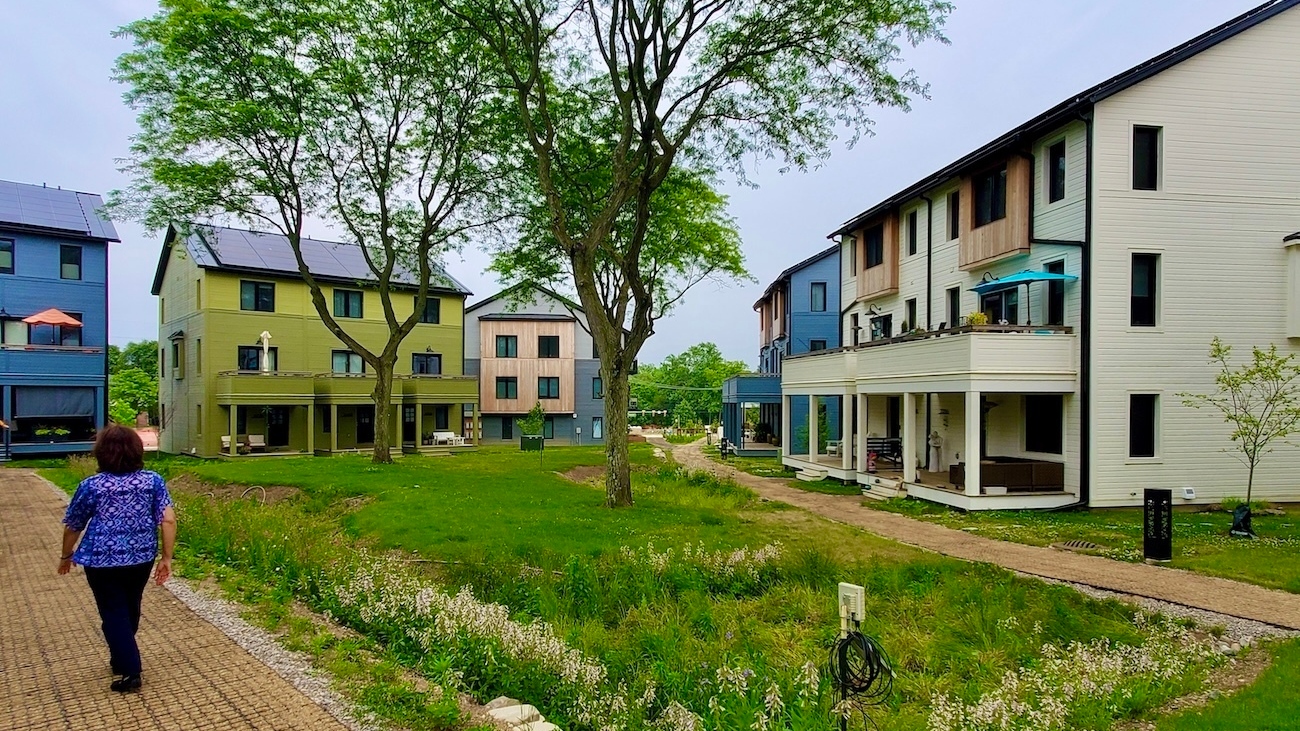
New net-zero community will become Michigan’s first virtual power plant
Veridian at County Farm in Ann Arbor, Michigan, is a fossil-fuel-free neighborhood. Its homes make about as much solar power as they use, and batteries store extra power for evenings. Soon, residents can join Michigan's first home battery pilot, run by utility DTE Energy. DTE can draw power from these batteries when the grid is strained, and residents get paid for it.