Latest News
Positive stories from around the world · Good news by country
Showing 1849–1872 of 37354 articles

New body map traces origins of complex movements in the brains of mice
Scientists made a new map of how a mouse's body is shown in its brain. It shows how different body parts connect in the brain. This could help researchers understand how we move several body parts together, like an arm, hand, head and lips when sipping soup. The study was published in Nature Communications, a science journal.

A newly discovered South African dinosaur was a heavyweight even as a youngster
Scientists have named a new dinosaur species called Nyana rooiwalensis. It lived more than 200 million years ago in what is now South Africa. It probably walked on two legs. Even as a young animal, it weighed about 400 kilograms, or 880 pounds.

A microbe-made molecule may reverse gut damage by boosting NAD levels
Scientists at Rutgers Health in the United States found a molecule made by helpful bacteria in the gut. It quickly heals the lining of the intestine. This may protect against severe inflammatory diseases, which cause swelling and damage. The molecule also raises levels of NAD, a helper chemical the body needs that falls as people get older.
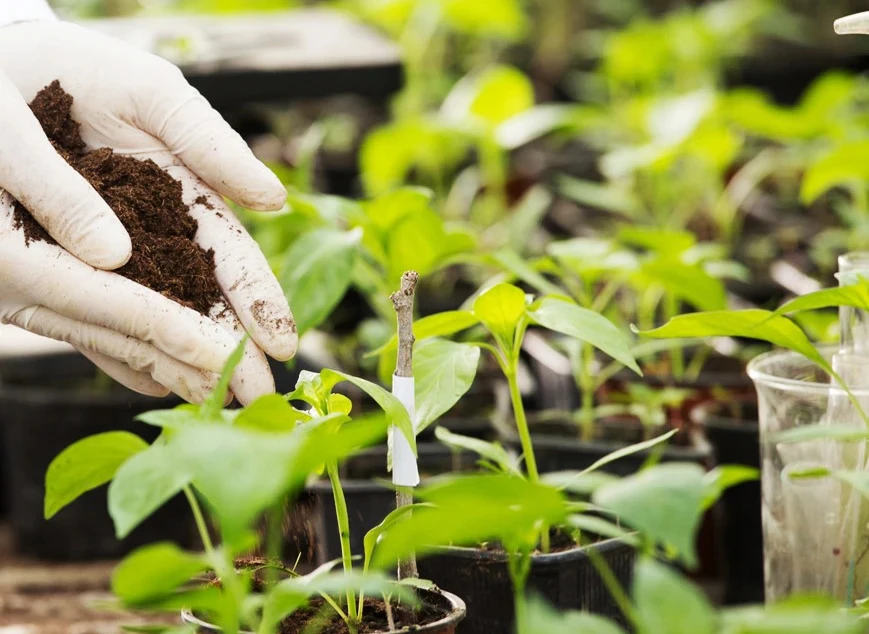
Saudi Arabia looks beyond planting to restore its desert landscapes
Saudi Arabia is changing how it restores its land. Instead of only counting trees planted, it is looking at whether they survive and grow. Experts say mangroves do best when natural tides keep flowing and young seedlings are guarded. Protecting existing forests along the coast can add to these gains.
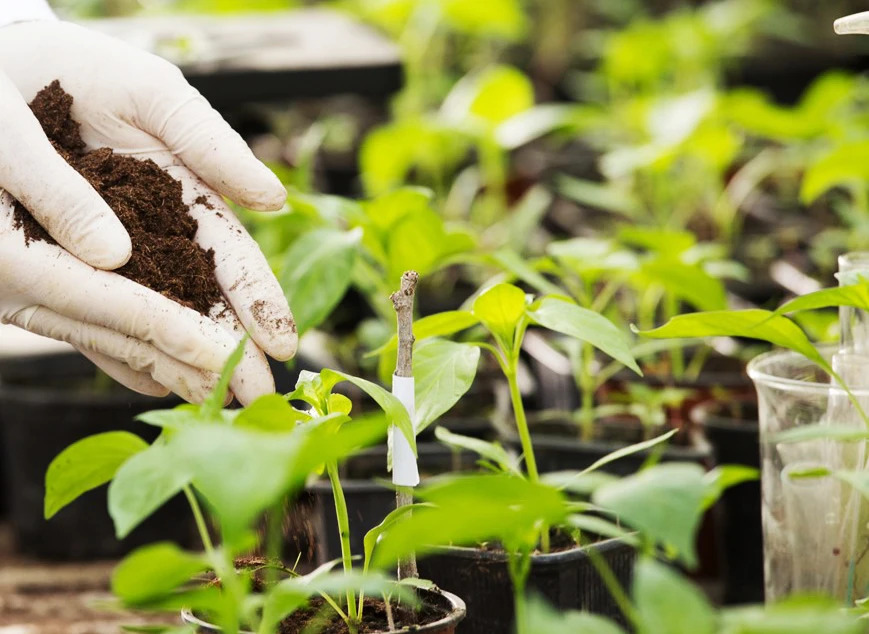
Arab News | Saudi Arabia looks beyond planting to restore its desert landscapes
Saudi Arabia is moving past simply planting trees to restore its desert landscapes. Experts say healthy plant growth can lower temperatures and help the soil hold water. Local farming is expected to benefit most from these effects. Mangroves, a type of coastal tree, also protect land from storms and provide homes for many fish and sea creatures.

Molecular sensor makes invisible traces of mercury easier to see
Mercury is a toxic metal that can hide in drinking water and food without any visible sign. Detecting tiny amounts usually needs expensive lab equipment and trained experts. Researchers have now built a molecular sensor that makes these traces easier to see. The tool could help people check for mercury more simply and quickly.

Longer inhibitory connections can push simulated neural networks beyond critical tipping point
Researchers at the University of Tokyo built computer models of simulated neurons spread across a small disk. They tested how the reach of inhibitory connections, which calm neural activity, affects the network. Longer inhibitory connections helped push the network to a critical tipping point, where small bursts of activity can spread widely. The findings, published in PLOS Computational Biology, may help explain how real brains organize themselves.
AHA: More intensive blood pressure lowering cuts future cardiovascular risk after stroke, transient ischemic attack
A large trial with 4,368 adults who had a past stroke or mini-stroke tested two blood pressure goals. Those aiming for a top number under 120 had fewer major heart events than those aiming for under 140. Over about 3.9 years, 10.9% of the stricter group had a major event, compared with 13.5% of the standard group. Doctors say kidney health needs close watching when pressure is lowered this far.

Fruit fly sleep protein yields peptides that inhibit drug-resistant bacteria in lab tests
Researchers at the University of Tsukuba in Japan studied Nemuri, a protein that helps fruit flies sleep. They found short pieces of it, called peptides, that stop many germs, including drug-resistant bacteria. The peptides work by disrupting the bacteria's ribosomes, the tiny machines that build proteins. The results were published in Nature Communications, but tests in animals are still needed.

New genetic atlas reveals traces of 10,000 years of sheep breeding
Researchers built SheepGTEx, the most complete map so far of how sheep genes are switched on and off. They studied 51 tissues and cell types and found hundreds of thousands of gene effects. By comparing this map with DNA from 52 ancient sheep, the team found that breeding shaped how genes work, not just their code. The work was published in Nature Genetics.

Blood NAD levels track heart disease, not aging, study of more than 1,000 adults finds
Researchers at Vilnius University in Lithuania studied blood NAD levels in 1,068 adults. NAD is a molecule linked to energy and anti-aging supplements. In healthy people, NAD did not fall with age, but people with heart disease had lower levels, especially those with high blood pressure. The team suggests heart health may matter more than age for NAD readings.

When the center stops paying: how competitors split into niches
A new mathematical model called the influencer's game looks at how competitors choose their positions. Players share a resource based on how much influence they have at each point. The model predicts when competition makes players bunch together and when it splits them into separate niches. The authors also test it with real-world resource data and reinforcement learning.
A network of quantum registers can solve equations by agreeing on the answer
Researchers describe a new way to solve systems of linear equations using a network of quantum registers. Each node holds one equation and enforces it locally. Neighboring nodes swap quantum states so the whole network agrees on one answer. The method is tested with numerical examples on computers.
Why an optimal robot may need more than one answer
Robot controllers usually pick one best action. This paper reviews a method that spreads probability across many possible actions instead. The authors show it can find diverse solutions and help robots escape bad choices. A simple numerical example shows simulated robot arms following many different successful paths.
One control move, many possible futures: a faster way to plan for uncertainty
Researchers introduced FanCyqlone, a new solver for control problems that must plan for many possible futures. It splits the work across time steps and scenario branches, so the calculations run in parallel. The team built it into a tool called FanCyQPALM and tested it on spring-mass and quadruped robot benchmarks. The method aims to make safe, real-time control of machines faster and more practical.

Antarctica’s treaties have a memory—and that may be their real strength
Researchers mapped more than 60 years of decisions made under the Antarctic Treaty. The treaty is the rulebook that guides how countries work together on Antarctica. The study found that countries keep updating and linking their rules, so the system stays alive. Rules about protected areas change the most often.

A forecast model misses fewer epidemic peaks—and works best when local data are scarce
Public health agencies need to know how outbreaks will grow and when they will peak. Researchers trained an AI model, Mantis, mostly on simulated outbreaks, then built Mantis 2 by mixing simulated and real data. Mantis 2 missed roughly 30% fewer outbreak peaks than the strongest comparison model. It also spotted successful peaks more than six weeks early on average, and it is publicly released.

Mapping an enzyme offers clues to treating rare genetic disease
Researchers at the Icahn School of Medicine at Mount Sinai in New York have mapped an enzyme. The enzyme is linked to glutaric aciduria type 1, a rare inherited disease that can lead to brain damage. The team also learned how the enzyme's activity is controlled. Their work was published in Science Advances and could guide new treatments.

Ancient rocks reveal a dramatic journey from deep inside Earth
Granite rocks on the southern shores and islands of the Marmara Sea in Türkiye once formed as hot melted material deep in the Earth. Researchers at Istanbul Technical University used several mineral-based clocks to track how these rocks cooled. They found two main stages: fast cooling during the Eocene, then another fast rise during the Oligocene. The study was published in the Journal of Asian Earth Sciences.

Evolution found another way to build a primate brain
Researchers in Taiwan and Japan studied how the human brain grows. They found that a small piece of DNA acts like a switch for the gene DACH1. This switch is shared among primates but differs in other animals. Using mini-brains grown from human stem cells, the team showed the switch helps make special brain-building cells.

Mountain growth spurts may have sparked complex life on Earth
Scientists studied rocks from the past 3 billion years to see how mountains grew over time. They found mountains grew taller in two major bursts, about 2.2 billion and 700 million years ago. Mountains may have released nutrients like phosphorus and helped raise oxygen levels. This may have helped complex life flourish on Earth.

In National Geographic’s “Expedition: Saving Our Seas,” it’s all hands on deck
A new National Geographic documentary, Expedition: Saving Our Seas, shows scientists at work in the Southern Ocean. The film captures their excitement as they find new kinds of life in the deep water. It highlights how much is still unknown about the ocean and why protecting it matters.

A likely supermassive neutron star might shed light on the mass gap between neutron stars and black holes
Astronomers studied a red giant star with an invisible partner. They used data from LAMOST and APOGEE telescopes. The partner weighs about 2.2 times the sun, which may make it a very heavy neutron star. Such rare objects can help scientists learn where neutron stars end and black holes begin.

Ocean absorbs more fossil fuel carbon while land uptake stalls, 30 years of data show
Scientists at Scripps Institution of Oceanography studied 30 years of air measurements from sites around the world. They found the ocean absorbed about 2.8 billion metric tons of carbon per year from 1990 to 2019. That is about 35% of fossil fuel emissions. Land absorption did not grow, and it has generally declined since 2009.