Latest News
Positive stories from around the world · Good news by country
Showing 2065–2088 of 37356 articles

New analytical method offers potential for faster risk assessment of avian influenza viruses
Researchers at Wageningen Bioveterinary Research studied eight avian flu variants in chicken and duck cells. They used a mathematical model to compare how the viruses spread between cells and how quickly infected cells died. The method may speed risk checks and reduce animal testing. More work is needed to confirm how well cell results match infections in live birds.

Moderna's RSV vaccine shown to provide strong protection against serious cases in adults 50 and older
A study of older U.S. veterans found that Moderna's mResvia vaccine helped prevent serious RSV illness. One dose was 81.8% effective against RSV-related hospital stays and 60.2% against emergency or urgent care visits. It also reduced documented RSV infections by 60.3%.

Study explores leveraging dental hygienists to expand access to oral health care
Dental hygienists help prevent tooth and gum problems, but state rules can limit where they work and which services they provide. A study explores whether changing or using these rules differently could expand access to preventive oral care. The provided article excerpt does not name the study’s findings or a specific state.

Rain may increase ocean carbon uptake more than we thought
Global carbon budgets may miss some of the carbon absorbed by the ocean. Researchers estimate rain's effects on the sea surface could raise uptake estimates by roughly 5% to 15%. Better accounting may sharpen our picture of how carbon moves through the climate system. The article does not report a new measurement of total ocean uptake.

Five lifespan-extending treatments boost the same antioxidant in mice
Researchers found that five lifespan-extending treatments in mice all boost the same antioxidant. The overlap may help explain how some treatments affect aging and related diseases. The excerpt does not name the antioxidant or treatments, and it gives no study details. These results are from mice, so they do not show that the treatments extend human life.

New atlas traces how key human brain cells develop before and after birth
A UCLA-led team created a detailed atlas of cells around the basal ganglia, a brain region involved in movement and behavior. It traces changes from midpregnancy through infancy. The work also maps controls that shape gene activity and DNA organization. This could help researchers see when and in which cells disease-linked genes matter.

Mapping the marmoset's deep-brain cell diversity and building a tool to integrate data across species
A team spanning 55 institutions created a detailed atlas of the basal ganglia, a brain network involved in movement, habits and decisions. It maps more than 25 million cells across humans, macaques and marmosets. The work includes a tool to compare brain data across species and may help researchers study brain disorders. Princeton University researchers helped map the marmoset brain.

Researchers pioneer new technology to track brain tissue from laboratory to data
UTHealth Houston researchers created a digital tracking system called NIMP. It follows brain tissue from the lab through 15 steps to the resulting data. The system records which brain region a sample came from and tracks how labs handle it. It supports a national brain-cell mapping effort involving 55 institutions in nine countries.

Sensors track stress in plants in real time—without hurting them in the process
A team of engineers has designed a sensor that attaches directly to plants. It tracks how they respond to stress, such as drought and fire, in real time. The device is designed to monitor plants without hurting them. The article does not name where the work took place.

Unified framework establishes rules for classifying unconventional magnets
A team from the Hefei Institutes of Physical Science developed a unified framework for unconventional magnets. The framework uses symmetry criteria, or rules about how a material's structure behaves, to classify them. It could give researchers a clearer way to study and compare these magnets. The report does not provide measurements or test results.

Researchers play critical role in developing new atlas of brain cells
Scientists from more than 50 institutions built the first comprehensive atlas of basal ganglia cell types in humans, macaques, marmosets and mice. The work includes 28 papers and may help explain how brain cells relate to conditions such as schizophrenia and Parkinson's disease. The open NeMO Archive lets researchers compare data from more than 50 million brain cells.

Study finds midlife women face unique need for workplace flexibility
Research from the Working for Women Research Partnership finds women ages 40–55 are more likely than other groups to both want and need flexible work. The study points to overlapping demands in midlife. Its findings may help employers better understand workers’ needs.

Human basal ganglia atlas reveals how genes are regulated in individual cells
Researchers at the Salk Institute helped create a 3D atlas of the human basal ganglia. It shows genetic and epigenetic details in individual cells, including where genes are active or regulated. The atlas may help scientists connect disease risks to specific cell types and find targets for more precise treatments. The findings appeared in a collection of 28 papers.

The brain’s fear center moonlights as the save button for memories
Scientists suggest the amygdala, a small brain area known for fear and aggression, may also help decide which moments we remember. It may act like a save button for memories. This could help explain how memory works in the brain.

From bush food to biodegradable materials: Unlocking the potential of pigface
A hardy Australian coastal plant called pigface has uses in Indigenous food and medicine. UNSW researchers found that its extract can make seaweed-based film stronger and more flexible. The finding could help improve biodegradable materials, though the article gives no test figures.

Cheap drug may prevent second stroke by lowering blood pressure
In a study at five U.S. hospitals, stroke survivors who added spironolactone to usual care had lower blood pressure. After three months, 52% reached the recommended target, compared with 30% receiving usual care. The benefit remained at six months. Serious side effects requiring hospital care were similar in both groups.

Electron beam tests advance safer sterilization method for flies that threaten livestock
Texas A&M AgriLife scientists tested electron beams on New World screwworm pupae. Treated flies could fly and complete their life cycle, while the males were sterile. The method takes seconds, compared with minutes using radioactive cobalt-60. It could help control a pest that threatens livestock and wildlife.

Euclid offers best-ever 3D map of the universe to date
The European Space Agency and Euclid Consortium have released 13 months of telescope observations. The data cover 1,900 square degrees of sky and include images and spectra from many cosmic objects. Scientists will use them to build a 3D map and study dark matter and dark energy. Research teams in Germany helped build key telescope optics and process the data.

Head-to-head trial reveals better immune-dampening drug for psoriatic arthritis
In a trial of 553 adults, bimekizumab helped more people reach a major improvement in psoriatic arthritis symptoms than risankizumab. At six months, the rates were 55% and 44%. Serious side effects were reported by fewer than 2% of bimekizumab users and about 3% of risankizumab users. Candida infections were more common with bimekizumab.

Sea pigs from the abyss host unusual bacteria
Researchers in Japan identified a bacterium living beneath the body wall of three sea pig species. It made up more than 70% of bacterial gene sequences in sampled body-wall tissue. The team mapped its location with fluorescent imaging and found a compact genome of 649,000 bases. The discovery may help explain how bacteria and animals live together.

Taiwan’s tea growers adapt to climate change by letting nature take control
Tea growers in Taiwan’s Alishan mountains are responding to hotter weather and soil damage by letting nature play a larger role in cultivation. Some are dropping chemical inputs and using wild-growing methods. Local tea production fell 13.5% between 2014 and 2023. The region warmed 0.7°C over the past decade.
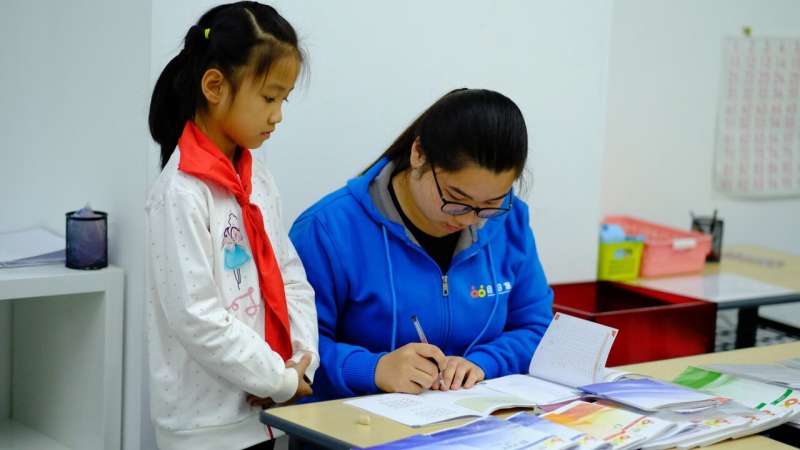
School nurses find stock epinephrine improves safety of students with severe allergies
Researchers surveyed school nurses from 349 schools across the United States. Eighty-seven percent of schools kept emergency epinephrine on site, while 74% also required students to bring their own. Nurses at schools without a shared supply were more than four times as likely to report that medicine was unavailable during an emergency. The findings support wider stock epinephrine programs, which may ease costs and help protect students.

Patients with meat allergy who take omalizumab may see improvement of symptoms
A study of 64 people with alpha-gal syndrome found that omalizumab may make reactions less frequent or less severe. None needed epinephrine for a food reaction while taking the medicine, and 95% reported improvement. About one in three could eat some mammal products again. The findings are promising, but more research is needed to confirm how well the treatment works.

Ant colonies defy aging patterns as death risk falls and reproduction rises
Researchers tracked 3,285 western harvester ant colonies in Mesa County, Colorado, from 1992 onward. Older colonies were less likely to die and more likely to reproduce. The colony renews its workers, which live about a year, while its queen can live for decades. The findings describe aging in the colony as a whole, not individual ants.