Latest News
Positive stories from around the world · Good news by country
Showing 2041–2064 of 37356 articles

Inflammation is involved in the earliest stages of atherosclerosis
Researchers at Spain’s CNIC followed 3,471 adults without known heart disease for six years. They found that inflammation contributes to early artery plaque growth, even when cholesterol and blood pressure are considered. White blood cell count was the marker most closely linked to the disease. The findings could help improve early heart risk checks, but do not establish a new treatment.
Champion trainer Skelton happy but always wanting more
Dan Skelton leads a large horse-racing yard near Alcester, Warwickshire, with more than 200 horses and over 70 staff. He won the British jumps trainers' title in April and wants to claim it again. This weekend, three of his horses are entered in the Paddy Power Gold Cup at Cheltenham. He says his stable is full and the team cannot take more horses.
SFA in talks with Boston officials over biannual friendly match
The Scottish Football Association is in talks with a group of Massachusetts state senators and Boston officials. They are exploring a friendly match between Scotland and a Boston-area team every two years. The plan aims to strengthen connections made during the World Cup. No agreement has been announced.

New guidelines recommend regular prostate cancer screening for all middle-aged men
The American Cancer Society has updated its prostate cancer screening advice. It recommends a PSA blood test every two years for average-risk men ages 50 to 69. Black men and men with a strong family history should start at 45. Better ways to assess test results may help doctors avoid unnecessary treatment for slow-growing cancers.

Transparency in earnings calls does not guarantee equal access to information
Kaisa Penttinen's accounting dissertation at the University of Vaasa studied company earnings calls. It finds that question-and-answer sessions can offer useful information not found in written reports alone. Yet analysts and managers often use specialized language that individual investors may struggle to understand.

Surveyed cancer patients say cannabis improves symptoms
Researchers at the University of Kentucky Markey Cancer Center and Kentucky Cannabis Center surveyed 237 adults who received cancer radiation. Among 35 who used cannabis after diagnosis, 80% said their main symptom improved and nearly 89% reported better quality of life. The survey cannot show that cannabis caused these changes. Researchers also say better guidance could help doctors advise patients safely.

Mice help researchers discover how the COVID virus triggers sneezing and coughing
A UC Berkeley team found that two coronavirus proteins can directly activate sensory nerves in mice. This can trigger sneezing, coughing and pain. The discovery challenges the view that these symptoms arise only from inflammation. It may help guide treatments for COVID-19 symptoms and some problems linked to long COVID.

A living shield: Skin microbes may help sawfish survive oxygen-poor pools
A study led by Flinders University points to a possible survival aid for young largetooth sawfish. Microbes living on their skin may help them handle oxygen-poor pools during the dry season. The fish is critically endangered, so the finding could offer new clues for conservation. More research is needed to confirm how the microbes help.

Lemon waste yields bioplastic more flexible than commercial counterpart, study finds
A study published in Polymers tested lemon industry leftovers as a feed source for making PHBV, a biodegradable plastic. Researchers used the salt-loving microbe Haloferax mediterranei to produce it. The resulting material was more flexible than a commercial counterpart, suggesting food waste could help make useful plastics.

Smelling Parkinson's: From discovery to skin swab test
Joy Milne noticed a distinct smell in people with Parkinson's, inspiring researchers in Manchester to investigate skin molecules. Their swab test finds a chemical pattern linked to the disease. The team has sampled more than 7,000 people worldwide. The pattern may help with diagnosis and show how the disease changes over time.
Plans to increase Windsor Park capacity to 23,750 part of Women's World Cup bid
A FIFA report says Windsor Park could expand from 18,500 to 23,750 seats by 2035. The Belfast stadium is the only Northern Ireland venue in a joint UK bid for the Women's World Cup. Planned work also includes hybrid grass and better floodlights. The bid is the only one submitted and is expected to be ratified in November.

Liquid-phase growth strategy densifies ceramic films at low temperature
A team at the Dalian Institute of Chemical Physics developed a liquid-based method to grow dense ceramic films at lower temperatures. They made 10-micrometer-thick films at 800°C, using a material with a melting point near 2,700°C. Tests showed the films worked well in fuel cells. The team also demonstrated the method with larger areas, metal supports and other ceramics.

Combination therapy overcomes treatment resistance in breast cancer models
A team at MD Anderson Cancer Center in Houston used TargetScore, a computer tool, to find a possible drug combination for advanced breast cancer. Blocking PARP and SHP2 together slowed tumor growth and improved survival in several preclinical models. The strongest results came in cancer cells with DNA repair defects that had resisted treatment. More research is needed before the approach can be tested in people.

A new view of the gamma-ray gap: 14 years of Fermi data reveal around 450 sources in a largely unexplored energy range
Researchers used 14 years of data from NASA's Fermi Large Area Telescope to map about 450 sources emitting gamma rays at 20–200 MeV. The catalog doubles the number of known objects in this energy range. Some sources had not been seen in gamma rays before. It gives scientists a better way to study how extreme objects release energy.

A suspected black hole turns out to be a rapidly spinning star
New observations show that NGC 1850 BH1 is not a black hole binary. It contains two bright stars, including a stripped, swollen star and a hotter companion. The companion spins at about 280 kilometers per second. The finding clears up a mistaken black hole identification in the Large Magellanic Cloud.
Lawes recovering after hospital stay with infection
Courtney Lawes was admitted to hospital after a staph infection caused severe pain, a high fever, and weakness in his arms and legs. Doctors found his infection markers were dangerously high. After identifying the source, they gave him the right antibiotics. Lawes spent 10 days in hospital and says he is now recovering day by day.

Scientists identify protein driving age-related organ damage
Researchers at Monash University in Melbourne found that granzyme K is linked to signs of aging in the heart, liver and kidneys. The study, published in Immunity, points to a possible cause of organ damage with age. The finding may help researchers develop treatments, though no new treatment is reported yet.

College student mental health improves, but significant needs remain
The 2025–2026 Healthy Minds Study found that college students reported lower rates of depression, anxiety and suicidal thoughts. This continues a multiyear trend of improvement. The findings also warn that many students still need mental health support.

Pumpkin seed protein puts a twist on nondairy coffee creamer
Researchers used food-grade phosphates to help pumpkin seed protein mix smoothly with oil and water. They made a prototype creamer using tea seed oil and added it to coffee. In a taste test with 12 people, participants preferred it to a commercial nondairy creamer. More work is needed before it could reach stores.

Simulated collisions reveal how Phobos could preserve rocks blasted off Mars
Experiments show that rocks from Mars could survive impacts and remain on Phobos. Such fragments may reveal how the moon formed and what has struck it. Japan’s MMX mission will collect soil from Phobos and return samples to Earth. Scientists will look for material from Mars and other bodies.

Sequential peaks in arthropod availability across snow and vegetation help sustain alpine birds
Researchers tracked arthropods on three Japanese Alps mountains over two years. Food abundance peaked first on snow in June, then in pine scrub in June and July, and later in grasslands in July and August. These shifting peaks may let birds change where they feed and find food for longer. The findings show why snowfields and nearby vegetation both matter to alpine wildlife.

Blood thinner could offer a new way to treat osteoarthritis
Osteoarthritis causes pain and stiffness as joint cartilage wears down. There are no approved drugs that slow or stop the disease itself. Researchers are exploring whether a blood thinner could help, but the provided report excerpt gives no details about the evidence or where the work took place.
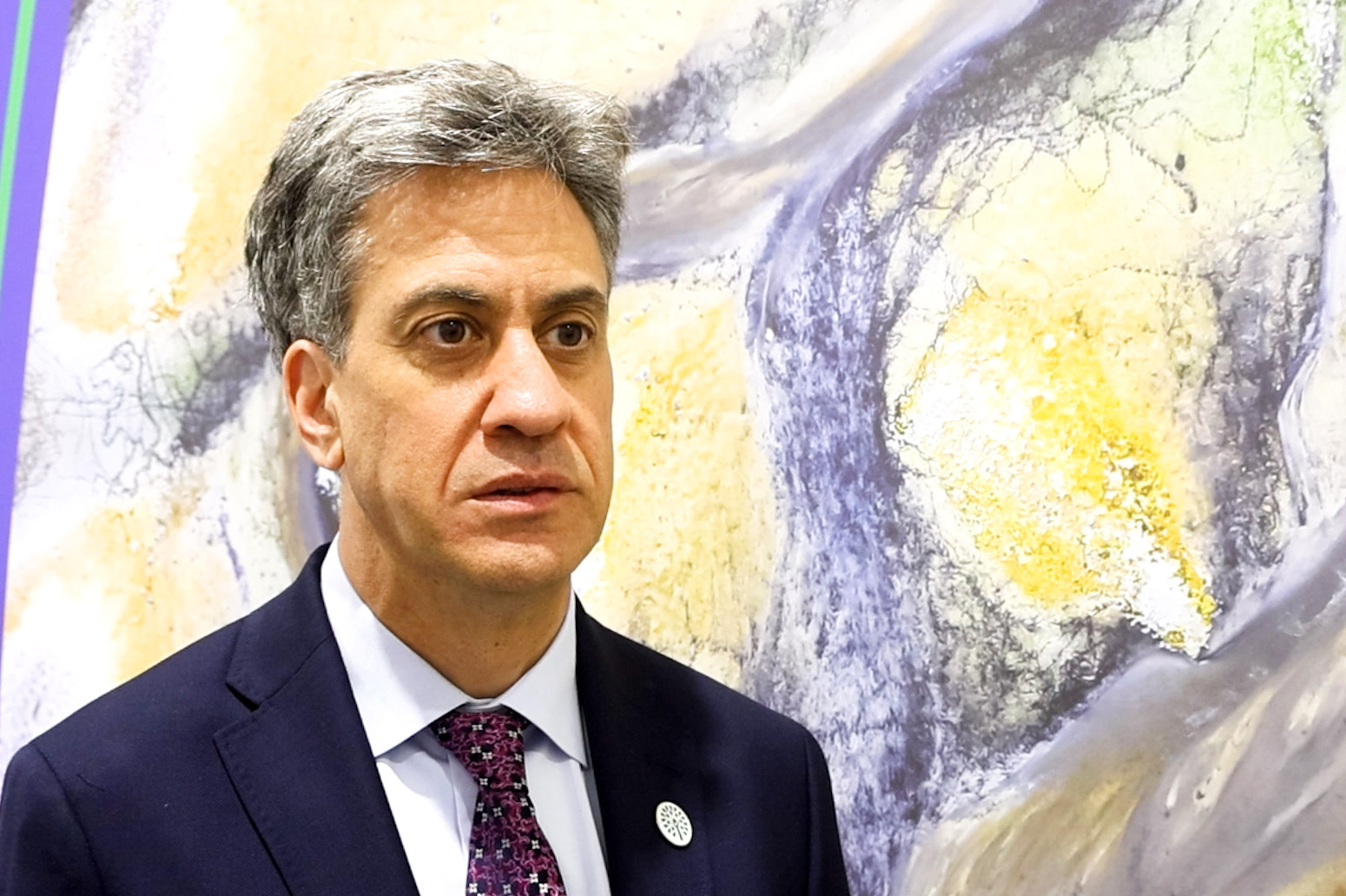
COP31: How Ed Miliband answered Carbon Brief readers’ questions
At COP31 in Antalya, UK foreign secretary Ed Miliband answered questions from Carbon Brief readers. He defended the UK’s climate leadership despite approval of the Jackdaw gas field. Miliband said the government aims to meet its 2030 emissions target and supports the 35×35 electrification pledge. He also called for development banks to do more for climate resilience and debt relief.

Lipids from banana peels help cherry tomatoes stay fresh longer
A Kyushu University team tested edible coatings made with protein, polysaccharides, or lipids from discarded banana peels. The coating with lipids best slowed water loss, ripening, and softening in cherry tomatoes. At 25 °C, treated tomatoes remained marketable for over 20 days, while uncoated ones lost more than 30% of their weight and showed decay by day 15. The approach could turn food waste into a way to reduce produce loss.