Joseph A. Sparano scrutinized a piece of tissue under radically new eyes. The Mount Sinai physician was testing an AI model named IICM+ that fuses digitized pathology images with a patient's age, tumor size and grade, plus an expanded 42-gene panel. Published in npj Breast Cancer, it predicts recurrence risk in early-stage HR+/HER2-negative breast cancer — the subtype behind about half of all U.S. cases — more accurately than the standard 21-gene Recurrence Score.
"Powered by artificial intelligence integrating clinical, molecular and histopathology data, this new test provides more reliable prognostic information," Sparano said. The AI is medicine learning to see.
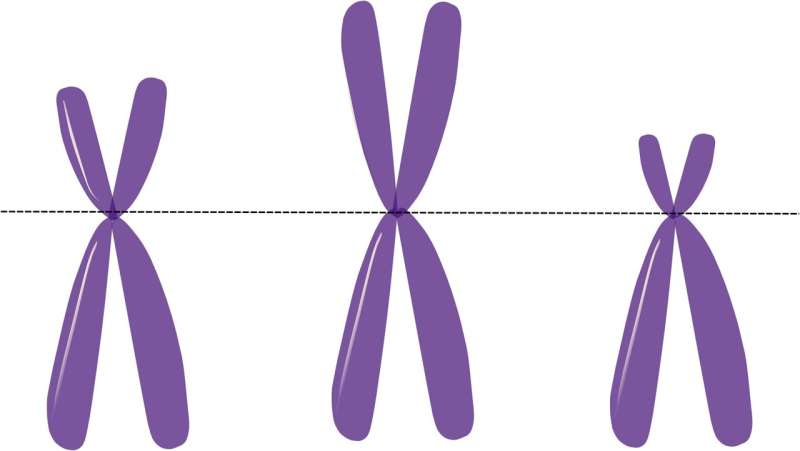
That seeing is getting sharper everywhere. At the University of Arizona Cancer Center, Dr. Dan Theodorescu found that losing the Y chromosome — common in aging men — creates a "preneoplastic field effect," a hidden zone of genetic vulnerability in tissue that looks normal. His team analyzed 1,000 samples from 405 men, scanning more than 4.3 million cells. "We may be looking at one of the earliest signposts of cancer forming," he said, findings published in JCI Insights.
Meanwhile, UTHealth Houston researchers, with Yale University, built an AI that performs a mental health evaluation nearly as accurately as a team of psychiatrists. Combining a system called Qwen3-Omni with custom software, it reads speech, tone and behavior across visits and writes explanations for its assessments. "Almost as good as a team of psychiatrists. It's very impressive," said co-first author Hammza Hamoudi.
The American Association for Cancer Research's 16th annual Cancer Progress Report looks ahead to AI, liquid biopsy, cancer vaccines and RNA medicines — therapies some patients already credit with saving their lives, all supported by federal investments from the NIH, NCI, FDA and CDC.
Yet progress isn't only algorithmic. The MATCH study, published in The Journal of Clinical Oncology, tracked more than 500 cancer survivors across Calgary, Toronto and Boston and found mindfulness and tai chi/qigong eased pain, fatigue and sleep problems. "These findings reinforce the value of a whole-person approach," said senior author Peter Wayne.
Likewise, the American Society for Radiation Oncology released its first guideline on bladder cancer care, supporting trimodal therapy as a curative alternative to bladder removal for muscle-invasive disease — hope for the estimated 85,000 Americans diagnosed this year.
And prevention still moves at the dinner table. A meta-analysis of 87 clinical trials in the European Heart Journal found four to six servings of whole grains daily lowered blood pressure, weight, cholesterol and glucose. "How much whole grain should people eat to meaningfully improve cardiovascular health?" asked lead author Helda Tutunchi. Answer: four to six servings.
Even childhood is being rewritten. At the University at Buffalo, a five-week summerMAXyc program helped autistic children ages 4–6 improve social skills dramatically. "Developing foundational skills early sets the stage for better long-term outcomes," said co-author Christopher J. Lopata.
From a single cell to a grain of wheat, the through-line is unmistakable: we are learning to intervene earlier, more precisely and more humanely. The tools change — algorithms, chromosomes, mindfulness — but the goal holds. Health is no longer just being sick less. It's being seen sooner.
Sign in to join the conversation.
Comments (0)
No comments yet. Be the first to share your thoughts.