The coral gardener of Moorea
Titouan Bernicot was 16 when he slipped beneath the waves of Moorea, French Polynesia, and saw a reef in trouble. Instead of watching the corals vanish, he began collecting broken pieces, hanging them in underwater nurseries, and returning them to the sea. What started in 2017 as a kid's experiment has since grown into Coral Gardeners, an organization that has planted more than 221,000 corals across three countries — French Polynesia, Fiji and Thailand.
Bernicot isn't alone. Across the planet, a quiet army of gardeners is rebuilding reefs, forests and farmland, one rooted fragment at a time.
From a hurricane's rubble to 60% coral cover
In 2001, Hurricane Iris struck Laughing Bird Caye National Park in Belize directly, crushing live shallow-coral cover to less than 6%. Marine biologist Lisa Carne found surviving elkhorn coral fragments scattered among seagrass beds — and saw an opportunity. She fixed those broken pieces to homemade steel tables, launching Fragments of Hope, a community-based restoration organization in Placencia.
The technique was simple: grow fragments in underwater nurseries, then transplant them onto damaged reef. Over the years, more than 92,000 plantings lifted coral cover to roughly 60%. A reef written off as rubble became a living lesson in what patience and local know-how can achieve.
A father-daughter 4-H project that changed the Florida Keys
Half a world away, in the Florida Keys, another gardener started even smaller. Around 2000, tropical-fish collector Ken Nedimyer helped his daughter with a 4-H Youth Development project. Together they began hanging rescued staghorn coral fragments from underwater "coral trees" — pieces that had broken off nearby reefs and would otherwise have died on the seafloor.
That backyard experiment grew into a full reef-restoration network. By the time the project matured, Nedimyer's "coral trees" had helped plant more than 200,000 corals. In a region where staghorn and elkhorn populations had dropped by almost 90% due to disease, bleaching and storms, the numbers tell their own hopeful story.
The rare coral that came home
In 2015, marine biologists in Hawaii rescued surviving fragments of knobby finger coral — a rare Hawaiian endemic found nowhere else on Earth except Kaneohe Bay. They placed the pieces in a special living collection called the Rare Hawaiian Coral Ark. Then, disaster: heat-related bleaching and storm damage wiped out the remaining wild colonies completely.
The coral had vanished from the wild. But not from the lab. Scientists at the Hawaii Coral Restoration Nursery, established that same year at the Anuenue Fisheries Research Center on Sand Island, grew the rescued fragments in a land-based nursery — speeding up growth in a species that naturally adds less than a centimeter a year. Mature colonies were eventually returned to Kaneohe Bay. A species that had disappeared came home.
Beyond the reef: speaking the quiet language of restoration
The same grammar of restoration plays out on land. In 1976, a South African farmer planted spekboom cuttings on a degraded 200-by-100-meter slope in the Kromport area of the Eastern Cape to stop floodwater from washing away soil and threatening livestock. The cuttings survived. Four decades later, the hillside had transformed: other vegetation returned, birds and wildlife followed, and scientists found evidence of change beneath the soil. That single planting shaped a much larger restoration experiment across the Eastern Cape, where millions of spekboom cuttings were tested to rebuild damaged landscapes.
In Tanzania, Jane Goodall saw the pattern from the air. In 1960 she'd arrived in Gombe to study chimpanzees. Decades later, a flight revealed that while Gombe National Park stayed green, the hills around it had lost much of their forest to farmland, charcoal and income needs. In 1994, her institute launched the Tacare project in 12 villages — not to simply protect chimps, but to work with village leaders on community-centered plans. Twenty-seven years later, forest cover in community reserves had risen 66% across the area.
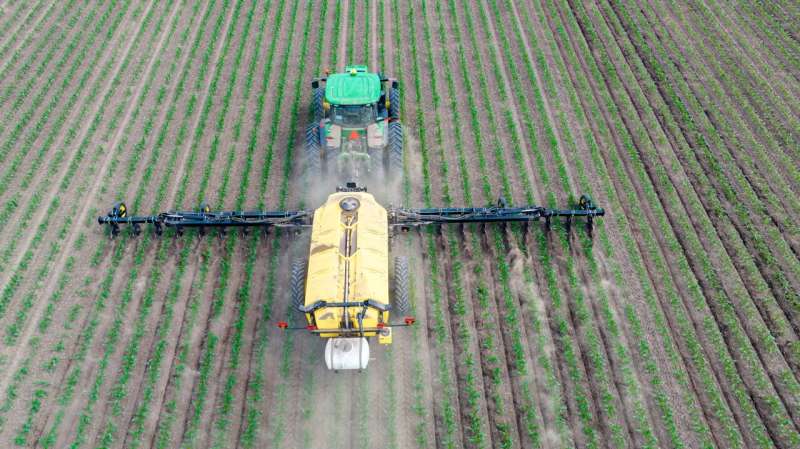
Even agriculture's invisible chemistry is being rewired. According to a new global dataset from the University of Minnesota's Institute on the Environment — six years in the making, covering crop-specific fertilizer rates for every country from 1980 to 2022 — global fertilizer consumption has doubled since 1980. Yet regions that historically overused it, including China and parts of Europe, have taken concrete steps to reduce use. Correcting underuse while cutting overuse, researcher Deepak Ray and his team argue, could produce enough food to feed the world while limiting environmental harm.
The thread that ties it together
Strip away the science and a single thread runs through every story: someone looked at something broken — a reef, a hillside, a forest, a soil system — and asked what could grow there again. A 16-year-old surfer. A father and daughter in Florida. A marine biologist in Belize. A farmer in South Africa. A primatologist who dared to work with, not against, the people around wildlife.
No single effort is enough. But together, they sketch a world that is not simply being rescued — it is being regrown, piece by patient piece, from the very fragments others had given up on.
The next coral tree, or spekboom cutting, or community reserve might start with an idea as small as a 4-H project. The question is simply who picks up the broken branch.
Sign in to join the conversation.
Comments (0)
No comments yet. Be the first to share your thoughts.