The Sun Is Winning
In a dusty village outside Lahore, a rooftop solar panel hums quietly. It wasn't installed by government decree or multinational aid — it was purchased by a family that wanted reliable power. Their decision, repeated millions of times across Pakistan, has transformed an entire nation's energy economy in just two years.
That's the real story of the solar revolution: it isn't waiting for political permission.
Pakistan's electricity demand surged 21% between fiscal years 2023 and 2025 — an increase of 33 terawatt-hours driven almost entirely by distributed solar, according to an Ember and Renewables First report. The country's electrification rate now matches the global average for the first time. These numbers represent real families, real businesses, and a real shift in what's possible.
Meanwhile, in the United States — despite an administration that has publicly backed coal and questioned solar's viability — the market is delivering a verdict of its own. In April 2026, both solar and wind individually produced more electricity than coal. Renewables accounted for 30% of U.S. electricity generation in the first third of the year, with utility-scale solar growing 21.3% year over year. The trend line is unmistakable.
"Solar and wind continue to get deployed rapidly due to their pure free-market competitiveness," notes the SUN DAY Campaign's analysis of EIA data. "The death of the coal industry is basically just being delayed by crony capitalism."
The momentum extends beyond power plants into manufacturing. Since 2022, 146 new solar and storage facilities have come online in America, with 36 more under construction. The U.S. now boasts 70 gigawatts of domestic solar module manufacturing capacity. As one CleanTechnica report put it: "Solar is powering America's next 250 years."
Storage technology is solving what was once solar's Achilles heel. Sodium-ion batteries — abundant, non-toxic, non-flammable, and domestically sourced — are emerging as a serious alternative to lithium-ion, with a new American Battery Leadership Coalition pushing for domestic production. These batteries let solar and wind punch above their weight, delivering power when customers need it, not just when the sun shines.
Innovation is unfolding in unexpected places. In the Philippines, VinEnergo and SunAsia Energy are developing 422 megawatts of floating solar across three projects — including a 181-megawatt installation in Macabebe and a 126-megawatt farm in Sagay. The structures float above water, allowing aquaculture to continue beneath them. Nearly 700,000 solar modules will dot reservoirs and lakes across the country.
Back in Australia, researchers at UNSW Canberra are tackling one of clean energy's trickiest puzzles: apartment buildings. With residents lacking roof access and ownership incentives, 2.5 million Australian apartment dwellers have beenlargely left out of the solar boom. A new AI-powered modular power portal system is testing whether intelligent energy management can share solar benefits across an entire building, not just individual homes.
And in Shenzhen, Jackery's portable power stations are partnering with the Red Cross to keep rescue teams running when disasters knock out the grid. "Having access to power keeps emergency crews running," the company notes — solar panels paired with portable batteries can mean the difference between a coordinated response and chaos.
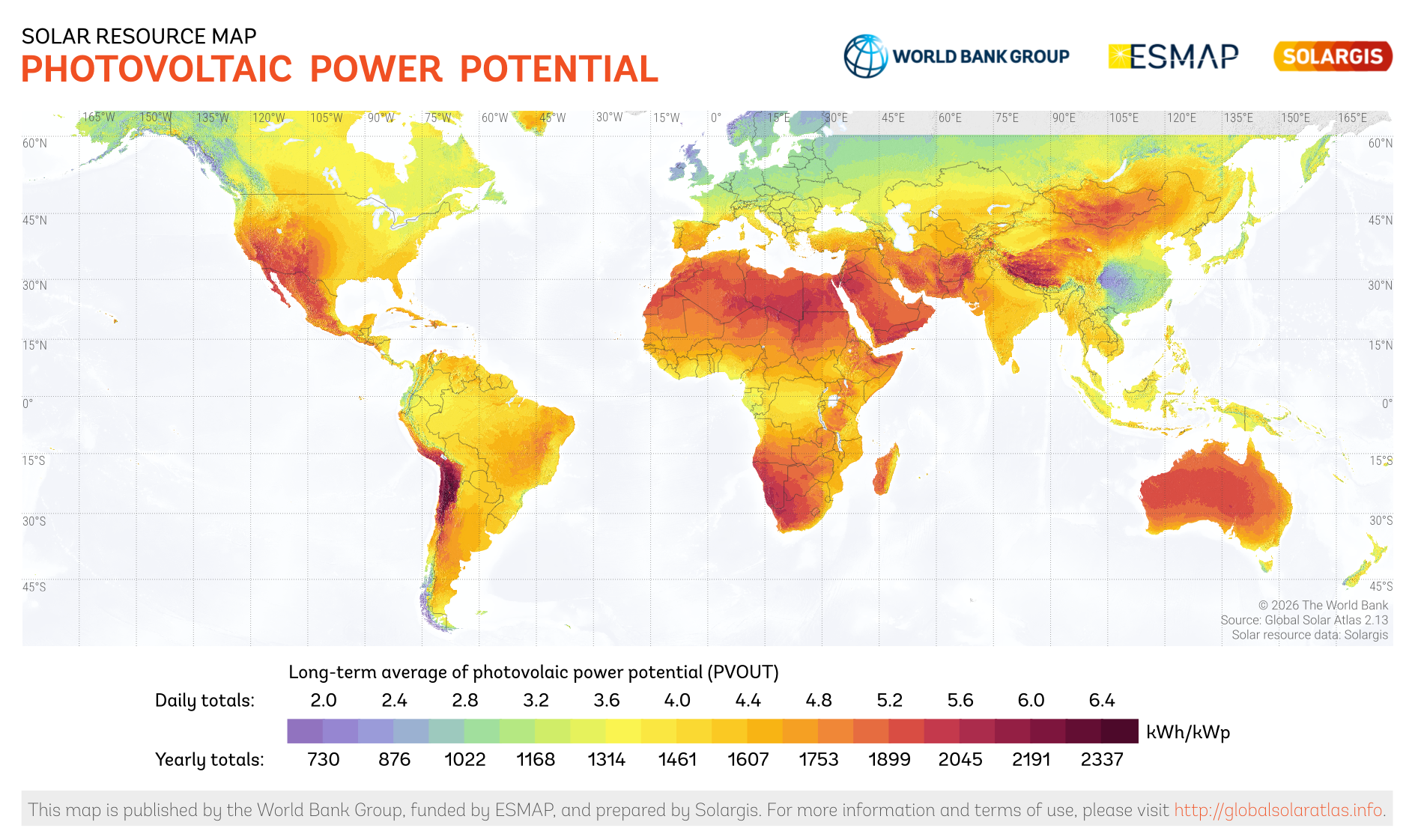
The geographic picture reinforces this optimism. Research from the University of Western Australia and Curtin University shows that roughly two-thirds of humanity already lives in regions with abundant solar and wind resources. The planet isn't short on clean energy — it's short on the will to deploy it fast enough.
That will, it turns out, is accelerating on its own.
Sign in to join the conversation.
Comments (0)
No comments yet. Be the first to share your thoughts.