A Hundred Days Old, and Already Changing the Game
Ten days after giving birth to her daughter Daisy, Danni Wyatt-Hodge strapped on her batting pads.
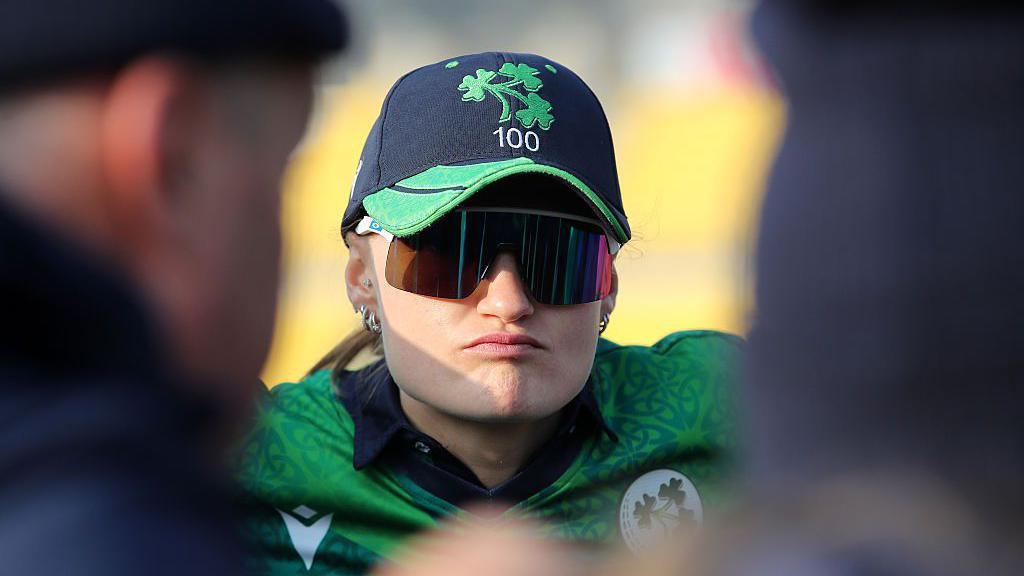
Last Tuesday, at Edgbaston, she walked out to open England's ICC Women's T20 World Cup campaign — and she didn't walk off until she'd hit an unbeaten century. Eighty-seven runs later, Sri Lanka were beaten. And Wyatt-Hodge was rocking her bat in her arms, mimicking cradling a newborn, in front of thousands of cheering fans.
"Playing in a home World Cup like that and then having the joy of seeing your wife and daughter the next day — that's what dreams are made of," she said afterward.
It was, as BBC Sport's Matthew Henry wrote, a "mummy hundred" — a phrase that somehow captures both the absurdity and the power of what Wyatt-Hodge had just pulled off. Back home, her wife Georgie watched on TV. Perhaps baby Daisy too.
One Moment, One Movement
Wyatt-Hodge's century is a single, shining moment. But it sits inside something much larger — a global shift in how the world sees, supports, and invests in women.
On the same pitch, her England teammate Freya Kemp took three wickets in four balls, dismantling Sri Lanka's batting order in a single over that left commentators barely able to keep up. England's opening statement to the tournament was emphatic.
But the statement being made off the pitch is just as striking.
From FemTech to Safe Houses
Across the Atlantic, a different kind of innings is underway. According to the Journal of Medical Internet Research, FemTech — female-focused health care technology — has exploded from a handful of period-tracking apps into a global force reshaping women's health, as reported by correspondent Jenny Castillo Cato for JMIR Publications. What began as a response to "deep-rooted gender biases" in medical research funding has grown into platforms like Invocares and Health in Her HUE, which target the specific health inequities facing women of color and lower-income communities.
The momentum is real. Changing attitudes, regulatory shifts, and surging consumer demand have all helped. Women are no longer passive recipients of health care — they're actively monitoring, managing, and advocating for their own bodies.
Meanwhile, in Port-au-Prince, Haiti is taking its own hard-won step forward. The country has opened its first State-supported safe house for survivors of sexual violence, backed by UN Women. Speaking from the capital, the agency's Marie Goretti Nduwayo described a crisis in which sexual violence surged by 163 percent in 2025 — affecting approximately 1,670 women and nearly 200 girls — as gang violence spreads beyond the capital into surrounding communities. The safe house offers protection, psychosocial support, and a path toward rebuilding lives. It is, as UN Women called it, "an important milestone" — small in scale but enormous in meaning.
The Women Who Refused to Wait
These moments don't happen by accident. They happen because women have been refusing to wait — for decades, sometimes lifetimes.
In 1997, at 60 years old, when most researchers are eyeing retirement, Harriet Latham Robinson was chasing a new faculty position as chief of microbiology and immunology at the Yerkes National Primate Research Center at Emory University. She got it. She went on to co-found GeoVax, a biotechnology company built on her preclinical HIV-1 vaccine research. Throughout her career in the male-dominated field of molecular biology, colleagues were addressed as "doctor" or "professor" at conferences. She, as Robinson recalls with dry precision, was simply called "Harriet."
Her story, published by MIT News, is a reminder that the pipeline of women in science has always been full — it was the doors that were narrow.
The Systems That Shape the Story
Progress for women doesn't happen in isolation. It happens when institutions change the rules.
New research from the University of Miami's Patti and Allan Herbert Business School, published in the Journal of Accounting Research, found that a 2020 SEC regulation requiring public companies to disclose more information about their human capital quietly transformed how firms compete for talent. After the rule took effect, companies became measurably more likely to use inclusive language — including DEI commitments — in their job postings. What was designed for investors ended up reshaping recruiting. Researcher Daniele Macciocchi put it plainly: "Forcing firms to publicly discuss aspects of their workforce could create pressure that changes how they access the labor market."
Rules matter. Transparency matters.
Even in rugby, a sport not always known for its progressive instincts, England's club directors are pushing for a more sustainable, humane approach to elite athletes. Northampton's Phil Dowson argued publicly that England captain Maro Itoje — who has led the British and Irish Lions, endured a punishing 12-month season, and may miss summer Tests — deserves rest not just for performance reasons, but for his long-term wellbeing. "It can't always be the clubs holding the burden," Dowson said. "Sometimes the international side has to also say a player doesn't need to play."
It sounds like common sense. In elite sport, it's actually radical.
What Connects All of This
A cricketer rocking her bat like a baby in a Birmingham stadium. A Haitian safe house opening its doors. A 60-year-old scientist landing a new job and co-founding a company. A regulation nudging corporations to mean what they say about inclusion.
These stories don't share a headline. But they share a current — a slow, stubborn, accelerating shift toward a world that takes women's lives, health, safety, and ambition seriously.
It's not finished. Not even close. But it's happening, in ways both enormous and quiet, on fields and in labs and in policy rooms and in safe houses. The world is showing up. And more often than not, women are leading the way in.
Sign in to join the conversation.
Comments (0)
No comments yet. Be the first to share your thoughts.