On a wind-scoured stretch of Wisconsin Point, a pair of piping plovers has done something no plover has done there since 1977. Nearly five decades after they vanished from this corner of Lake Superior, two tiny shorebirds built a nest on sand and cobble that didn't exist a few years ago — it was built for exactly this moment.
"The news of a piping plover pair nesting here is a very significant milestone for this site," said Matt Steiger, the DNR's St. Louis River Area of Concern coordinator. The $4.5 million habitat restoration — a collaboration of the Army Corps of Engineers, Fish and Wildlife Service, Wisconsin DNR, St. Louis River Alliance and the EPA — turned a working harbor into refuge.
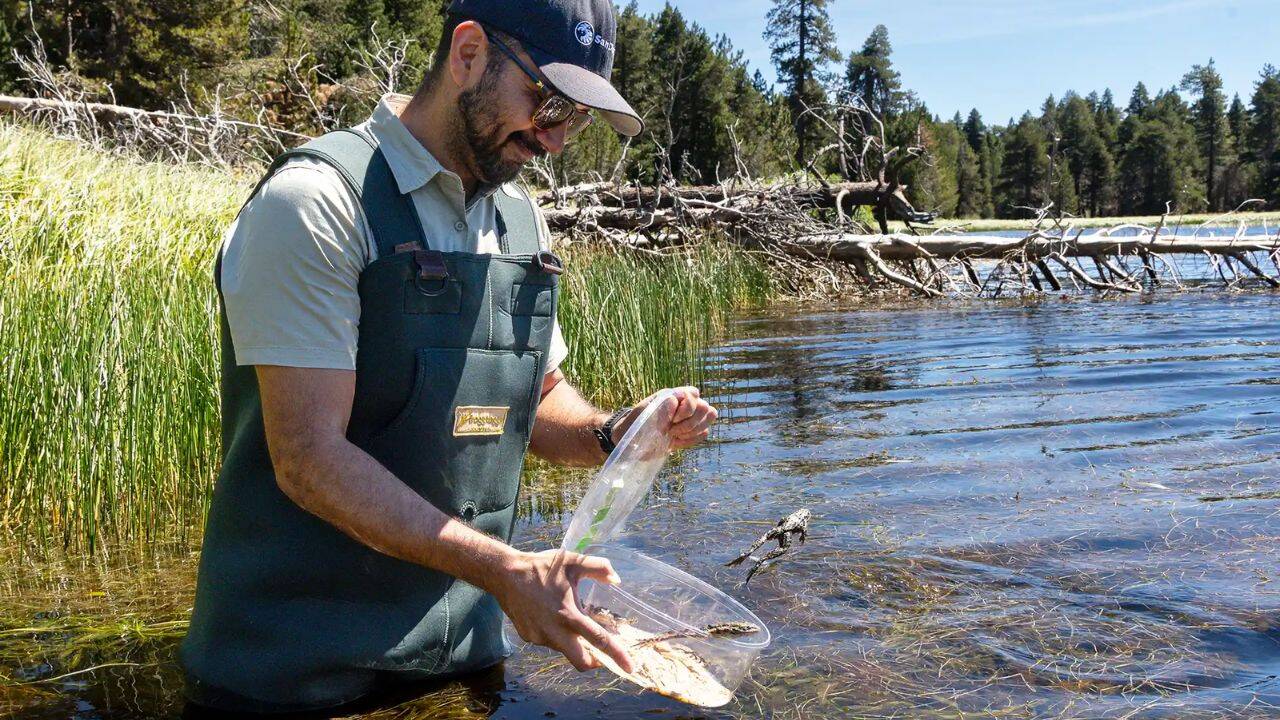
What happened in Wisconsin is part of a much larger story unfolding across North America in 2026. On the other side of the continent, more than 3,000 endangered mountain yellow-legged frogs and tadpoles were released into California's San Bernardino and San Jacinto mountains. The San Diego Zoo Wildlife Alliance program, which began in 2006 as a rescue effort, has now returned more than 10,000 frogs to the wild.
These aren't isolated victories. They're evidence of a quiet revolution in how we heal a damaged planet.
In Pennsylvania, researchers at Penn State are building what they call a "Noah's Ark for trees." The invasive emerald ash borer has decimated black ash across North America — a vital wetland tree that regulates forest hydrology and anchors the basketry and cultural heritage of Wabanaki, Iroquois and Great Lakes tribes. The team studied genetic diversity in black ash seeds stored in seed banks and published findings in Annals of Botany showing that different climates have evolved different seed traits — knowledge that will be critical for reintroducing the tree to U.S. and Canadian forests. They've already grown 9,000 seedlings in greenhouses.
Meanwhile, in India's Tadoba-Andhari Tiger Reserve, scientists at the National Centre for Biological Sciences used DNA metabarcoding — extracting genetic material from dhole scat — to discover that Asiatic wild dogs almost entirely eat wild prey, even where they overlap with livestock. As molecular ecologist Abhinav Tyagi explained, this method removes the human bias of traditional hair-microscope analysis. The finding is a clear blueprint: protect wild prey populations, and the dholes follow.
Science is also learning to listen more deeply. A new Concordia University study published in Scientific Reports uncovered that mackinawite, an iron sulfide mineral, can trap phosphorus in lake sediments under conditions where other minerals fail — a hidden chemical pathway that could help predict how lakes recover from pollution. And in Science Advances, coral scientists argue that art must join science to save reefs, pointing to Jalimer, a young Champeta musician in Colombia whose local genre could carry coral conservation to the global stage.
Even the money is starting to work. An arm of the federal government called ARPA-E — the Department of Energy's high-risk, high-reward moonshot funder — has doled out $4 billion over 15 years to climate startups. A landmark National Academies report requested by Congress found that investment has leveraged more than $20 billion in additional funding and 1,400 patents. Around 40 percent of ARPA-E grants create a "crowding in" effect that attracts private capital. And in a separate ruling this year, a South Carolina federal judge ordered the EPA to resume distributing billions in climate grants meant for disadvantaged communities like Jackson, Mississippi, where residents like Dominika Parry never stopped fighting for clean water.
None of this is easy. Piping plovers, frogs, ash trees, dholes, lakes and reefs all remain endangered. But 2026 is proving something worth remembering: when funding, science and stubborn human hope align, species come back. Habitats return. Waters clear. And the tiny, improbable victories — a plover nest on a restored beach, a frog released into a mountain lake — compound into something that looks a lot like the future we want to live in.
Sign in to join the conversation.
Comments (0)
No comments yet. Be the first to share your thoughts.