Insights
AI-synthesized editorial coverage of positive news from around the world

The 3:30 a.m. Knock That Explains Everything About Belonging
From a formerly homeless "wizard" in Helsinki to children protecting Raja Ampat's reefs, communities worldwide are discovering that belonging isn't given — it's built. A grieving footballer, California's free pre-K, and a soccer squad's speed-dating all tell the same story: small acts of care are quietly transforming lives.
A formerly homeless man was woken at 3:30am by neighbors asking for salt — proof that home is something we build togethe

The 400-Year-Old Shark Teaching Us to See Clearly
This week's science reveals resilience hiding in plain sight: a Greenland shark whose eyes barely age across 400 years, brain networks that steer back to balance, and the gut carrying fingerprints of past medications for years. From a 22% memory boost after one workout to a study of 680,000 people on generosity, researchers are learning how life heals, adapts, and endures.
A Greenland shark can live 400 years — and its eyes barely age. Scientists just figured out why.

The Fairness Blink Spot: Why Equity Tools in Science Miss So Many Women
New research finds a "legibility gap" in tools meant to fix gender bias in science. These tools guess gender from names. They work for names like "Sarah" or "Michael," which clearly show gender in English. But names from East Asia, like "Li" or "Chen," often lose their gender clues when written in English letters. So, these tools fail to recognize women with those names.
Citation diversity tools cite more women overall—but all the gains go to women with gender-signaling Western names, at

The Ghost Curves of Chaos: How a Network Reads the Logistic Map's Hidden Skeleton
Scientists made a map from the ups and downs of a simple math formula. They turned its random jumps into a web of connected points. From these jumps alone, they found hidden patterns — ghost-like curves shaped like "⊂" — that show the system's unstable paths. The web's numbers spiked at special moments (r = 3.635, 3.745, 3.857, 3.961), matching old chaos theory. Their method works without knowing the formula, just watching data, and reveals new secrets about chaos.
A network built from raw fluctuations rediscovers the logistic map's hidden skeleton — ghost curves no one had named

The THz Gap Just Met Its Match: Plasma Waves on Plain Silicon
The THz gap is a frequency range that normal transistors can't reach. But now, a silicon path goes through it. Scientists turned a row of 28 nm CMOS transistor channels into a "plasma." In this plasma, charge ripples move ten times faster than individual electrons. Using this plasma, they built an amplifier that hits 62 dB/mm at 650 GHz. It runs on standard, low-cost CMOS. Compound-semiconductor devices, which used to own this area, only reach about one-third of that gain.
Electrons move at 10^7 cm/s, but their plasma waves hit 10^8 cm/s — and that gap just became an amplifier.
A Century-Old Math Trick Just Solved a Wireless Problem Engineers Called Unsolvable
On a factory floor, sensors radio readings to a control room. Speed isn't key—freshness is: how long ago the data matched reality. Engineers call the gap "age of information" (AoI). Keeping it small when many users, sources, and interference clash had no perfect solution. RWTH Aachen researchers solved it using the Knaster-Tarski fixed-point theorem from pure math. They proved joint source-and-update scheduling hits the global best.
A 100-year-old lattice theorem just solved a wireless scheduling problem the field called unsolvable — and cut data age
One Night Off Key Largo, and the World Started Healing Itself
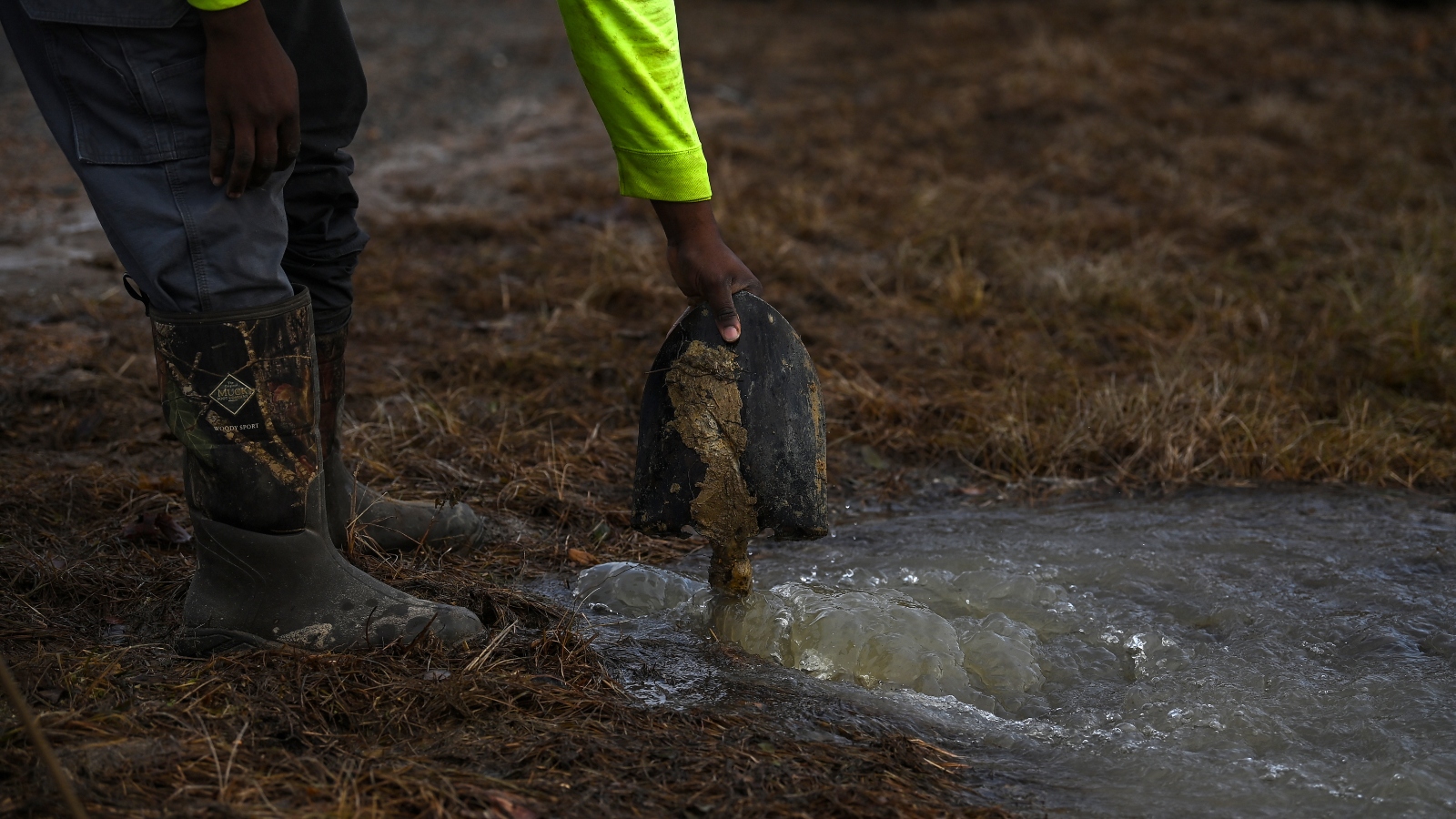
In one year, a judge reopened $2.8B in climate funds for Jackson, Mississippi; 12 organizations saved Florida's rarest corals mid-spawn; TNC planted 3.2 million trees; and South Africa turned on Africa's biggest solar-storage plant. Restoration is happening everywhere at once.
Just after 10 p.m. off Key Largo, scientists raced the tide to catch Florida's last corals mid-spawn.

Seeing the Unseen: How Science Is Finally Making Sense of the World
A Harvard team grew human brain cells for a record seven years and they kept maturing. Sonar revealed a 7,000-year-old drowned landscape beneath the Great Barrier Reef. A KAIST team reversed "irreversible" cell states. Across eight labs, scientists are seeing what was always hidden—and proving the world is more changeable than we think.
A clump of human brain cells just lived seven years in a lab—and recorded the passage of time.
The Quiet Architecture of Hope: How Community Rebuilds Everything
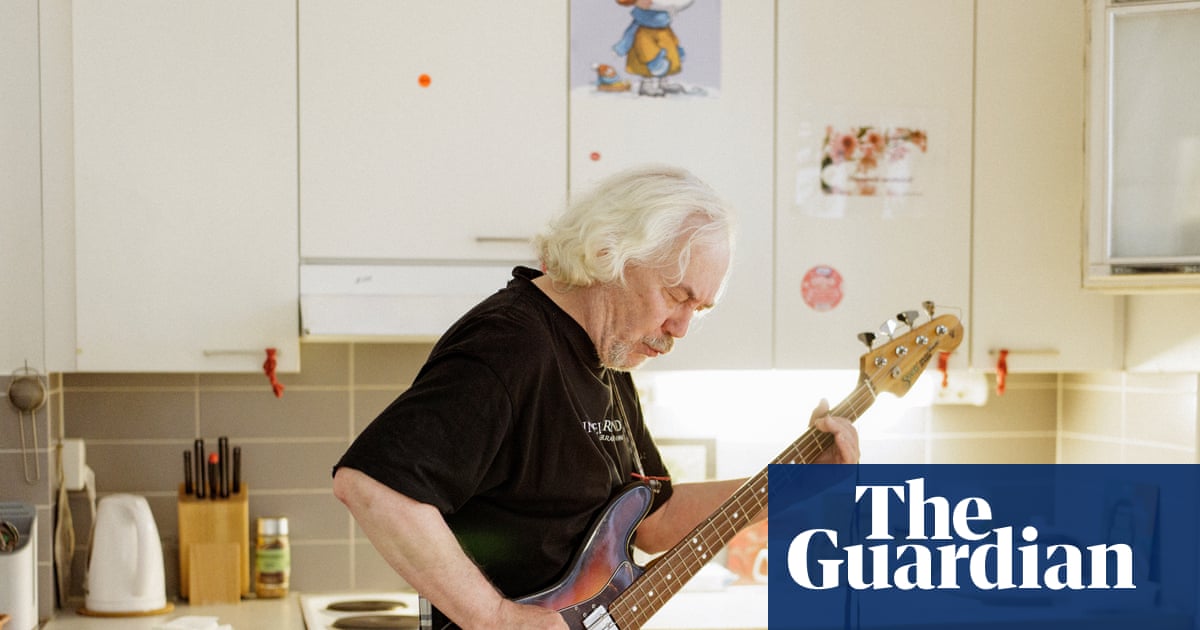
They're four very different stories — a footballer mourning his dad, a house raised in a week, a state that fixed reading, and a man who went from streets to hosting brunch. But each one proves the same thing: community is how we rebuild. From Finland's Housing First success to a Habitat Blitz Build, here's what happens when people show up for each other.
At 3:30am, Vello Senkel's neighbours knocked for salt — and found a man who'd been sleeping on the streets three years e

The Cancer Vaccine Just Passed Its Biggest Test — and Smarter Detection Is Coming Too
Moderna and Merck's personalized mRNA cancer vaccine just passed its biggest trial yet, extending the cancer-free window for over 1,100 melanoma patients. Meanwhile, Mayo Clinic quantified pancreatic cyst risk, and researchers found a mouth rinse that may flag GI cancers. A quieter, smarter era of treatment is arriving.
Moderna's stock nearly tripled in one day after a personalized cancer vaccine cleared its biggest trial yet.

Germany's CO₂ Pipeline Puzzle Has a Surprising Answer: 500 Kilometers Is Enough
Germany wants to stop adding CO2 to the air by 2045, but some factories can't run on electricity alone. Making cement needs limestone, and no amount of green power changes that. So, the plan is to capture CO2 from these factories, pipe it away, and store it under the North Sea. The big question isn't if we need pipelines—it's which ones to build first.
A 500-kilometer pipeline, not 1500, captures most of Germany's CO₂ transport value — if it reaches the Dutch coast.
The WWII Slot-Machine Puzzle That Still Runs Adaptive Control
During WWII, Allied statisticians faced a tricky math puzzle called the multi-armed bandit. It asks: you have several levers, each pays unknown rewards. You must pick between trying new levers (explore) and using the best one you know (exploit). This tradeoff still guides adaptive control today. Meijer & Rantzer's review maps four research paths. First, bandit theory proves optimal learning costs log T (regret grows slowly with time).
A WWII math problem about slot machines so consumed Allied analysts someone proposed dropping it on Germany.

Fifty Cabins and a Saved Park: How Communities Turn Needs Into Wins
A Canadian town wins national honors for 50 housing cabins. An Illinois neighborhood rescues its park from privatization with an Emmett Till mural. A Louisiana main street is booming. Australia launches its biggest gun buyback in 30 years. Different places, one pattern: noticing a need, organizing, and building with partners. A hopeful look at what community wins have in common.
Fifty cabins won an Ontario town a national innovation award — but the real win was the doors they opened.

The Era of One-Size-Fits-All Medicine Is Ending. These 8 Breakthroughs Show Why That's Great News.
This month, scientists cracked the 'undruggable' MYC protein, had a mouth rinse flag stomach cancer, and saw an mRNA vaccine halve melanoma recurrence. From AI recovery maps to climate-predicted outbreaks, medicine is getting more precise, earlier, and gentler — one breakthrough at a time.
Scientists just cracked the "undruggable" MYC protein—and that's only one of 8 breakthroughs in a single month.

Melting metal in space and reversing the 'irreversible': the scientists proving nothing is fixed
Melting metal floats aboard the ISS while scientists at KAIST reverse cellular states once called irreversible)Skip. From AI spotting rare Higgs events to sonar resurrecting a 65,000-year-old reef coastline, researchers keep proving the unseen is knowable and the "unchangeable" isn't. Grounded optimism, molecule by molecule.
A droplet of molten metal floats in space, melting at 1,700°C—and it's teaching us to reverse the "irreversible."

A Teen Found Fungi That Eat Plastic — And 7 More Signs the Ocean Is Fighting Back
A Hawaii high schooler's coconut filter uncovered fungi that eat plastic. Biologists raced the lunar tide to rescue Florida's last elkhorn corals. A researcher found the first marbled murrelet nest on Haida Gwaii in 30 years. Across every depth of the sea, this season's science shows an ocean that isn't just struggling — it's being fought for, and won back, one discovery at a time.
A 17-year-old found fungi in a coconut husk that literally eat plastic — and that's just one win for the ocean this seas

The shy girl who learned to lead: how belonging rebuilds the world
On a tiny island off Dakar, a girl who couldn't look people in the eye learned to be a leader — and she's just one thread in a global story. From a Cebu robotics team winning a world title to Bangladeshi families building flood-proof homes énMongabay has documented, belonging is proving to be the quiet engine of real change.
A girl too shy to raise her hand just became student council president — and she's only part of the story.

The Snap: How Reputation Alone Makes Selfish Agents Cooperate — Until They Suddenly Don't
Physicists at three Chinese universities built a computer game on a big grid. Ten thousand selfish agents play a "prisoner's dilemma," where cheating pays best in the short term. But agents can watch their neighbors' success. This information alone makes them cooperate fully—no rewards, punishments, or forced kindness.
Past a critical threshold, cooperation snaps to total defection in a discontinuous phase transition — like water
The Volcano We Could Build Would Reshape the Air We Breathe — Just Not the Way You'd Expect
Imagine pumping tiny sulfur particles into the sky to cool Earth, like a fake volcano. But this trick changes the air we breathe. A new computer study found that overall, tiny pollution particles at ground level would drop. Yet that's misleading. The drop comes only from less dust and sea salt. The man-made particles, which are worse for our health, actually increase. Cooler air makes more of them form. Plus, most injected sulfur is too big to count as the dangerous tiny stuff.
Injecting sulfur into the stratosphere would cut total PM2.5 — yet raise the fraction of fine, toxic particles that

Climate scientists just learned to weigh time itself — and the Little Ice Age ocean got colder
Paleoclimate records measure different things at different timescales. A tree ring shows one season. A borehole profile—a deep ice core—shows centuries of temperature, blurred together. A new tool, LMR4D-Var, combines these records to rebuild past climate while respecting each one's memory. It scored highest against real measurements (r = 0.95). When borehole data is added, the Little Ice Age ocean becomes cooler: by 0.15×10⁸ J m⁻² in the top 300 meters, and 0.20×10⁸ J m⁻² down to 2000 meters.
Adding centuries-long borehole memories cools the Little Ice Age ocean by 0.2×10⁸ J/m² — no explicit linkage programmed.