In zebrafish with a missing collagen IX gene, tiny mineral deposits began stiffening the tissues between their vertebrae—and an osteoporosis drug stopped that buildup in the researchers’ experiments. The finding points to a possible new way to study spinal damage, though it is not yet evidence that the medicine can prevent back pain in people.
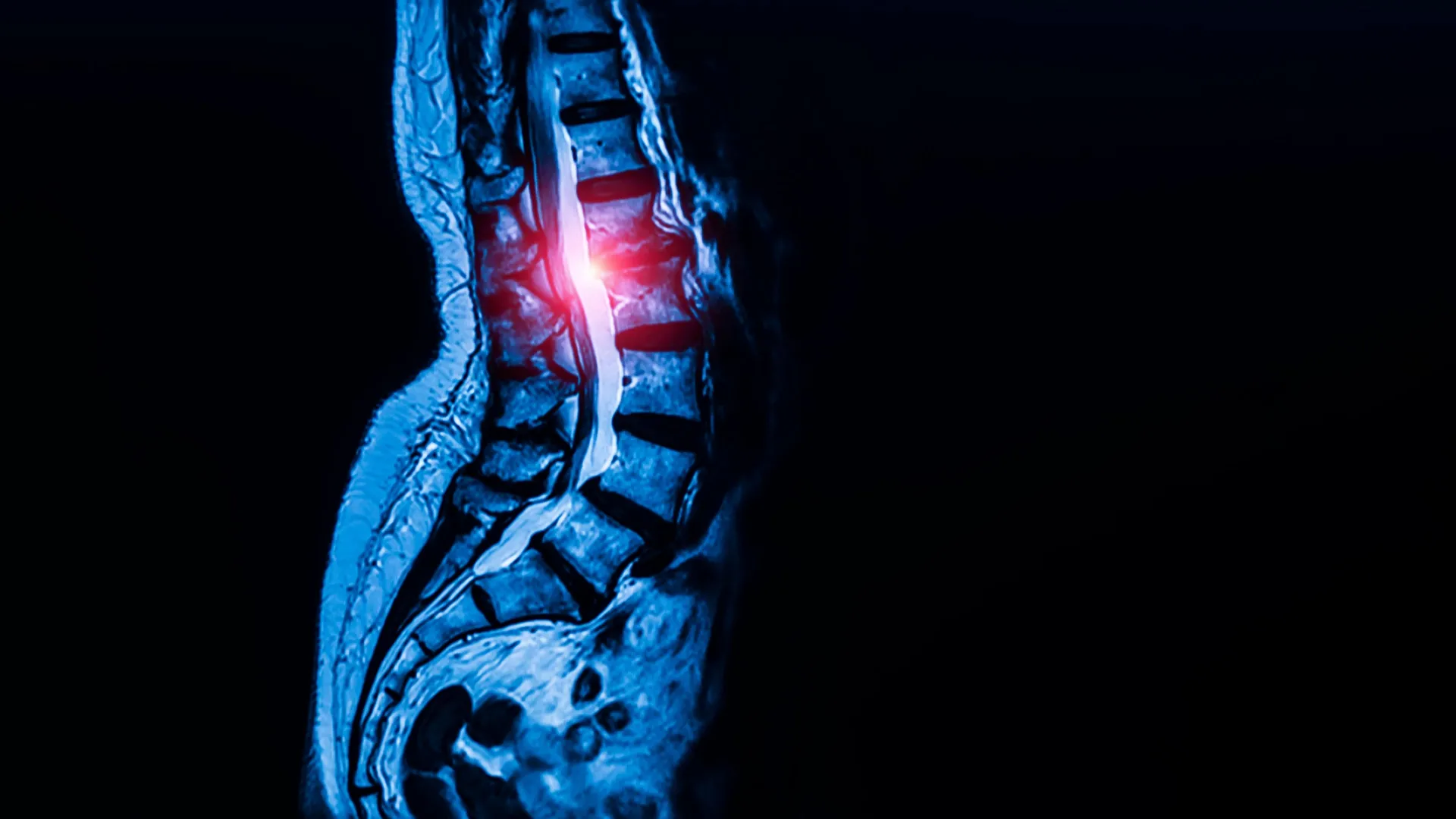
The study, led by researchers at the Universities of Edinburgh and Bristol, examined a gene linked to collagen IX, a protein that helps support the fibers holding spinal discs together. These discs sit between the bones of the spine and act as shock absorbers. When they wear down, people can develop pain, stiffness and reduced movement. This condition, called intervertebral disc degeneration, affects many people, but there are currently no medicines that can stop or reverse the process. Surgery is an option for some severe cases.
To learn how the gene might affect the spine, the team studied zebrafish bred without a working copy of it. As the fish grew older, minerals built up in tissues between their vertebrae. The deposits made normally flexible structures more rigid, and neighboring vertebrae sometimes fused. Those changes resemble features of degenerative spinal disease in people.
The damage appeared to start before the mineral deposits formed. A layer that supports the spine as it develops began to break down first. That sequence suggests the loss of this structural support may leave the tissues vulnerable to later hardening.
The researchers also looked for changes in gene activity. Their analysis pointed to several processes that may contribute to the damage, including fat metabolism and mTOR, a cell system that helps manage growth and responses to nutrients. They also found changes involving phosphate regulation and vitamin A signaling. Phosphate is needed to build bones and teeth, but mineral buildup in the wrong tissues can be harmful. Together, the results suggest that disc degeneration may involve changes in cell activity and metabolism, not only gradual wear.
In the experiments, an existing osteoporosis drug prevented the abnormal mineral deposits from forming in the zebrafish spine. That result is promising because it suggests a medicine developed for one condition might offer a route to investigating another. But the study does not show that the drug protects human spines, slows disc degeneration in people or relieves pain. Those possibilities still need to be tested.
For now, the work offers researchers a clearer view of how spinal damage may unfold: a support layer weakens, mineral deposits collect, and the spine can lose flexibility. The zebrafish model could help scientists examine those steps and test possible treatments. The next challenge is to find out whether the biological clues—and the drug’s effect—also apply to people.