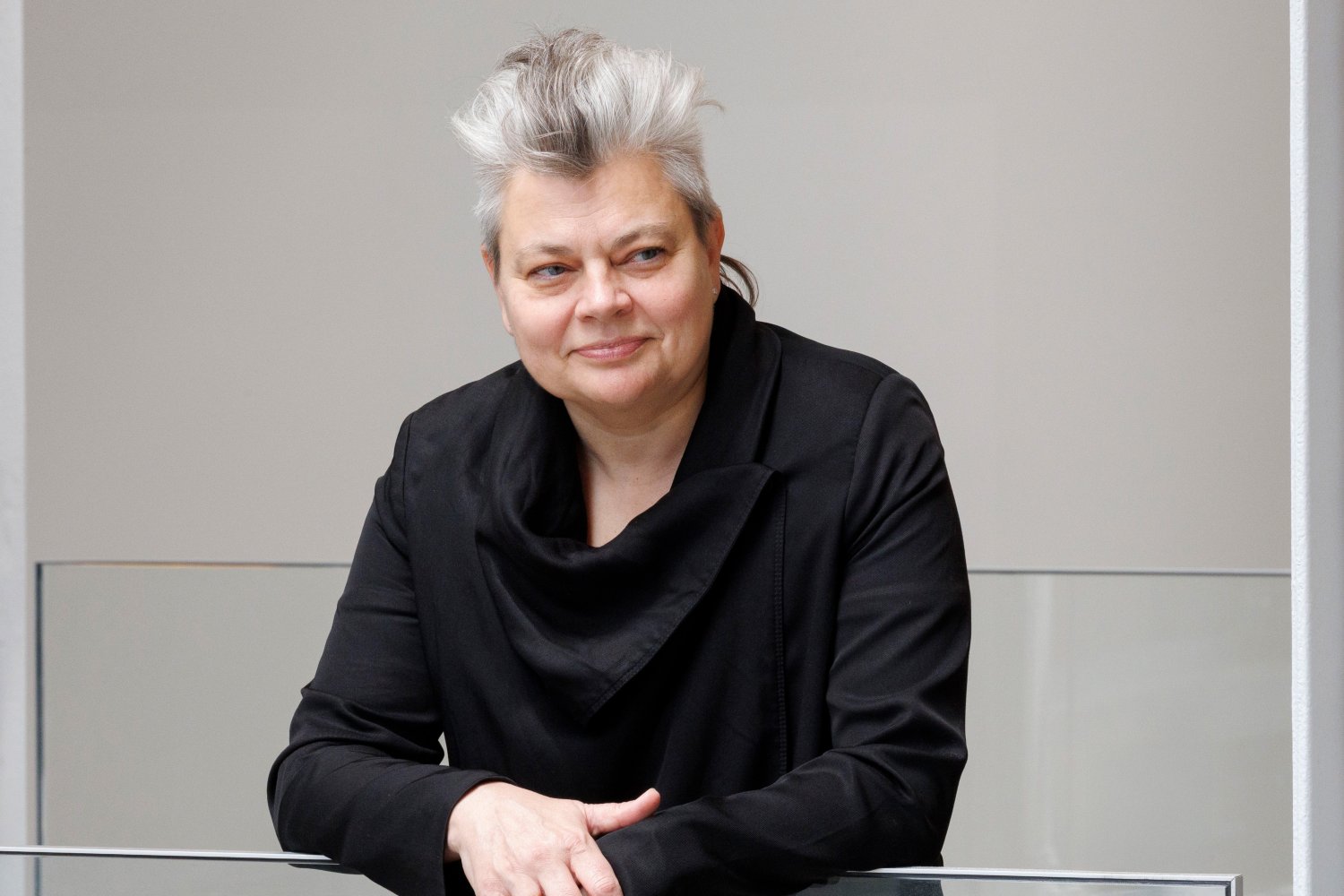
When Ana Miljački first walked through the doors at MIT nearly two decades ago, she noticed something that would shape her entire career: the students.
These weren't students content to simply learn the rules of architecture. They were curious, driven, and eager to push the entire field forward. "These were students comfortable being at the edge of the discipline, eager to push and transform it," Miljački recalls.
This month, Miljački herself took on a new challenge at the same institution. On July 1, she became the head of MIT's Department of Architecture — the same department where she has spent nearly 20 years teaching, researching, and shaping how future architects think about the built world.
Miljački succeeds Nicholas de Monchaux, who helped grow the department's focus on climate resilience and sustainability. She inherits a department that is also preparing for a physical transformation: later this summer, the entire architecture program will move into a historic building called the Metropolitan Storage Warehouse, nicknamed the Met.
The appointment comes as no surprise to those who know her work. Miljački has directed two of MIT's specialized graduate programs — the Master of Architecture program from 2016 to 2020, and the Master of Science in Architecture Studies program from 2023 to 2025. She teaches history, theory, and design, and her scholarship is recognized worldwide for pushing architectural thinking in new directions.
In 2014, she co-curated the U.S. Pavilion at the Venice Architecture Biennale with the exhibition "OfficeUS." She founded MIT's Critical Broadcasting Lab in 2018, a space where architects can think critically about their field without pressure from outside interests. The lab has contributed work to major exhibitions in São Paulo, Seoul, and Berlin, and even put on a show at the Museum of Yugoslavia in Serbia earlier this year.
Miljački also hosts a podcast called "I Would Prefer Not To," produced with the Architectural League of New York. The show explores why architects sometimes turn down work — a question that most people never think to ask. Last year, the podcast won an award from the American Institute of Architects.
Despite her new leadership duties, Miljački says students remain her motivation. "When junior faculty are supported to produce their own work, they also support students who are helping them," she told MIT's announcement. "That is not something I had encountered until coming to MIT."
Looking ahead, Miljački will guide a department whose research connects directly to one of the world's biggest challenges: the climate crisis. Last year, she co-curated an MIT exhibition at the Venice Biennale examining how architects are responding to climate change. It's work that will only grow more important as her tenure begins.