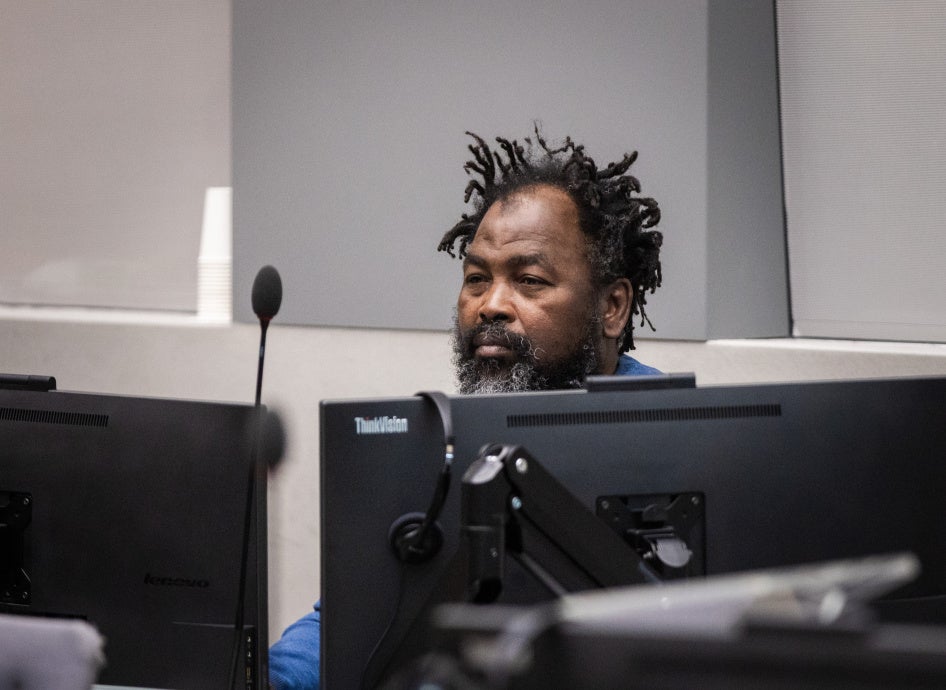
Mahamat Said Abdel Kani stood silently in a courtroom in The Hague as the judge read the verdict: guilty of crimes against humanity. In a packed chamber, survivors of violence in Bangui, the capital of the Central African Republic, watched through interpreters, some wiping away tears. This was the first time a high-ranking commander from the Seleka armed group had been convicted by the International Criminal Court (ICC) for atrocities committed during the group’s brutal 2013 takeover.
The Seleka, a coalition of predominantly Muslim rebels, seized power in March 2013 after ousting President François Bozizé. What followed was months of terror in Bangui. Civilians were attacked, homes looted, and fear ruled the streets. At the Central Office for the Repression of Banditry (OCRB), a police unit with a long history of abuse, Said oversaw imprisonment, torture, and persecution of civilians between April and August 2013. The ICC found him guilty on these charges, though he was acquitted of war crimes, as judges determined the armed conflict had technically ended by then.
Said rose quickly through the Seleka ranks—from lieutenant to commander—and was placed in charge of OCRB at the height of the violence. The court’s ruling does not erase the suffering, but it marks a turning point. As Lewis Mudge of Human Rights Watch said, this verdict is a "significant milestone in the fight against impunity." Yet justice remains incomplete. Other top Seleka figures, like Noureddine Adam and Michel Djotodia, remain at large or live freely in neighboring countries. Adam, wanted by the ICC since 2019, was only formally charged in 2022.
The ICC’s work in the Central African Republic began in 2014, after the government asked for help investigating crimes dating back to 2012. This case is part of a broader effort: in 2025, two anti-balaka leaders were sentenced to 15 and 12 years for their roles in retaliatory violence. But one case was dropped due to lack of evidence, showing how hard it is to secure convictions in a country where witnesses are scarce and fear runs deep.
Now, the court will decide Said’s sentence, with a hearing set for November. Reparations for victims and appeals are likely to follow. For the people of Bangui, this verdict is not an end, but a sign that accountability is possible—even after years of silence. As the ICC continues its work, the message is clear: no one should assume they can commit atrocities and never be held responsible.